Search across 18 country guides, eco articles, photography, and travel resources.

ALL DESTINATIONS Australia — The continent of contrasts — Outback, reef and city
OCEANIA

AustraliaKarijini, Uluru, Monkey Mia Outback

Why Visit Australia?
The Country of the Kangaroo 🦘, Koalas, and red dust

Australia is not only a country, but an entire continent of wildly different worlds packed into a single destination.
The ancient red walls of → Karijini National Park glow like embers at sunset,
wild dolphins glide into the shallows at → Monkey Mia ,
and the sacred silhouette of → Uluru changes colour by the hour.
Add the tropical wetlands of → Kakadu , the turquoise reef of Ningaloo, and the eerie silence of the → Outback, and you have a photographer's landscape that most people never come close to exhausting in a single trip.

Region 01

Northern Territory

The Northern Territory is one of Australia's most remote and dramatic landscapes — home to Uluru, Kakadu National Park, and a rich Aboriginal cultural heritage. Vast red plains, ancient gorges, and extraordinary wildlife define this wild heartland of the continent.

Travel Tips

  • Visit Uluru at sunrise or sunset for the most spectacular light
  • Kakadu is best visited in the dry season (May–October)
  • Respect sacred Aboriginal sites — some areas are restricted
  • Darwin is a great base for exploring the Top End
Photography Highlights

Western Australia is where the light turns extraordinary. Karijini's gorges are best shot in the morning when the sun hits the iron-red rock walls at a low angle — I've never seen colour like it anywhere else on Earth. Monkey Mia delivers close-up dolphin encounters at a predictably reliable hour, and the Pinnacles Desert at dusk creates an alien scene that needs no filter.

The Outback rewards patience. Uluru at sunrise draws crowds, but walk around to the western face and you'll often find yourself alone with one of the world's great photographic subjects. The red dirt roads stretching to the horizon in every direction make for effortless wide landscape shots.

The Northern Territory — Kakadu's wetlands in the dry season host an absurd concentration of birdlife. Yellow Water Billabong at golden hour is the single best wildlife photography spot I found in Australia. And Darwin's sunsets over the Timor Sea are genuinely among the best I've seen worldwide.

New South Wales & East Coast — the Three Sisters in the Blue Mountains at dawn, Bondi Beach on a winter morning before the crowds, and the Twelve Apostles off the Great Ocean Road when the sea mist rolls in. These are postcard images for a reason.

Region 02

Western Australia

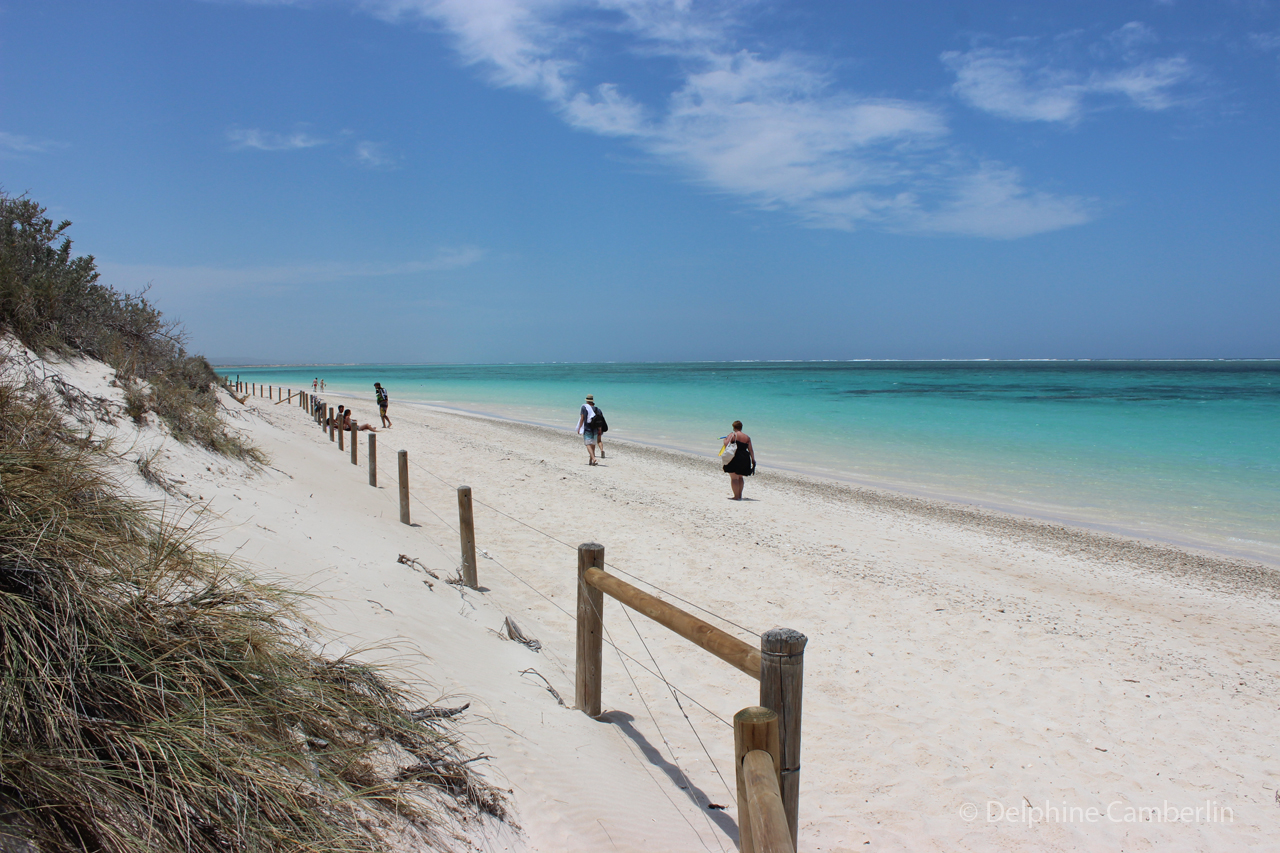
Western Australia is the country's largest and most diverse state — stretching from the turquoise bays of Exmouth and the Kimberley's ancient rock formations to the vineyards of Margaret River and the wildflower-covered plains of the interior. Its sheer scale is breathtaking.

Travel Tips

  • Swim with whale sharks at Ningaloo Reef (March–July)
  • The Kimberley is only accessible in the dry season
  • Perth is one of the world's most isolated major cities
  • Road distances are enormous — plan fuel stops carefully

Photography Notes Memories from Australia

The shape of the rocks of Karijini are breathless. The overall experience is awesome and unforgettable. First we had to hike down the valley on a red rocks, then navigate in a maze, sculpted in the rocks where wer could walk or swim in the water. Be careful of your belongings and camera to avoid getting water on!

The dolphins at Monkey Mia come in at around 7:30am. It is getting crowded at that moment with a lot of tourist with their feet in the shallow water and the dolphins coming nearby to say good morning.

For Uluru, we had morning sunrise walk and evening wine tasting to watch the sunset from different points of view of Uluru or other stunning Rocks around.

Region 03

The Outback

Australia's legendary Outback is a place of extraordinary silence, ancient red earth, and endless sky. Stretching across the country's interior, it is one of the most remote and sparsely populated regions on Earth — and one of the most unforgettable to experience.

Travel Tips

  • Always carry emergency water — distances between towns are vast
  • A 4WD is essential for many Outback roads
  • The night sky is extraordinary — no light pollution for hundreds of kilometres
  • Travel in cooler months (April–September) to avoid extreme heat
Region 04

New South Wales & East Coast

From the iconic Sydney Opera House and Bondi Beach to the ancient Blue Mountains and the whale-rich waters of Hervey Bay, the east coast is Australia's most travelled and most diverse corridor.

Travel Tips

  • Book Sydney Opera House tours well in advance
  • The Great Ocean Road is best driven west to east for the best views
  • Fraser Island (K'gari) requires a 4WD permit
  • Humpback whale season on the east coast runs June–November

Travel Information about Australia

Australia is not a budget destination — but it rewards those who plan well. Self-driving or campervanning dramatically cuts costs while giving you access to landscapes no tour bus reaches. Western Australia in particular is best explored at your own pace, with long empty roads and free or low-cost national park campsites that put you right inside the scenery you came to photograph.

🗓️Recommended stay14 – 28 days
🎒Budget / day€55–80 / $60–90Hostel, supermarket meals, local buses
🥂Luxury / day€200–400 / $220–440Hotel, restaurants, guided tours
📅Best monthsApril – October
🌡️Climate18–32°C · Tropical north, temperate south — varies hugely by regionAvoid the north Nov–Mar (cyclone season & extreme heat)
✈️VisaeVisitor (free, online) required before arrival for EU / US / UK
💵CurrencyAUD · Cards accepted almost everywhere including small cafés
🚗Getting aroundHire car or campervan essential outside cities · Greyhound buses for budget travellers
🛡️SafetyLow — very safeWatch for wildlife on roads at dusk & dawn
🍜Must-try foodMeat pie, flat white coffee, barramundi & chips, Tim Tams
💬LanguageEnglish only · Australians are informal — skip the formalities

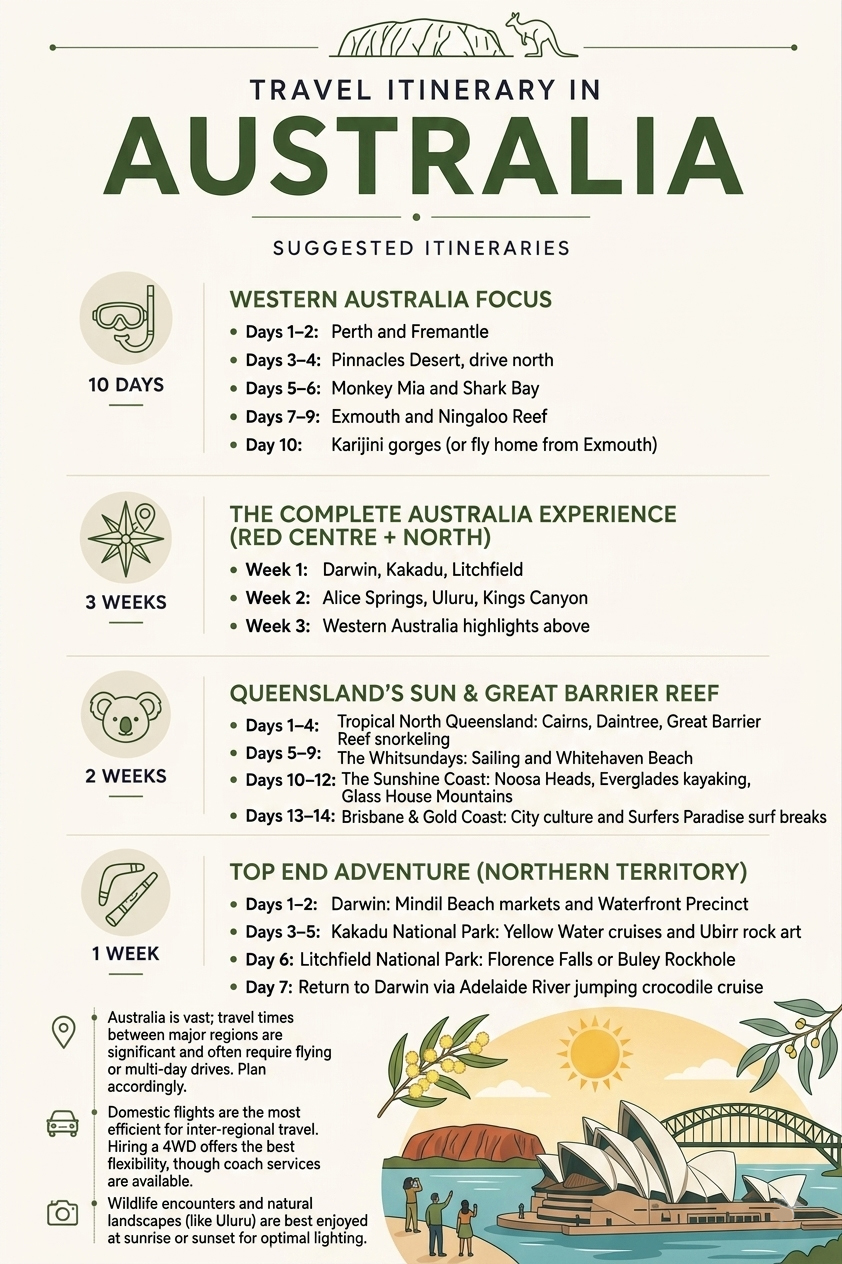
Suggested Itineraries in Australia

Suggested Itineraries in Australia

10 days — Western Australia Focus

  • Days 1–2: Perth and Fremantle
  • Days 3–4: Pinnacles Desert, drive north
  • Days 5–6: Monkey Mia and Shark Bay
  • Days 7–9: Exmouth and Ningaloo Reef
  • Day 10: Karijini gorges (or fly home from Exmouth)

3 weeks — The Classic Red Centre + North

  • Week 1: Darwin, Kakadu, Litchfield
  • Week 2: Alice Springs, Uluru, Kings Canyon
  • Week 3: Western Australia highlights above
    • 2 weeks — Queensland’s Sun & Great Barrier Reef

      • Days 1–4: Tropical North Queensland: Cairns, the Daintree Rainforest, and snorkeling the Great Barrier Reef
      • Days 5–9: The Whitsundays: Sailing through the 74 islands and relaxing on the silica sands of Whitehaven Beach
      • Days 10–12: The Sunshine Coast: Noosa Heads, Everglades kayaking, and the Glass House Mountains
      • Days 13–14: Brisbane & Gold Coast: City culture followed by the world-class surf breaks of Surfers Paradise
        • 1 week — Top End Adventure (Northern Territory)

          • Days 1–2: Darwin: Mindil Beach markets and the Waterfront Precinct
          • Days 3–5: Kakadu National Park: Yellow Water billabong cruises and Ubirr rock art lookouts
          • Day 6: Litchfield National Park: Cooling off in the Florence Falls or Buley Rockhole swimming holes
          • Day 7: Return to Darwin via the Adelaide River jumping crocodile cruise
            • Australia is an island continent of massive proportions, and travel times are often underestimated. Domestic flights are the most efficient way to hop between states (e.g., Cairns to Uluru), but "Greyhound" buses and campervan rentals are popular for the East Coast and Western Australia. Always carry extra water and fuel when driving in the Outback, and be mindful of the northern "Wet Season" (November to April) when some roads in the NT and Queensland can become impassable!

Aboriginal Australia — The World's Oldest Living Culture

60,000 Years of Continuous Connection to Country

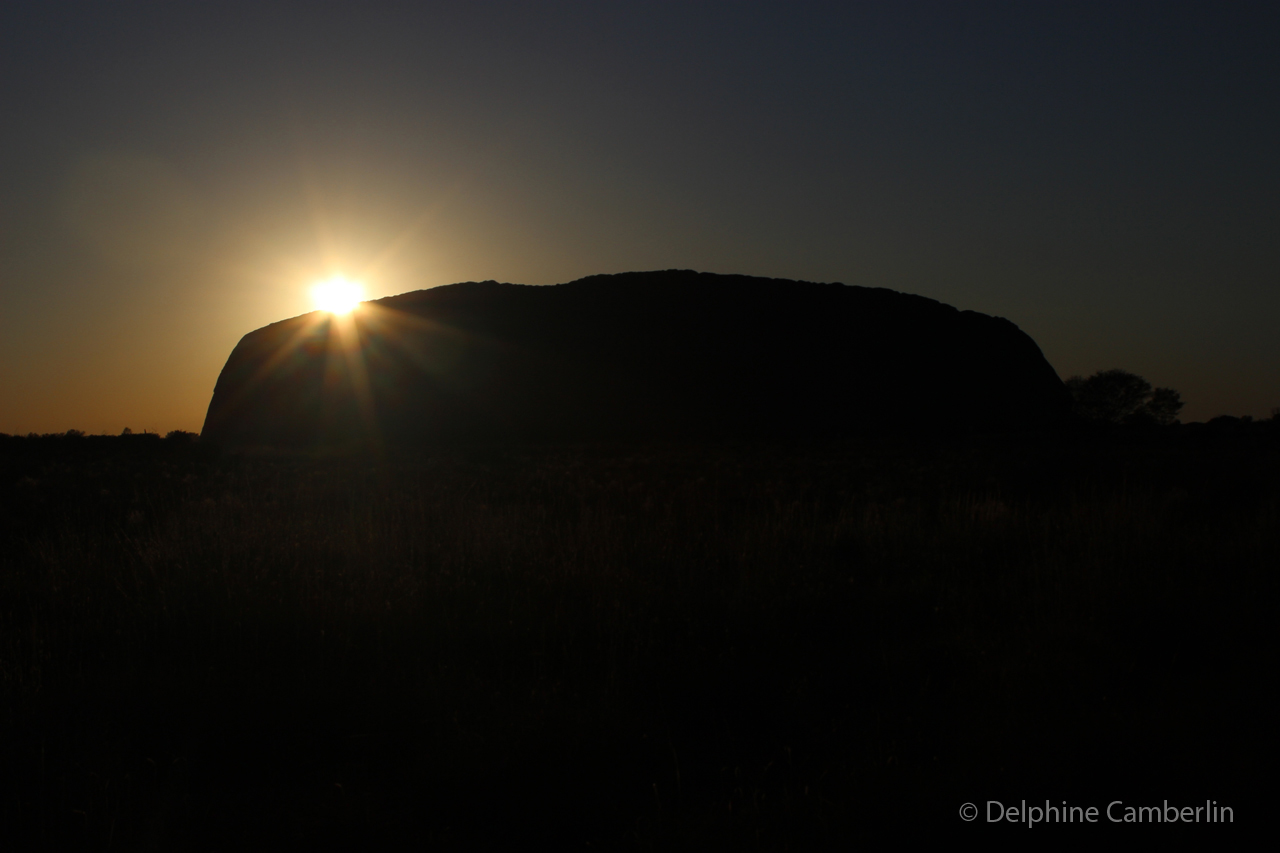
Uluru sunrise Aboriginal sacred site Australia
Uluru at sunrise — returned to its Traditional Owners in 1985, it is the most sacred site in Australia · © Delphine Camberlin

Before anything else about Australia, there is this: Aboriginal and Torres Strait Islander peoples have lived on this continent for at least 60,000 years — making theirs the world's oldest continuous living culture. That is not a tourist brochure superlative. It means that when you stand at Uluru, walk through Kakadu's wetlands, or look at rock art in the Kimberley, you are encountering a civilisation that was already ancient when the Egyptian pyramids were built. Understanding this changes everything about how you experience Australia.

There are over 250 distinct Aboriginal language groups across the continent, each with their own traditions, laws, Dreaming stories, and deep knowledge of their specific Country. "Country" in Aboriginal Australian usage is not simply geography — it is the living relationship between people, land, water, animals, plants, and ancestral spirits. Caring for Country is both spiritual duty and ecological practice, and the sophisticated land management techniques developed over millennia — including controlled burning to manage vegetation and encourage biodiversity — are now being studied and adopted by conservation scientists worldwide.

Uluru and the Anangu — The most famous Aboriginal cultural encounter in Australia is also the most transformed. Uluru was handed back to its Traditional Owners, the Anangu people, on 26 October 1985, in a landmark act of land rights recognition. The Australian government formally returned the title deeds; the Anangu leased the land back for 99 years for joint management as a national park. In 2019, climbing Uluru was permanently banned — a decision the Anangu had requested for decades, as the climbing route crosses a sacred Tjukurpa (Dreaming) track. Since the ban, cultural tourism at Uluru has grown by 20%: visitors who once came to climb now come to listen.

The Australian People — A Nation Built by Immigration
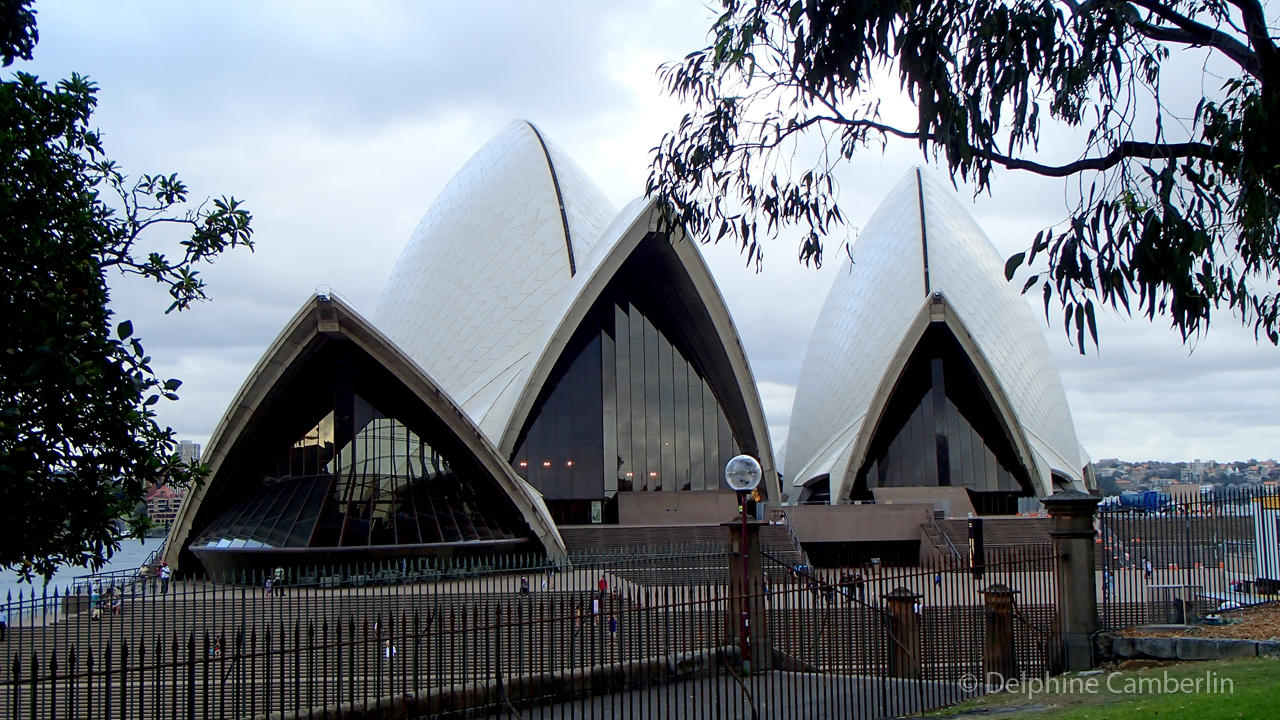
Sydney Opera House multicultural Australia
Sydney Opera House — designed by Danish architect Jørn Utzon, built by an immigrant workforce, icon of a multicultural nation · © Delphine Camberlin

Australia is one of the world's most multicultural nations. Around 30% of its 26 million people were born overseas, and in cities like Sydney and Melbourne, the proportion of residents from Asian backgrounds rivals or exceeds that of many Asian cities.

Indian Australians — as of 2024, over 916,000 Indian-born people live in Australia, making Indians the second largest migrant community after the British. Indian cuisine — from South Indian dosas to Punjabi dhabas — is now as embedded in Australian daily life as any other food tradition.

Chinese Australians — over 700,000 Chinese-born people live in Australia, with an estimated 1.4 million Australians claiming Chinese ancestry. Australia has more people of Chinese ancestry per capita than any country outside Asia. Yum cha on Sunday morning in any Australian city is a social institution.

The multicultural food reality — Melbourne in particular is recognised as one of the world's great food cities — not for any single cuisine, but for the density and quality of its multicultural food culture. Vietnamese pho in Footscray, Japanese omakase in the CBD, Lebanese charcoal chicken in Auburn, Korean BBQ anywhere.

Essential Australian Slang — A Survival Guide
  • G'day — Hello (works any time of day, not just morning)
  • Mate — Friend, acquaintance, or indeed anyone at all. A stranger who helps you is "mate." The prime minister is potentially "mate."
  • No worries — Don't worry about it / you're welcome / it's fine. Australia's unofficial national motto. Can also appear as "no wuckers."
  • She'll be right — Everything will be fine. A fundamental article of Australian faith.
  • Fair dinkum — Genuine, real, authentic. "Is that fair dinkum?" = "Is that true?"
  • Arvo — Afternoon. "See you this arvo" = "See you this afternoon."
  • Smoko — A short break from work (originally a smoke break, now any break).
  • Ripper — Excellent, fantastic. "That was a ripper of a day."
  • Chockers — Full to bursting. "The beach was chockers on Saturday."
  • Bloke — A man. Sheila — A woman (slightly old-fashioned but still used).
  • Bogan — A loveable working-class person, sometimes used self-deprecatingly.
  • Drongo — A fool or idiot (affectionately). "Don't be a drongo."
  • Dunny — Toilet. Ta — Thanks. Hoo roo — Goodbye.
  • Yeah nah — I understand what you're saying, but no. Nah yeah — I know it sounds like no, but yes.
  • Throw another shrimp on the barbie — Australians actually call them prawns, not shrimps. This phrase was invented for a 1984 American tourism campaign and Australians will gently correct you while laughing.
  • Good on ya — Well done, good for you. Sincere, not sarcastic.

The most important thing to understand is the Australian relationship with sarcasm and understatement. When an Australian says something is "not bad," it may be extraordinary. When they call something "a bit of a disaster," it was probably catastrophic. And when they call you a "bloody idiot" while laughing, they like you.
Australian Food — Vegemite, Meat Pies & a World on a Plate
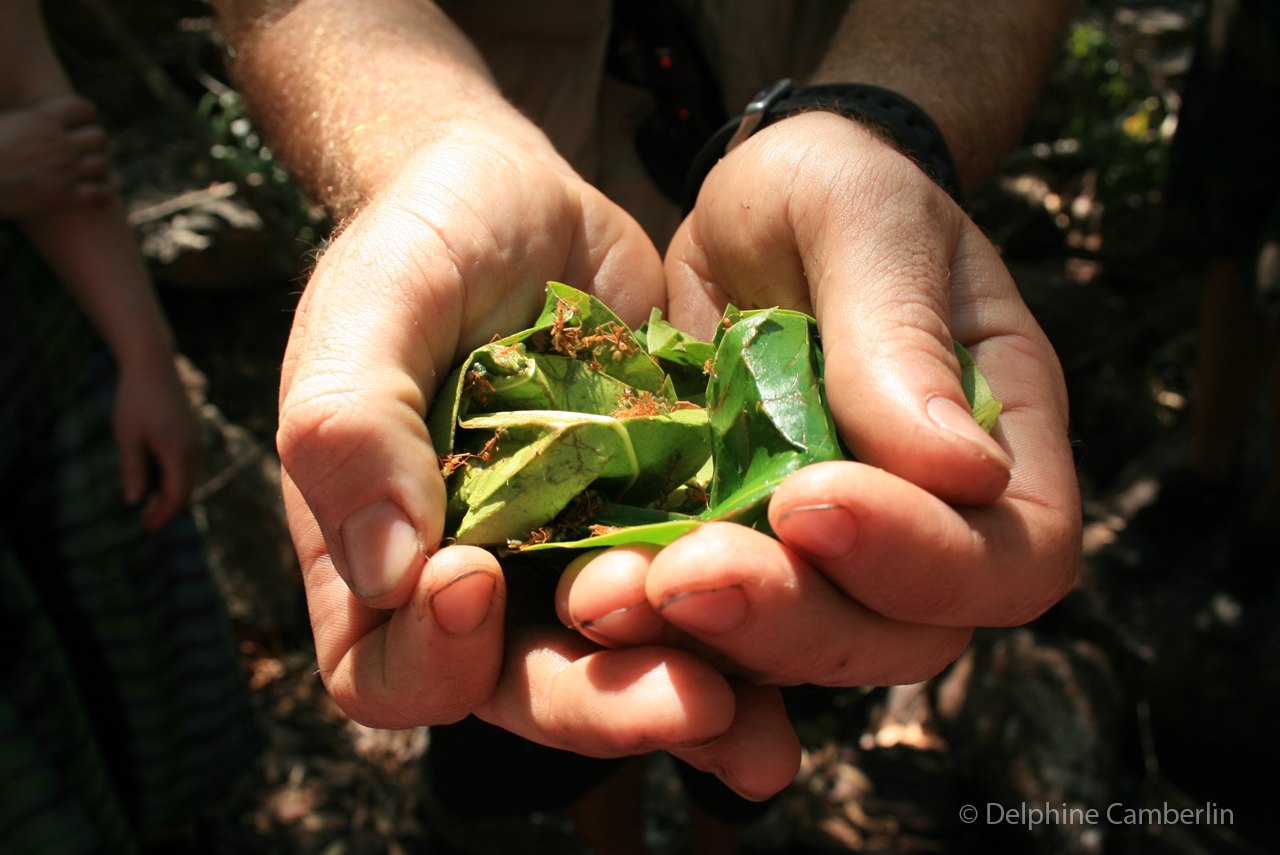
Bush tucker Australian food culture indigenous
Bush tucker — indigenous Australian food traditions are increasingly recognised as world-class cuisine · © Delphine Camberlin

Australian food exists on two completely different levels simultaneously. There is the traditional, often British-heritage fare that Australians grew up eating — hearty, unpretentious, frequently involving a meat pie at a football match or a snag (sausage) on a barbecue. And there is the multicultural urban food scene, particularly in Sydney and Melbourne, which is genuinely world-class in its range, quality, and creativity. Both are worth your time.

Vegemite — the most Australian thing in existence. A dark, intensely salty yeast extract spread, eaten on toast with butter for breakfast. The key is moderation: Australians use a thin scraping. A thick layer will be brutal.

Tim Tams — Australia's most beloved chocolate biscuit. The "Tim Tam Slam" is the ritual: bite off both opposing corners, use it as a straw to suck hot coffee through, then eat it as it melts from the inside.

The flat white — Australia (jointly with New Zealand) invented this now-global coffee style: espresso with a thin layer of velvety microfoam. Australian coffee culture is exceptional — every suburb has a genuinely good café.

Barramundi — the quintessential Australian fish: firm white flesh, mild flavour, available grilled or battered in every coastal town from Darwin to Sydney.

Australia's Surf Culture — Sun, Waves & a Way of Life

From Bondi to Margaret River — A Continent of Breaks

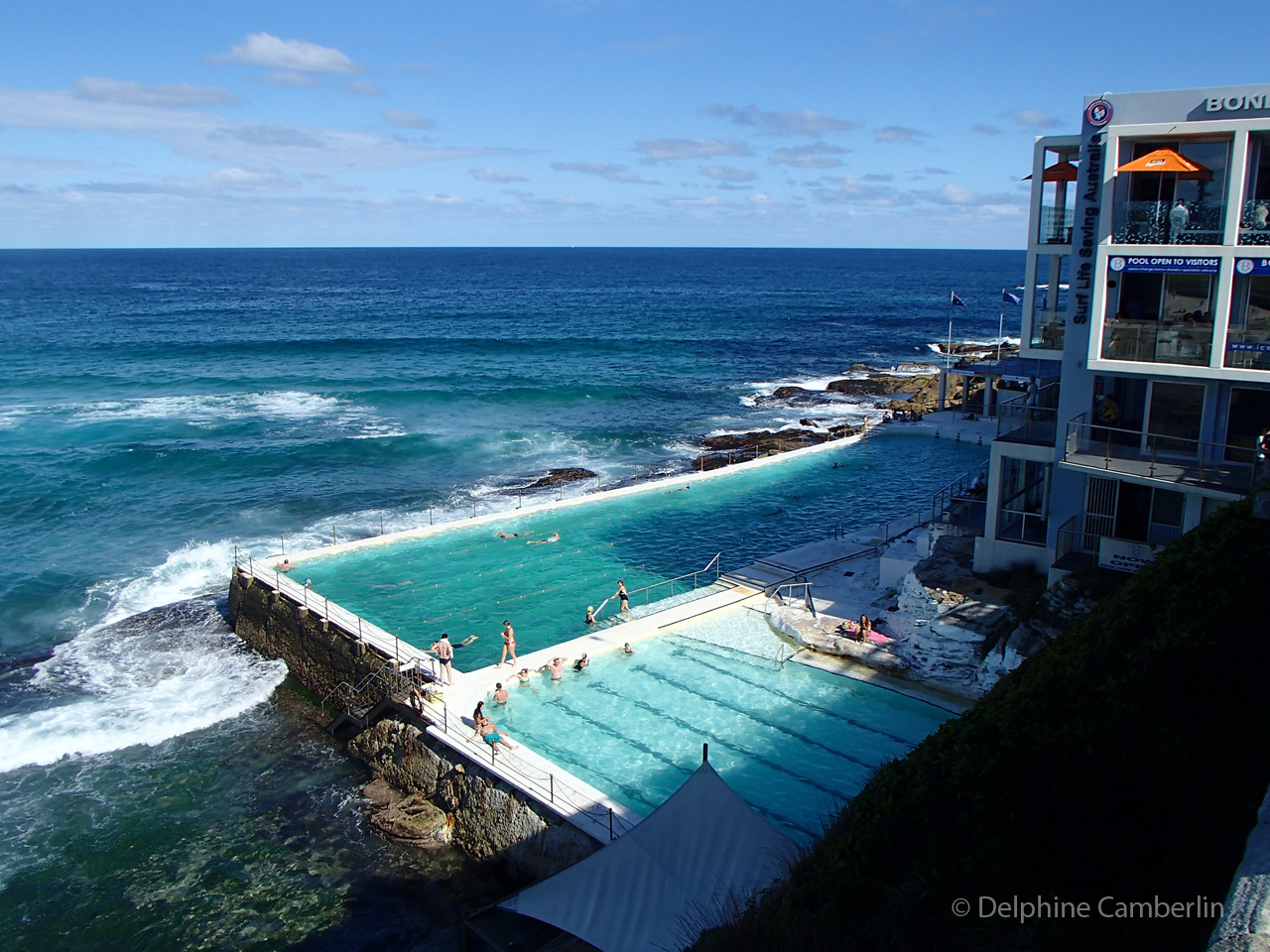
Bondi Beach Icebergs pool Sydney Australia surf culture
Bondi Icebergs — the most iconic ocean pool in Australia, where waves crash over the lip at high tide · © Delphine Camberlin

Surfing is not a sport in Australia. It is a weather system, a social structure, a morning ritual, an explanation for being late to work, and the lens through which the entire coastal culture understands itself. Australia has roughly 35,000 kilometres of coastline, and an extraordinary proportion of it produces surfable waves.

Bondi Beach, Sydney — the most famous beach in Australia. The Icebergs Ocean Pool — built into the rocks at the southern end, with waves crashing over the lip — is one of the great swimming experiences in the world. Arrive early — by 8am the beach is alive with surfers, swimmers, and the famous bronzed locals doing their morning laps.

Byron Bay, New South Wales — mainland Australia's most easterly point. The Pass is the jewel — a world-famous right-hand point break offering long, cruisy rides. Byron has an energy unlike anywhere else — bohemian, creative, occasionally pretentious, always beautiful.

Gold Coast, Queensland — the most consistently excellent surf on the east coast, concentrated around Snapper Rocks and the Superbank: a 2km stretch of perfect sand-bottom point break. Surfers Paradise, Burleigh Heads, and Kirra are legendary names in surfing.

Australian Rules Football — The Game That Makes No Sense Until It Does
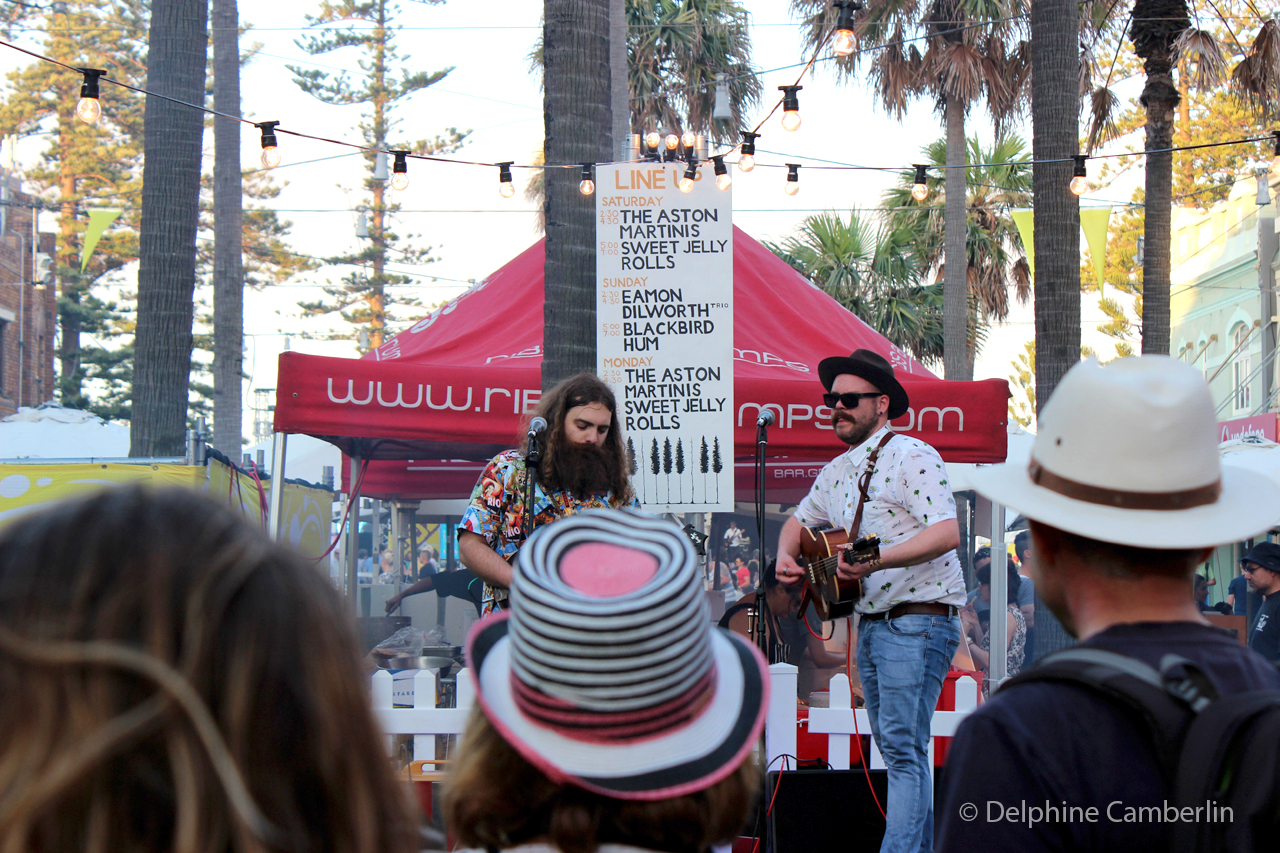
Australian festival culture Manly Sydney
Manly Festival — Australian community culture is built around outdoor gatherings, sport, and music · © Delphine Camberlin

If you are in Melbourne between March and September, you will find it almost impossible to avoid Australian Rules Football. It is on every television, in every conversation, and filling stadiums of 90,000 people on Saturday afternoons. The MCG (Melbourne Cricket Ground) — a 100,024-capacity venue — regularly sells out for AFL finals.

AFL is a contact sport unlike anything else in the world. Its closest relatives are Gaelic football and the Aboriginal game of marngrook, from which it partly derives. It originated in Melbourne in 1858, making it the world's oldest football code still played professionally.

How it works — Two teams of 18 players compete on an enormous oval field. There are four goalposts at each end. Kick the ball through the two tall centre posts: 6 points. Players can run with the ball but must bounce it every 15 metres. A player who catches a cleanly kicked ball has taken a "mark" and earns a free kick — often from 50+ metres out, resulting in long, soaring drop-kicks that are among the sport's most dramatic moments.

How to watch — Buy a ticket to any MCG or Marvel Stadium game in Melbourne. Stand in the outer terraces. Eat a meat pie. Try to follow the play. By the third quarter you will understand enough to shout at the umpires with everyone else. It is one of the finest sports-watching experiences in the world.

The Working Holiday Visa (WHV) — Travel Australia, Fund It Yourself
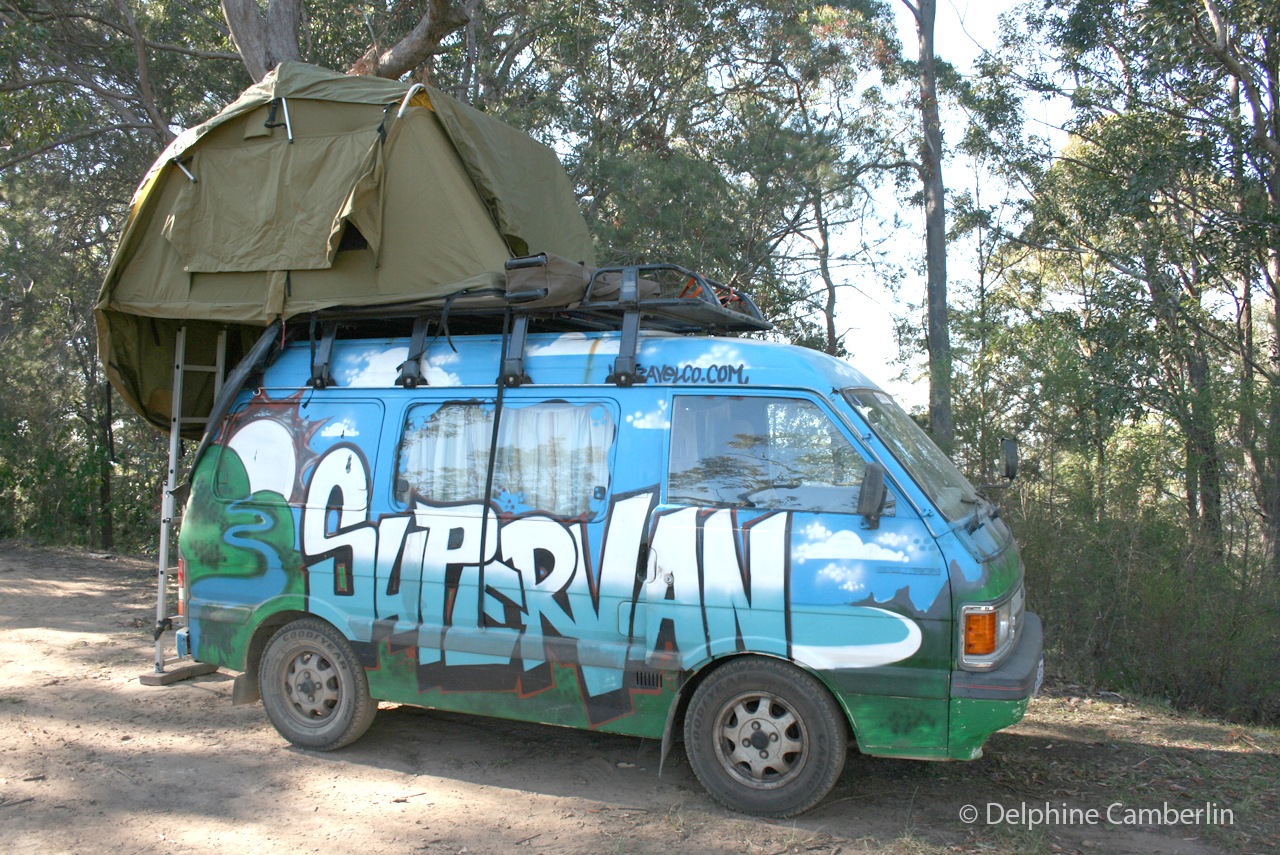
Campervan camping working holiday Australia
Campervan life, Central Coast NSW — the working holiday experience: work a few weeks, travel for months · © Delphine Camberlin

Australia offers one of the world's most generous and popular working holiday visa programmes, allowing young travellers (generally 18–30, extended to 35 for some nationalities) to live and work in Australia for up to 12 months, with the possibility of extending to a second and even third year. Over 200,000 working holiday visas are granted annually.

The 88-day rule and farm work — to qualify for a second-year extension, WHV holders must complete 88 days (three months) of "specified work" in a regional area. This usually means agricultural work: fruit picking (mangoes in Darwin, blueberries in NSW, grapes in the Barossa, strawberries in Queensland), vegetable harvesting, or similar. Most backpackers describe it as one of the more memorable experiences of their trip, even when exhausted.

Working in the cities — WHV holders work across almost every sector. Hospitality is the most common entry point: cafés, bars, restaurants, and hostels. Minimum wage in Australia is among the highest in the world (over AUD$24/hour as of 2025), which means a few weeks of work can fund weeks of travel.

Australian Brands, Shops & Things to Bring Home
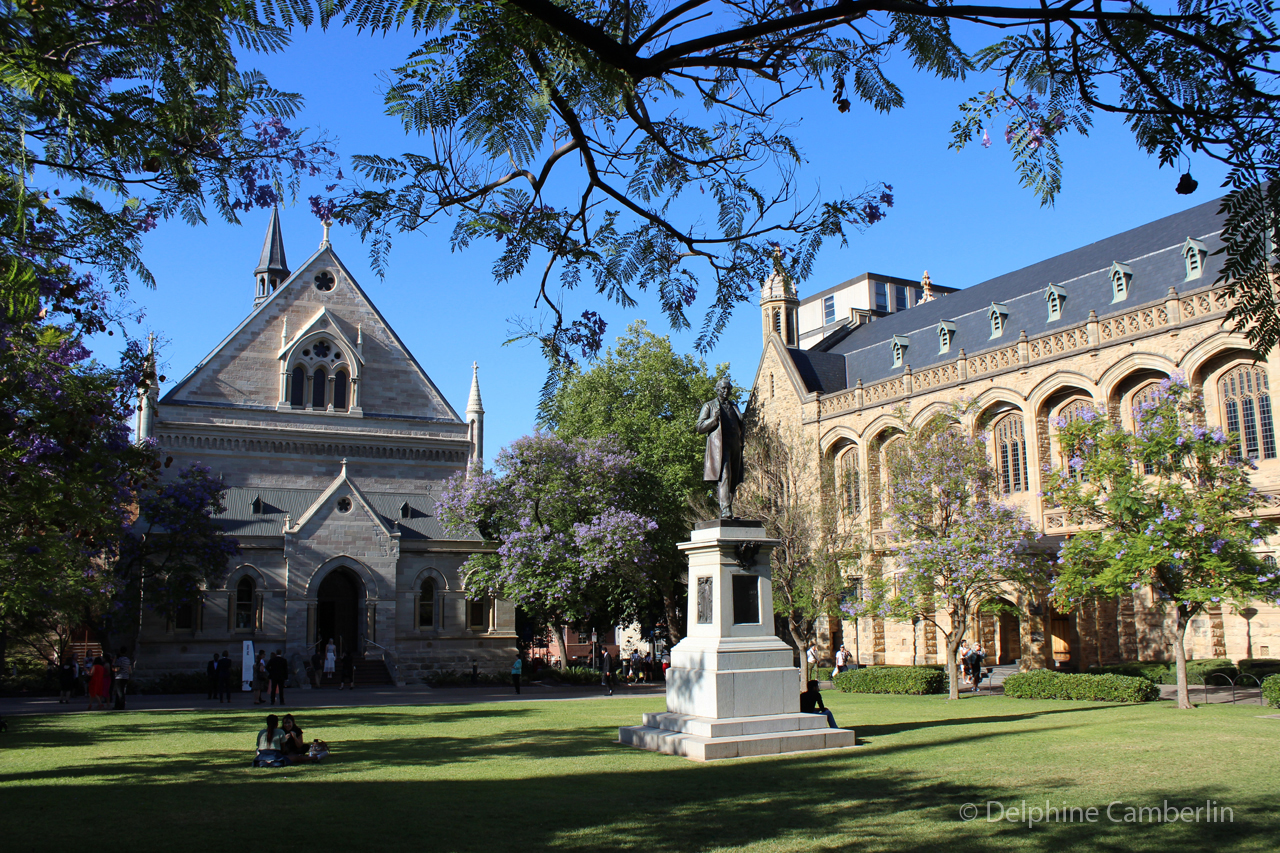
Adelaide city Australia South Australia capital
Adelaide — the gateway to the Barossa Valley wine region and one of Australia's most underrated cities · © Delphine Camberlin

Australia has produced a handful of brands that are genuinely iconic and worth knowing about.

Akubra — the Australian bush hat, made since 1876 from rabbit felt, worn by everyone from stockmen to prime ministers. Genuinely practical and genuinely Australian. RM Williams — premium leather boots and workwear, founded in 1932 in Adelaide. Bonds — Australia's most beloved underwear and basics brand; the Chesty Bond singlet is a cultural artefact. Ugg boots — originally made in Australia (the name "ugg" is Australian slang for ugly), now globally appropriated, but the genuine Australian sheepskin version is dramatically superior.

Tim Tams, Shapes, and Arnott's biscuits generally are excellent food gifts. Macadamia nuts — native to Queensland; the freshly roasted version sold at farmers' markets is extraordinary. Australian wine — the Barossa Valley (Shiraz), Margaret River (Cabernet Sauvignon and Chardonnay), Hunter Valley (Semillon), and Clare Valley (Riesling) all produce world-class bottles at prices well below European equivalents.

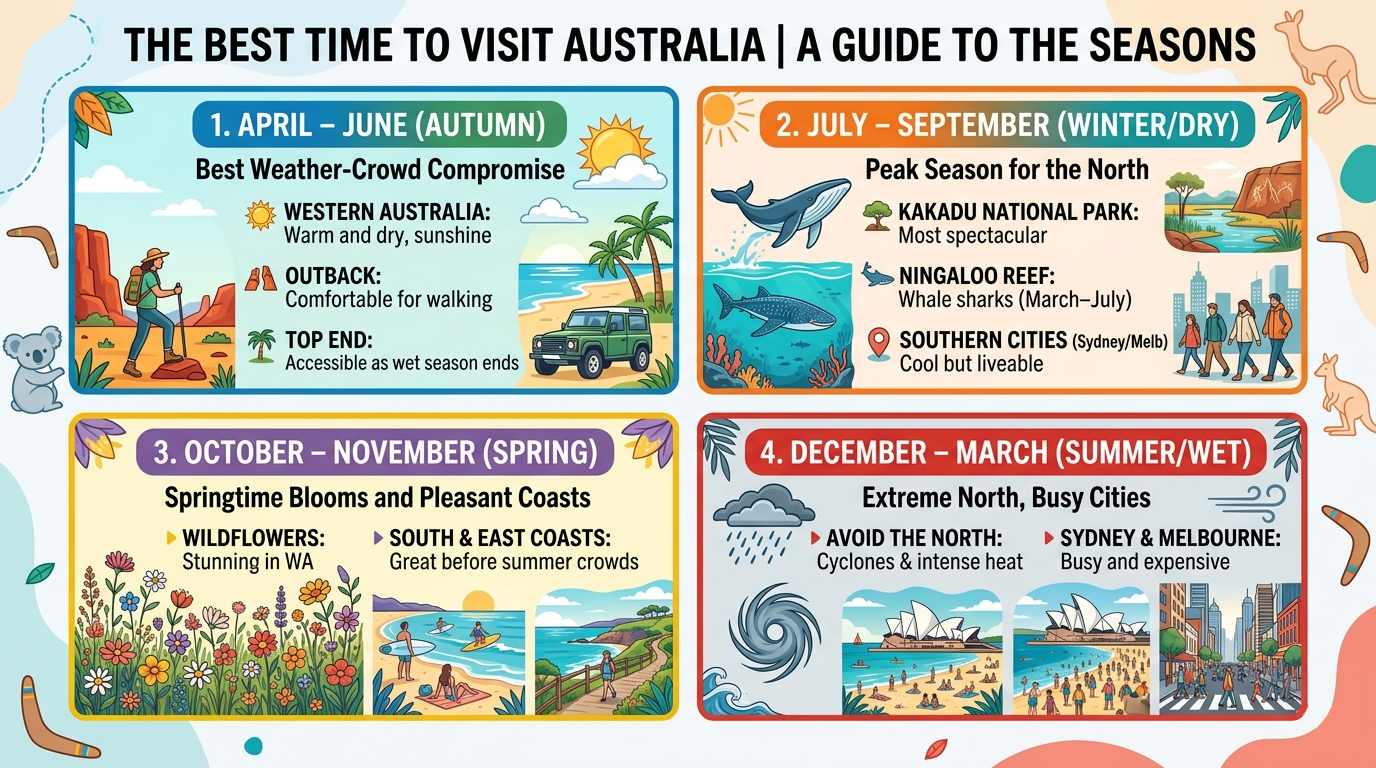
The Best Time To Visit Australia

The Best Time to visit Australia

April – June (Autumn)

The best compromise between weather and crowds. Western Australia is warm and dry, the Outback is walkable, and the Top End is accessible.

July – September (Winter/Dry)

Peak season for the north. Kakadu at its most spectacular. Whale sharks at Ningaloo (March–July).Southern cities are cool but very liveable.

October – November (Spring)

Wildflowers in WA. Good for the south and east coast before summer crowds arrive

December – March (Summer/Wet)

Avoid the north entirely — cyclone season and extreme heat. Sydney and Melbourne are busy and expensive.

Getting in Australia

From Europe

Australia is a 22–24 hour journey with at least one connection. Common hubs are Dubai (Emirates), Singapore (Singapore Airlines), Doha (Qatar Airways), and Kuala Lumpur (AirAsia).

Perth is actually 2–3 hours closer to Europe than Sydney or Melbourne — worth considering if Western Australia is your main destination.

I use Kiwi.com to find the best multi-stop combinations. Their "nomad" search is particularly useful for Australia since it lets you fly into one city and out of another without a price penalty.

📶 Stay Connected

Skip the SIM hunt on arrival. A travel eSIM lets you activate local data before you board — no plastic card, no roaming fees, instant setup. Roamic covers this destination and most countries in the Galerie.

Get Your Travel eSIM →
Experiences to Book

🎟️ GetYourGuide: "A few experiences I'd book in advance: whale shark snorkelling at Ningaloo, a guided walk into Karijini's gorges, and a sunrise Uluru tour with a local Indigenous guide."

Subscribe to the Newsletter

New quizzes, travel stories, and photography from 18 countries — straight to your inbox. One email at a time, no spam.

✓ Thanks! Check your inbox shortly.

Stock Photography

Australia Collection

Browse and license the full Australia photography collection — available for commercial and editorial use on Shutterstock.

View on Shutterstock →
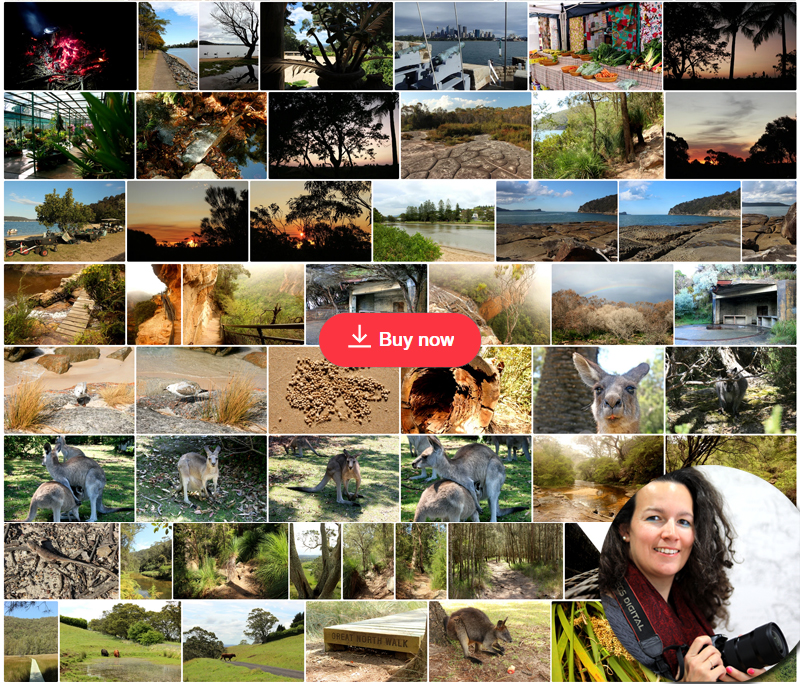
Australia Collections Delphine Camberlin ShutterStock

Stock Photography

Fiji Collection

Browse and license the full Fiji - Underwater seabed photography collection — available for commercial and editorial use on Shutterstock.

View on Shutterstock →
Fiji Collections Delphine Camberlin ShutterStock