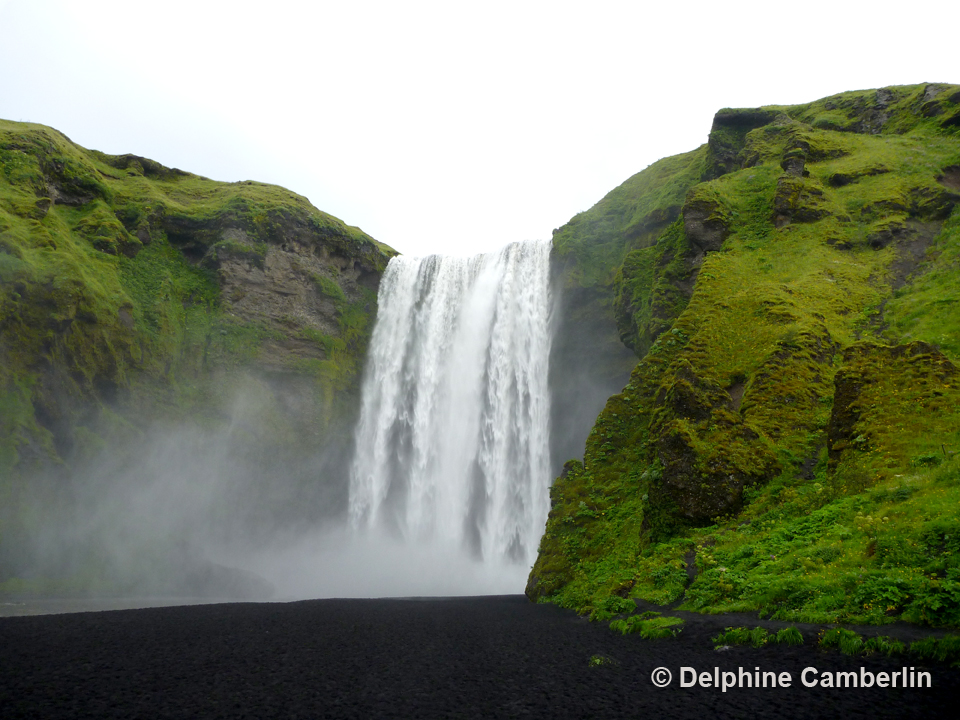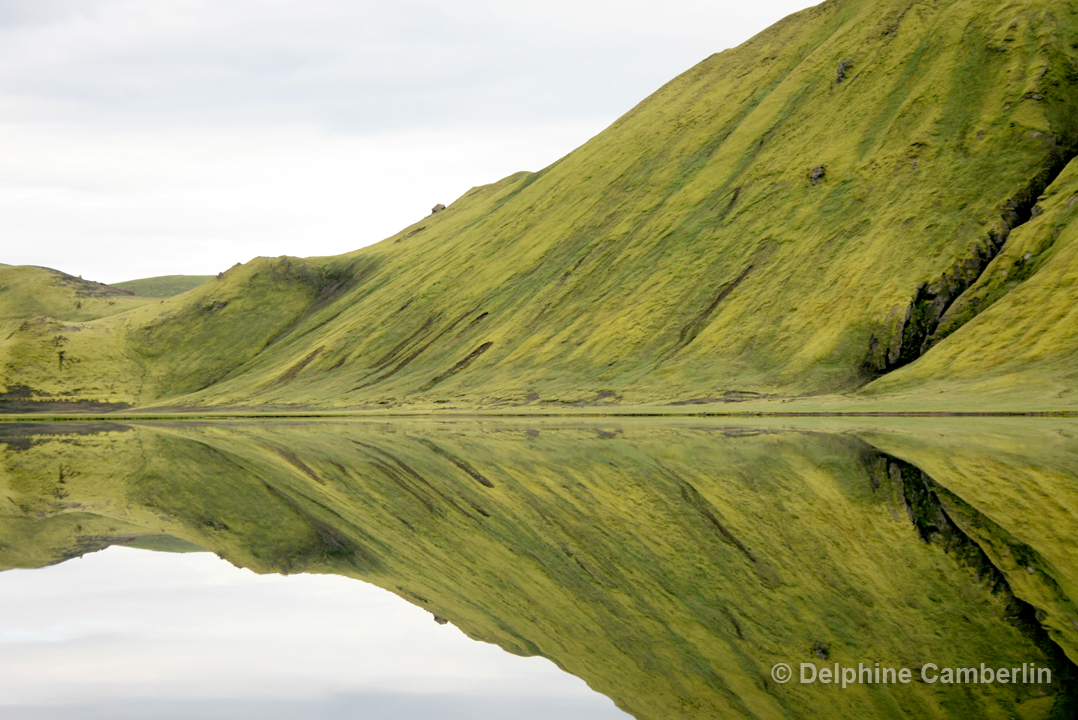
Iceland is the planet's greatest photography destination — and I say that having visited many of the obvious contenders. Where else can you photograph a geyser erupting on the hour, a waterfall you can walk behind, an aurora dancing over a glacier lagoon, and a puffin colony on a sea cliff — all in the same week? Gullfoss, Skógafoss, Jökulsárlón glacier lagoon, and the Snæfellsnes Peninsula offer a density of extraordinary subjects that simply doesn't exist at this concentration anywhere else I've been. Iceland doesn't do ordinary landscapes.
Jökulsárlón glacier lagoon — icebergs the size of houses, blue-white and translucent, drifting toward the sea. At dawn or dusk with a long exposure, the reflections on the still water produce images that look composited but aren't. Diamond Beach next door, where small ice chunks wash up on black volcanic sand, is equally extraordinary.
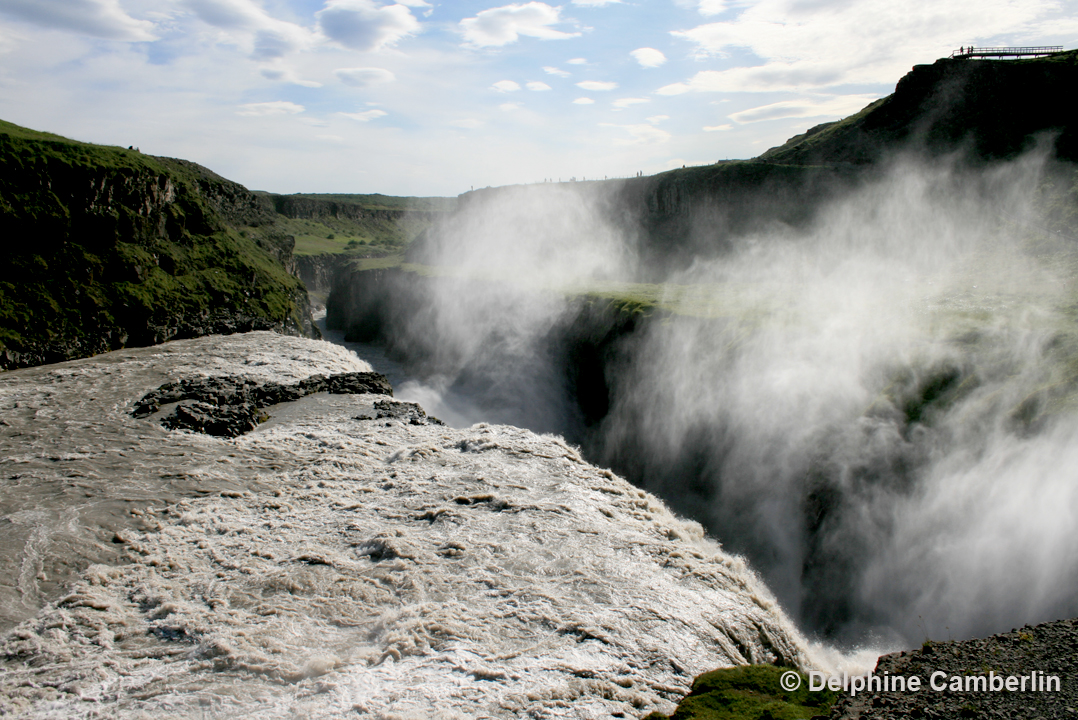
Gullfoss and the Golden Circle — Gullfoss in winter with ice-rimmed banks and steam rising is one of the most dramatic waterfall shots I've taken. The Strokkur geyser erupts every 5–10 minutes — shoot in burst mode and catch the bulge before it blows for the most dynamic frame.
The aurora borealis — Iceland between September and March offers excellent aurora conditions, especially away from Reykjavík's light pollution. The Snæfellsnes Peninsula and the Westfjords are the best locations I found for combining aurora with interesting foreground subjects.
The Highlands in summer — the Landmannalaugar rhyolite mountains with their candy-coloured slopes, accessible only by 4WD in summer, are among the most surreal landscapes I've photographed anywhere.
Iceland is expensive — but self-catering from supermarkets and sleeping in well-equipped campsites or guesthouses makes it manageable. The rental car is non-negotiable: Iceland's landscape rewards those who can stop exactly when the light demands it, which is impossible on a bus. Budget for fuel — the Ring Road is 1,332km.
| 🗓️ | Recommended stay | 7 – 14 days |
| 🎒 | Budget / day | €100–140 / $110–155Hostel dorm, supermarket self-catering, rental car shared |
| 🥂 | Luxury / day | €300–600 / $330–660Design hotel, guided glacier tours, fine dining |
| 📅 | Best months | Jun – Aug (midnight sun) · Sep – Mar (northern lights) |
| 🌡️ | Climate | −1 to 13°C · Cold year-round · Summer mild with endless daylightWeather can change in minutes — always carry a waterproof layer |
| ✈️ | Visa | Schengen — EU / EEA free · US / UK visa-free 90 days |
| 💵 | Currency | ISK · Cards accepted literally everywhere including food trucks |
| 🚗 | Getting around | Rental car essential for the Ring Road · Buses very limited · No train network |
| 🛡️ | Safety | Very low — one of the safest countries on EarthMain risk: unpredictable weather outdoors |
| 🍜 | Must-try food | Skyr, lamb soup (kjötsúpa), hot dog with remoulade, fresh arctic char |
| 💬 | Language | English spoken fluently by almost everyone |
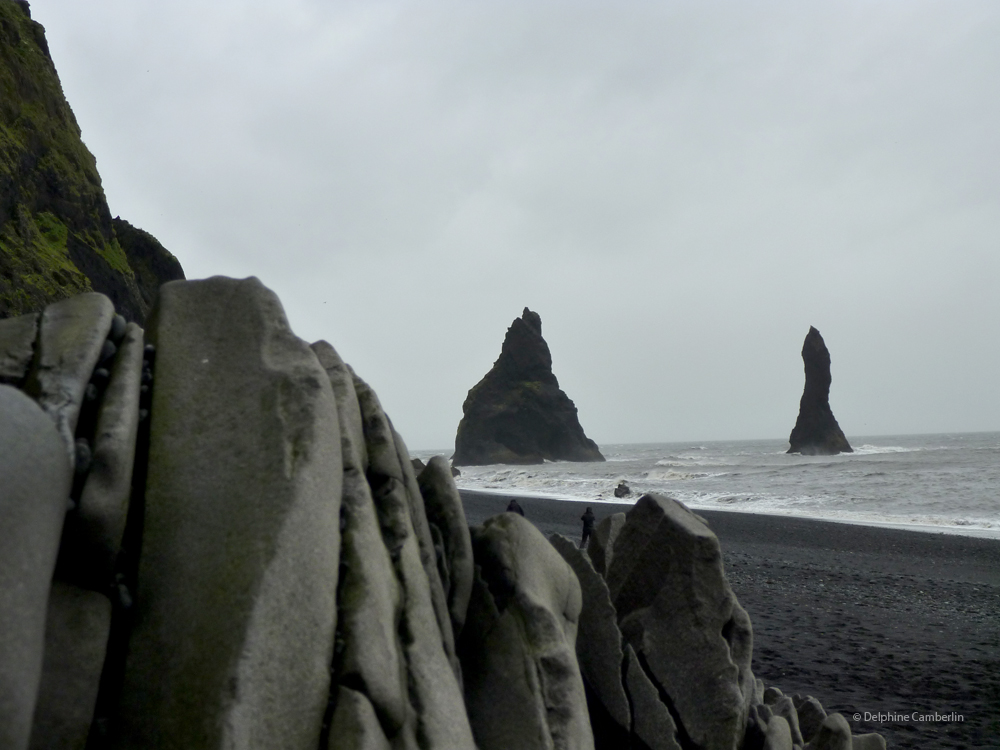
Snæfellsnes Peninsula — often called "Iceland in miniature": in 90km of coastline, the peninsula contains a glacier (Snæfellsjökull — Jules Verne's entry point for Journey to the Centre of the Earth), lava fields, sea caves, seal beaches, black sand, fishing villages, and a mountain that appears in the sky above the far end of Reykjavík's bay on clear days. It is accessible as a long day trip from Reykjavík or a 2-day loop, and it concentrates the essence of Iceland's landscape more efficiently than any other area.
North Iceland — Akureyri, Iceland's second city (population: 20,000), sits at the head of Iceland's longest fjord and functions as the gateway to the north. Lake Mývatn, 90km east of Akureyri, is the most concentrated geothermal landscape in Iceland outside the Geysir area: pseudocraters, lava formations, boiling mud pools, and the Mývatn Nature Baths (a less crowded, less expensive, and equally beautiful alternative to the Blue Lagoon). Dettifoss waterfall — in the northeast, accessible from the Ring Road — is Europe's most powerful waterfall by volume, a thundering curtain of brown glacial melt dropping 44 metres into a canyon of black basalt. The Húsavík Whale Watching capital has the highest humpback whale sighting success rate in Europe (late May to September).
The Westfjords — the most remote and least visited region of Iceland, and for those willing to make the drive (or fly into tiny Ísafjörður), the most rewarding. The fjords here are deeper, more dramatic, and entirely unpopulated — the population of the entire Westfjords region is around 7,000 people. The Dynjandi waterfall (a series of cascades that widens from 30m at the top to 60m at the base, entirely alone in a landscape of mountains and sea) is the most beautiful waterfall in Iceland that most visitors never see. The bird cliffs at Látrabjarg — the westernmost point of Europe, with millions of nesting seabirds including puffins so unafraid of humans that you can sit a metre from them — are extraordinary. The Westfjords require at minimum 3 extra days and ideally a week, and they will be the most memorable part of your Iceland trip.
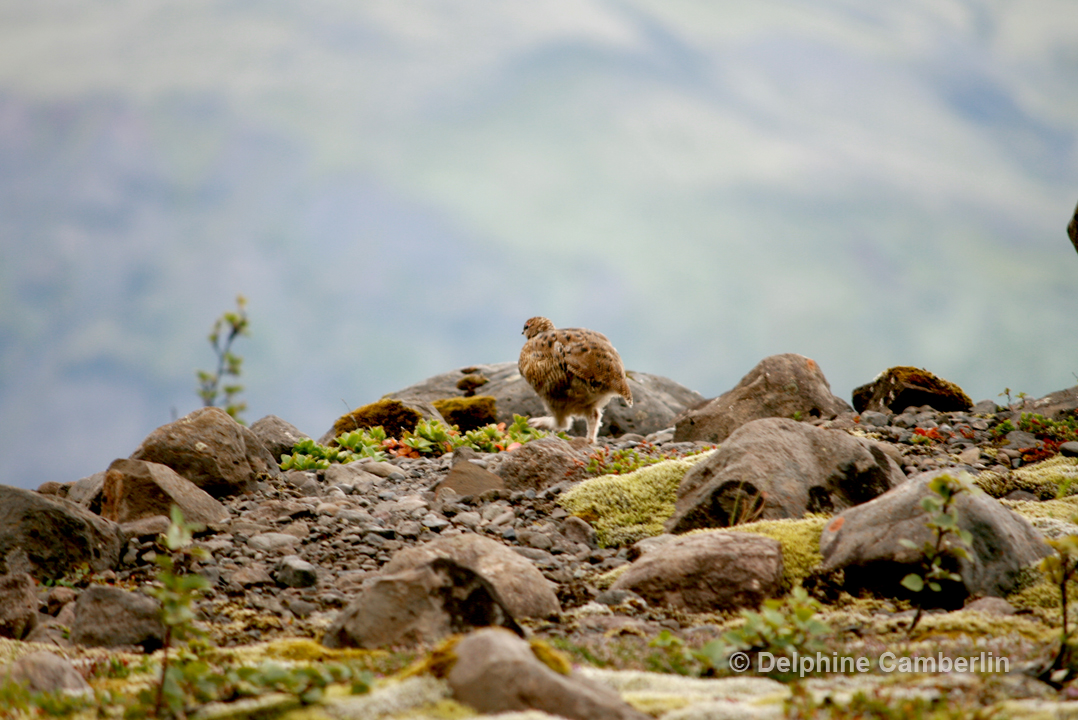
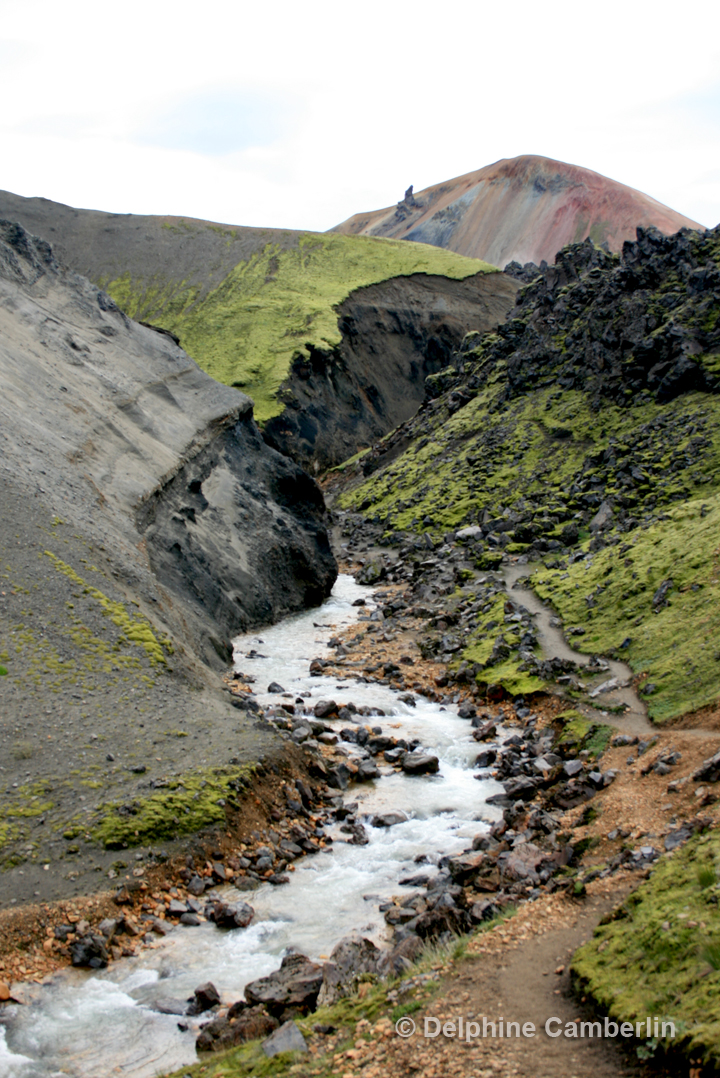
The Highlands (Miðhálendi) — accessible only by 4WD on F-roads (unsealed mountain tracks, open July to September). The Landmannalaugar area — a landscape of multicoloured rhyolite mountains, natural hot springs rising from the river, and the start of the Laugavegur hiking trail (55km, 4 days, one of the world's great hikes) — is the most extraordinary highland destination. Þórsmörk, at the end of the Laugavegur trail, is a green valley surrounded by three glaciers that feels like another planet. Do not attempt Highland F-roads in a standard rental car — it is illegal, dangerous, and will invalidate your insurance.
Iceland sits on the Mid-Atlantic Ridge — the boundary between the North American and Eurasian tectonic plates — and the geothermal energy this produces heats 89% of the country's homes, powers its electricity system, and creates hot springs throughout the landscape. The hot pool (sundlaug) is not a tourist attraction in Iceland; it is a social institution, equivalent to the Viennese café, the Parisian bistro, or the English pub. Every inhabited area has one, Reykjavík alone has 17, and the Icelandic ritual of sitting in a hot pot (a small circular pool at 38–42°C) and gossiping with neighbours is the social backbone of Icelandic community life. Entry costs around 1,000–1,500 ISK (€7–10). Etiquette: shower thoroughly without a swimsuit before entering, as is required and enforced by the staff.
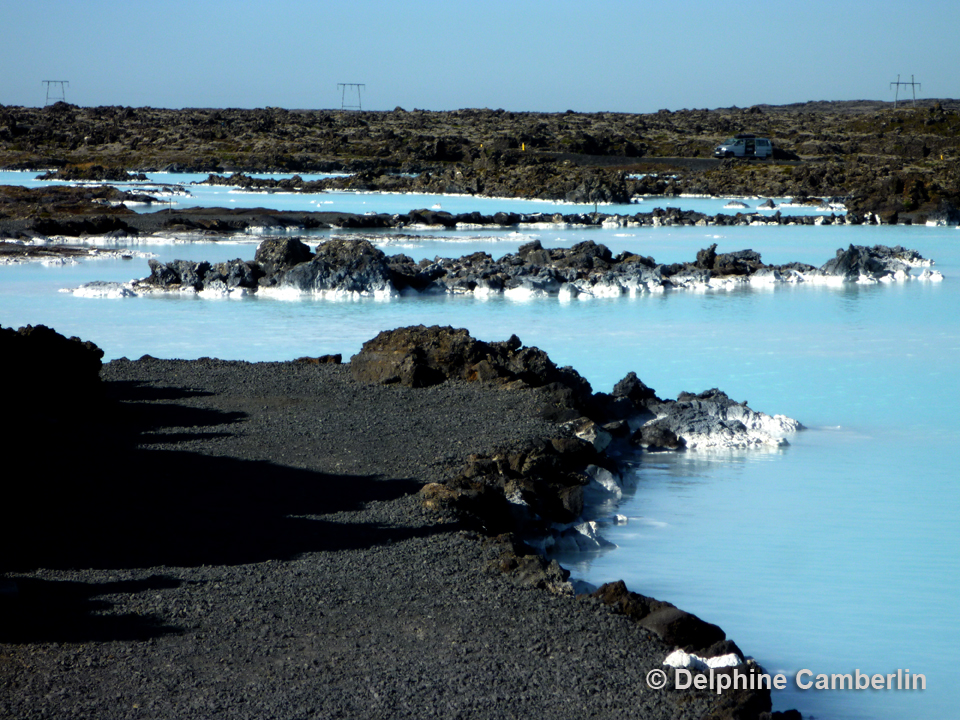
The Blue Lagoon — the most famous geothermal experience in Iceland, and a genuine experience despite its tourist saturation. The silica-rich, mineral-blue water at 37–40°C in a lava field near the Reykjanes Peninsula is visually extraordinary, and the spa facilities are excellent. But: it is expensive (€80–120+), it must be booked in advance, and it is very crowded. It is located 45 minutes from Reykjavík and is most conveniently visited en route to or from Keflavík Airport. The water quality is consistent throughout the year.
The Sky Lagoon — the newest premium lagoon experience, opened in 2021 just outside Reykjavík, with an infinity edge looking out over the North Atlantic. More manageable than the Blue Lagoon in terms of crowds, and the view is remarkable. Includes the traditional seven-step ritual — lagoon, cold plunge, sauna, steam, scrub, shower, lagoon again — that represents an authentic version of Icelandic bathing culture.
The Secret Lagoon (Flúðir) — Iceland's oldest public pool (1891), on the Golden Circle, with a natural geothermal pool surrounded by small geysers and hot springs. Far cheaper (€20), far less crowded, and with much more of the authentic Iceland about it than the tourist lagoons.
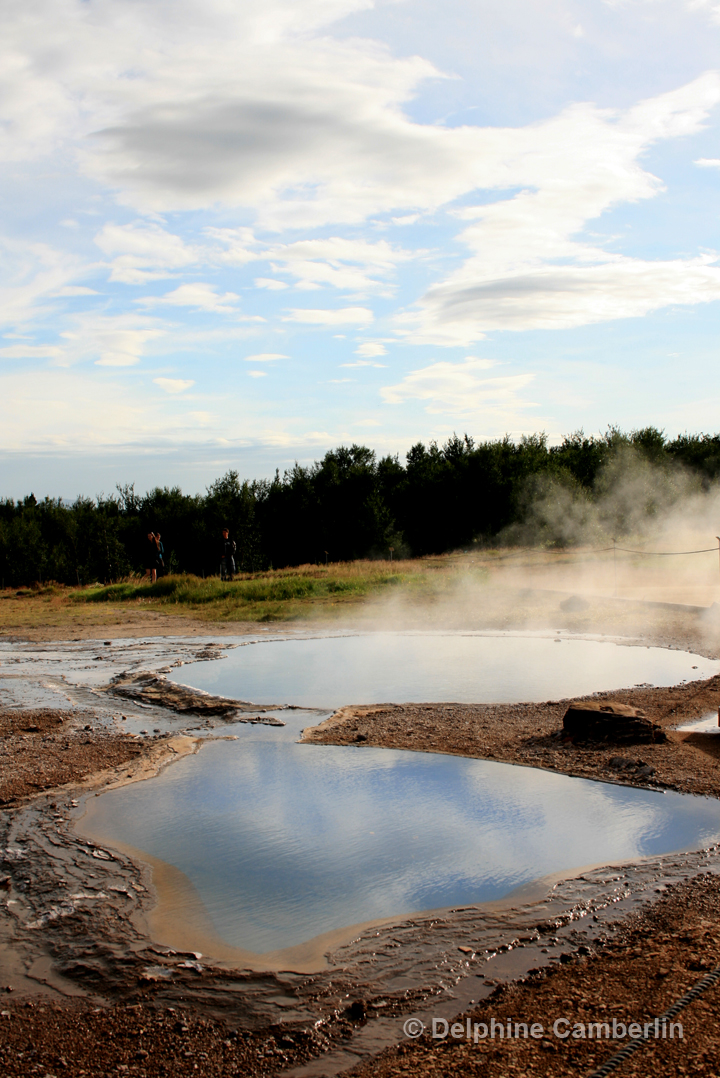
Wild hot springs — the most rewarding geothermal experiences require some effort. The Reykjadalur hot river (a 3km hike from Hveragerði, then bathing in a natural hot river in a geothermal valley) is the finest accessible wild bathing experience. The Westfjords contain several roadside hot pots (including Hellulaug, a small pool by the sea with humpback whale views) that are entirely free, entirely undeveloped, and entirely memorable. The Highland springs at Landmannalaugar rise from the river itself at 40°C, surrounded by multicoloured rhyolite mountains.
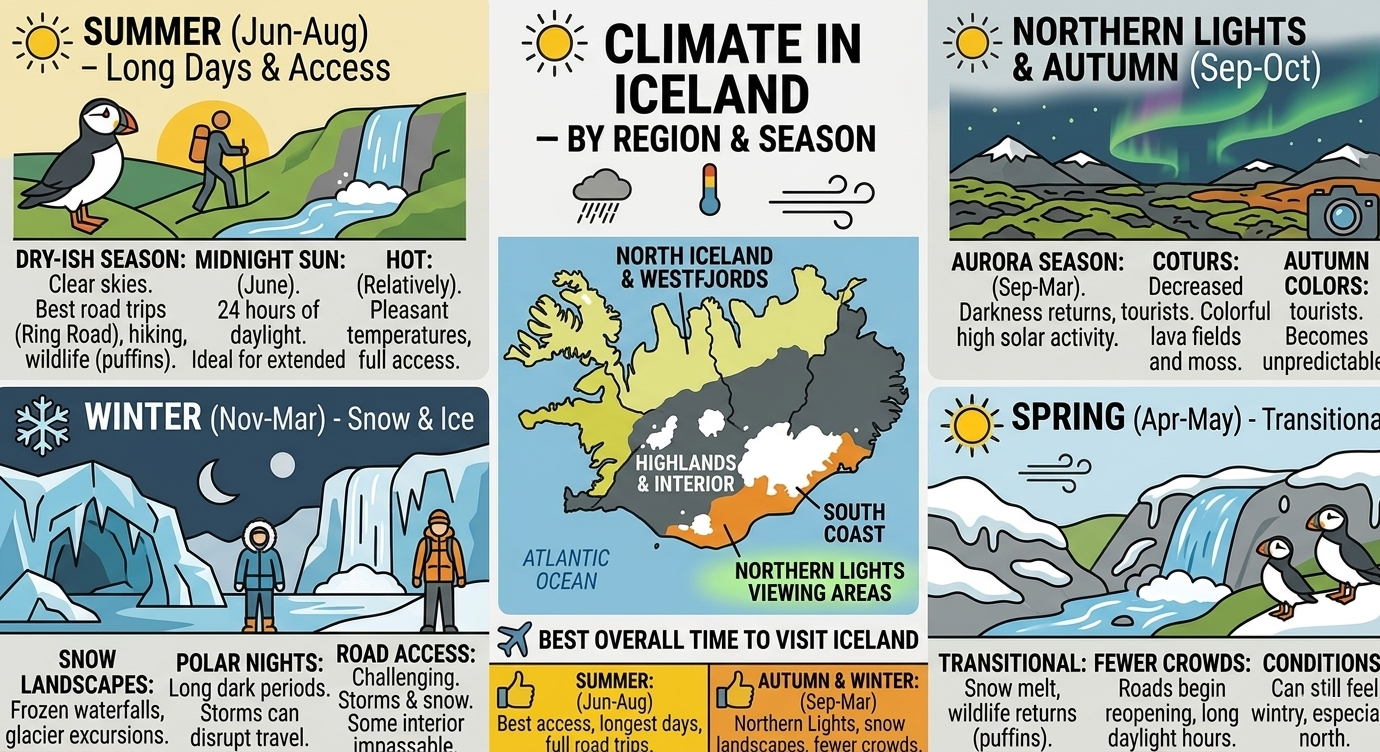
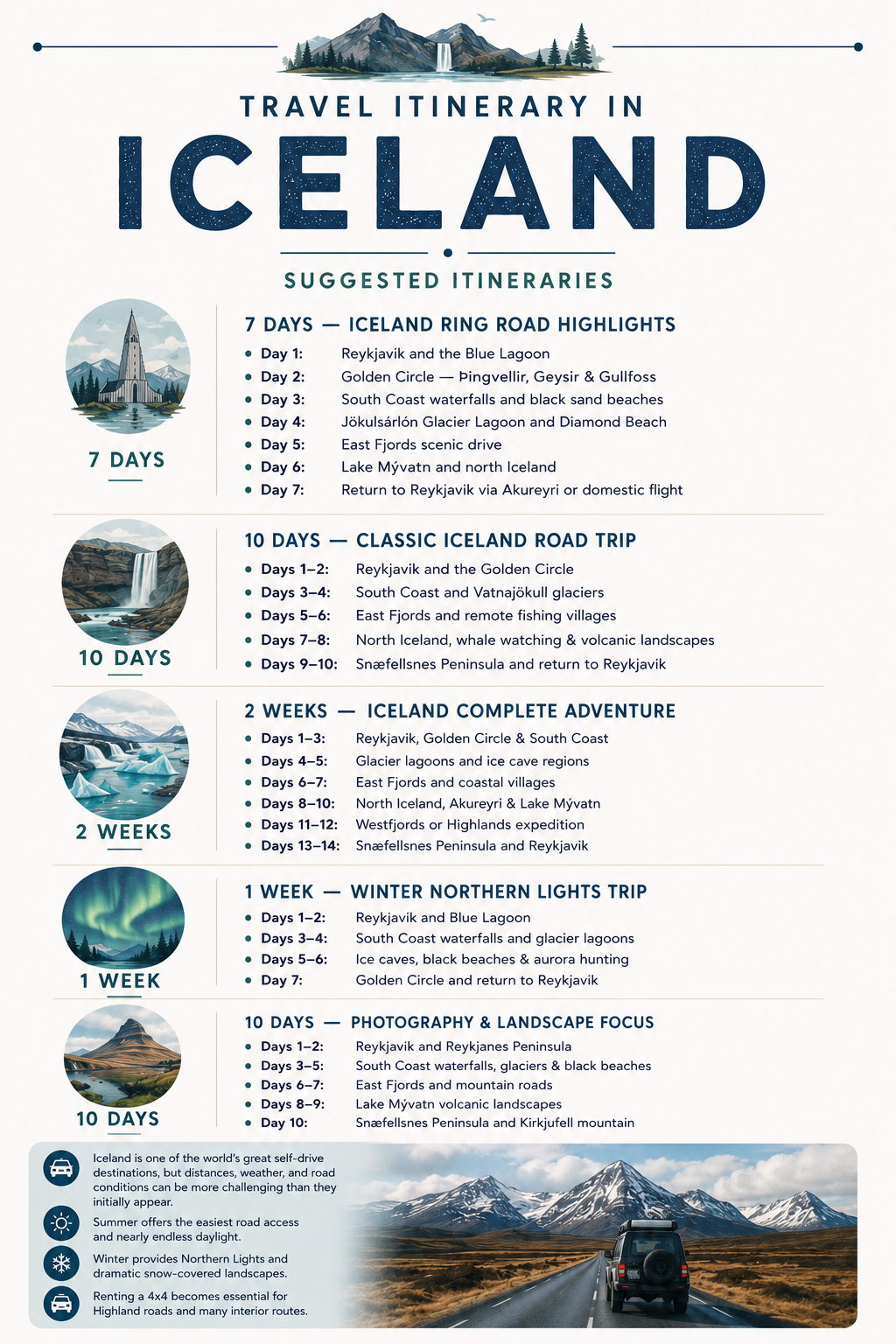
Iceland is one of the world’s great self-drive destinations, but distances, weather, and road conditions can be more challenging than they initially appear. Summer offers the easiest road access and nearly endless daylight, while winter provides Northern Lights and dramatic snow-covered landscapes. Renting a 4x4 becomes essential for Highland roads and many interior routes.
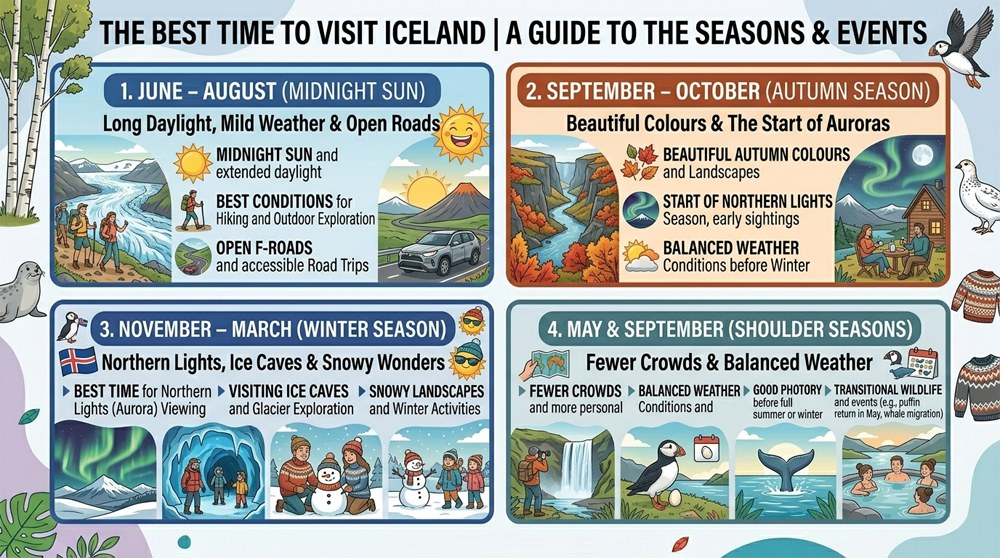
Midnight sun, mild weather, open roads, and best conditions for hiking and road trips.
Beautiful autumn colours and the start of Northern Lights season.
Best time for Northern Lights, ice caves, and snowy landscapes, though daylight hours are short.
Excellent shoulder seasons with fewer crowds and balanced weather conditions.
Skip the SIM hunt on arrival. A travel eSIM lets you activate local data before you board — no plastic card, no roaming fees, instant setup. Roamic covers this destination and most countries in the Galerie.
Get Your Travel eSIM →A glacier hiking tour on Sólheimajökull, a dedicated aurora photography tour, and a Golden Circle day trip are three experiences that genuinely benefit from a specialist local guide — I'd book all three in advance.
Iceland works well as a stopover on transatlantic routes — Kiwi.com often finds clever combinations that include Reykjavík as an intermediate stop without adding significant cost to a Europe–US or US–Europe journey.
Stock Photography
Browse and license the full Nature photography collection — available for commercial and editorial use on Shutterstock.
View on Shutterstock →
Stock Photography
Browse and license the full Permaculture photography collection — available for commercial and editorial use on Shutterstock.
View on Shutterstock →