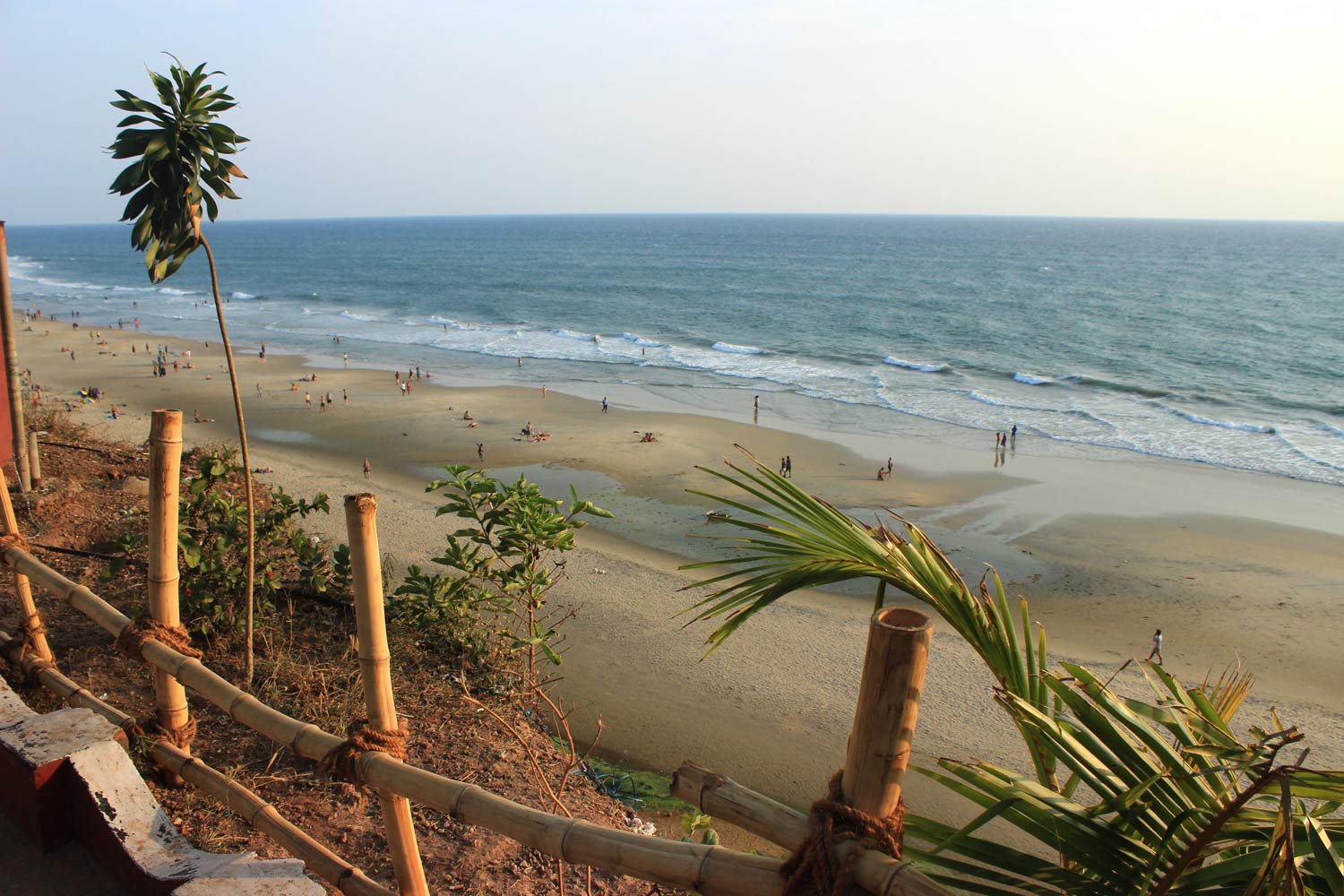
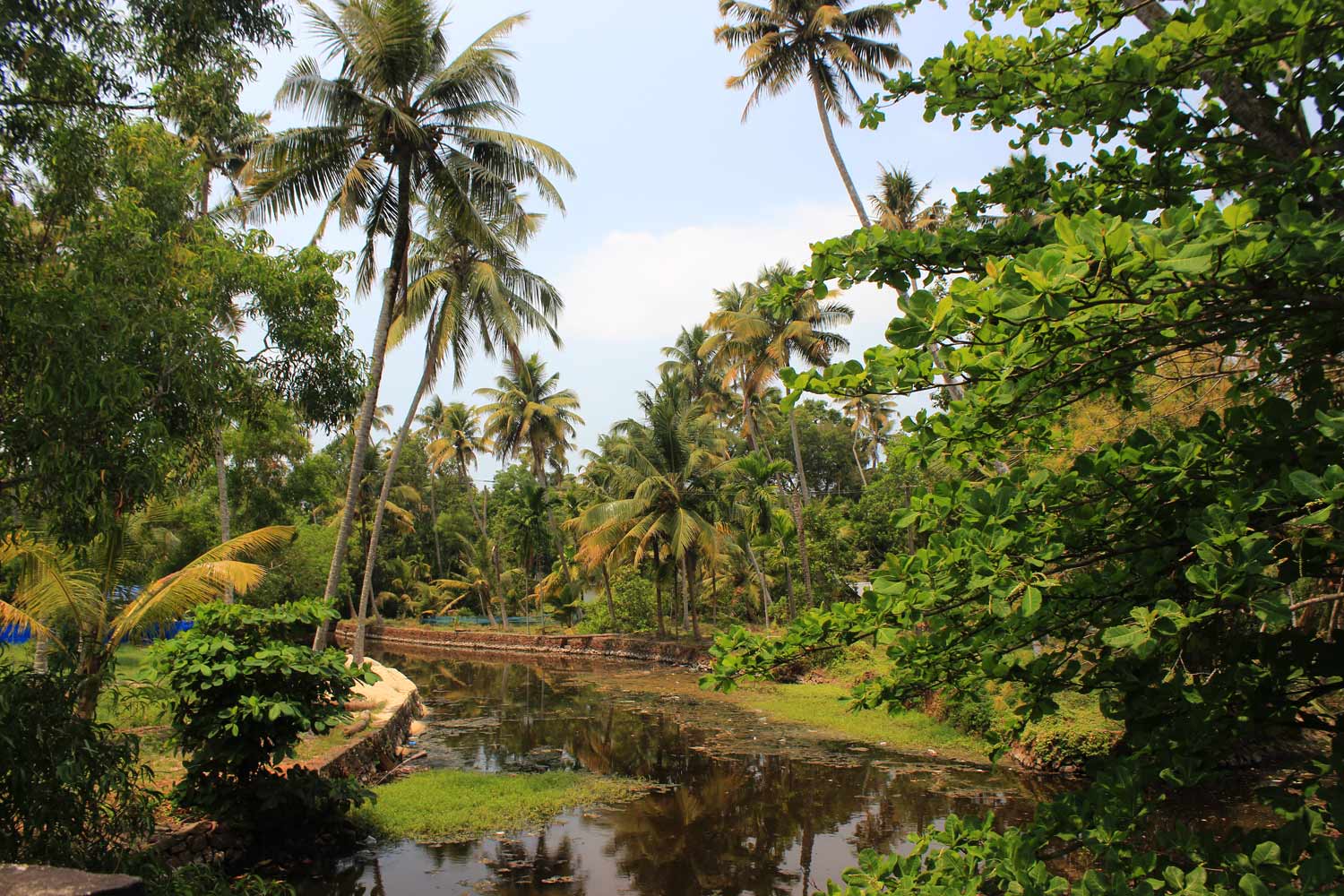
India is visually overwhelming in the best possible way — a country where colour, texture, light, and human activity combine at an intensity that exists nowhere else. Kerala in particular is a photographer's paradise: the backwater canals of Alleppey where houseboats drift through palm-fringed waterways, the cliff-top beaches of Varkala where the light off the Arabian Sea turns golden and soft, the kathakali dance performances in Kochi with their extraordinary makeup and expression, and the ancient spice markets of Fort Kochi. This is a corner of India that rewards slow travel and the patience to let scenes develop naturally.
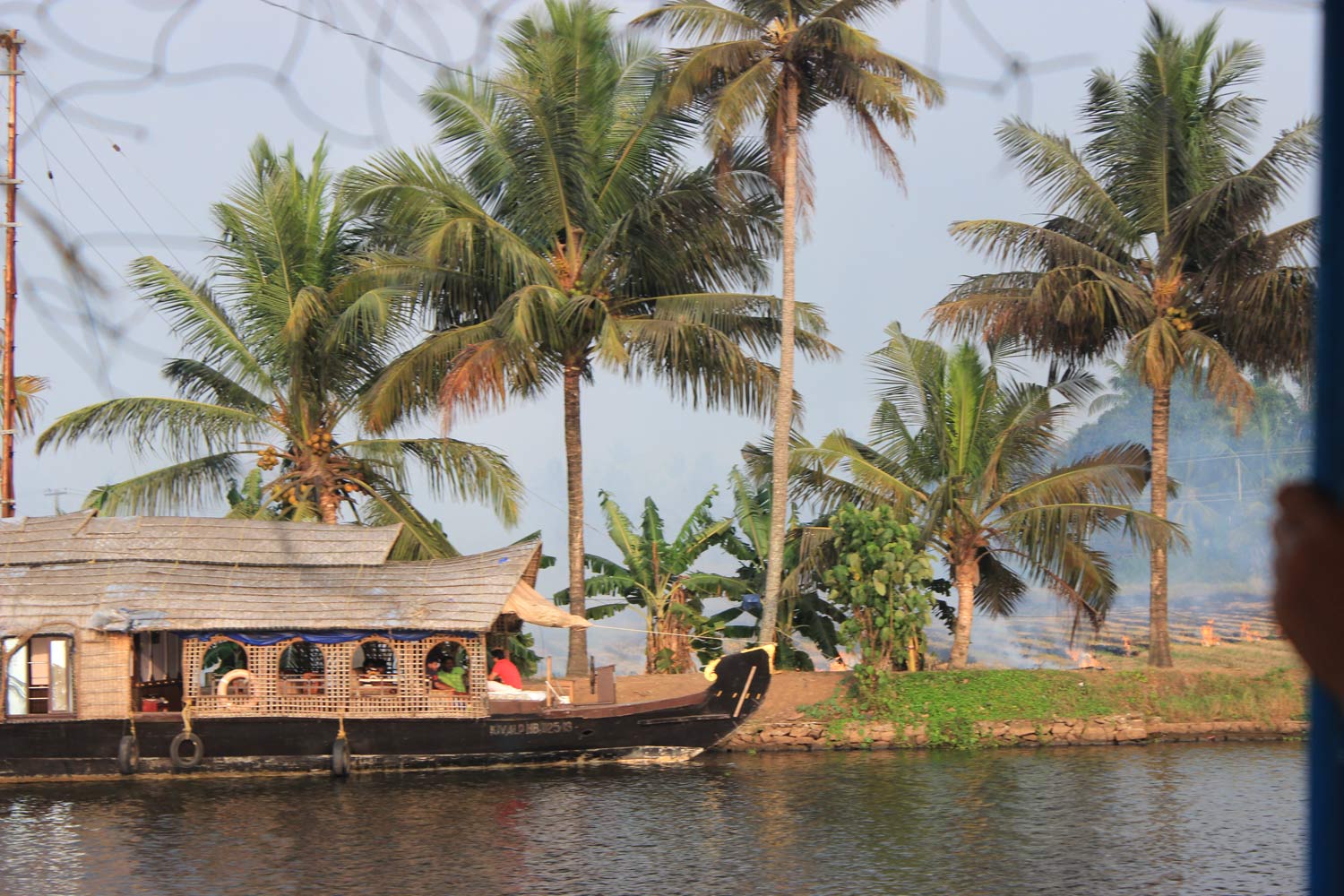
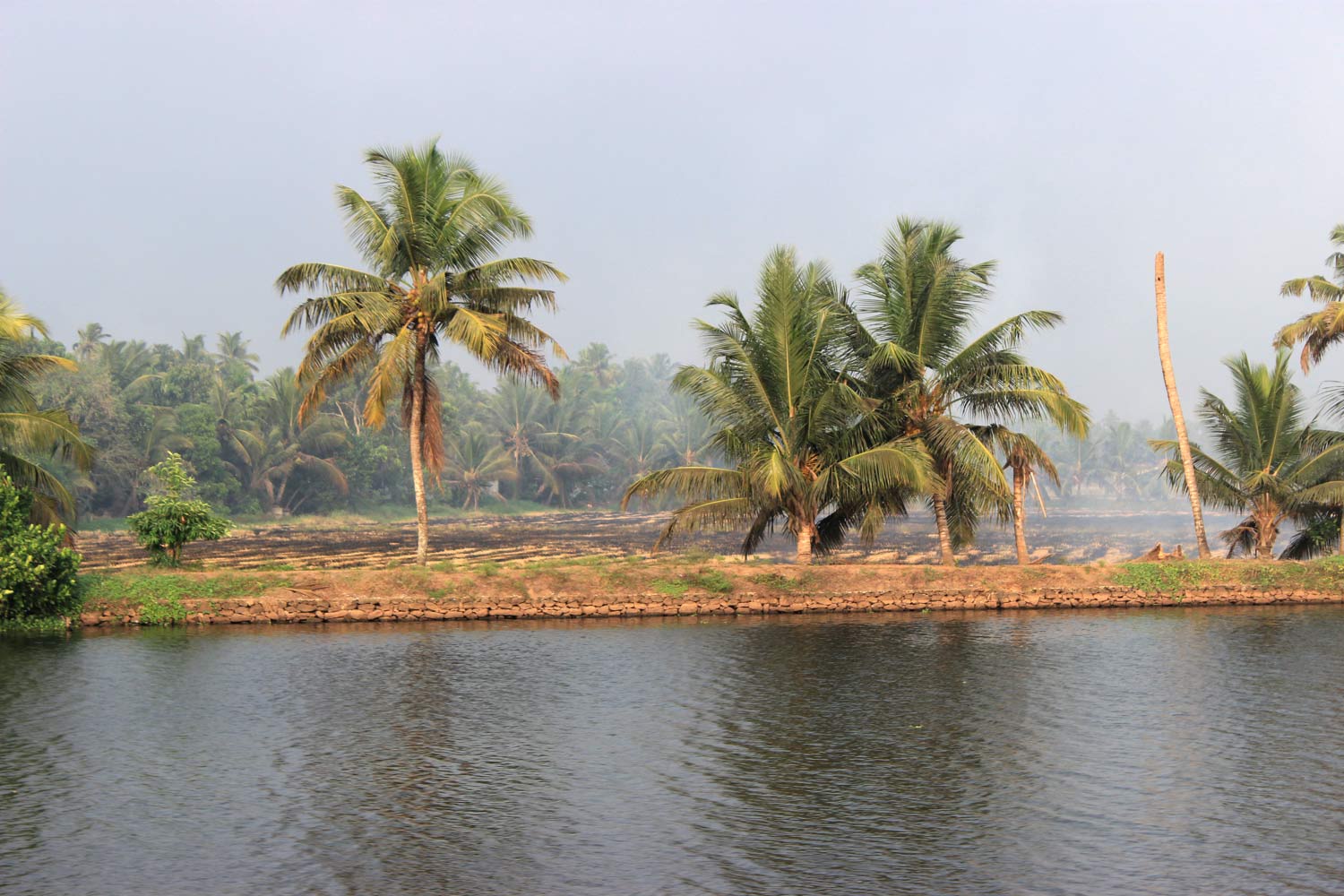
● Kerala backwaters — renting a houseboat for a night on the Alleppey backwaters puts you on the water at dawn, which is exactly when the light is right. Fishermen casting nets, children bathing from wooden jetties, water hyacinth floating on still channels — it's one of those locations where you can't take a bad photograph.
● Varkala cliffs — the red laterite cliffs above the beach catch the setting sun beautifully, and the contrast between the deep orange rock and the turquoise sea below is a gift for landscape photographers. The cliff-top path at golden hour is the best evening walk I had in India.
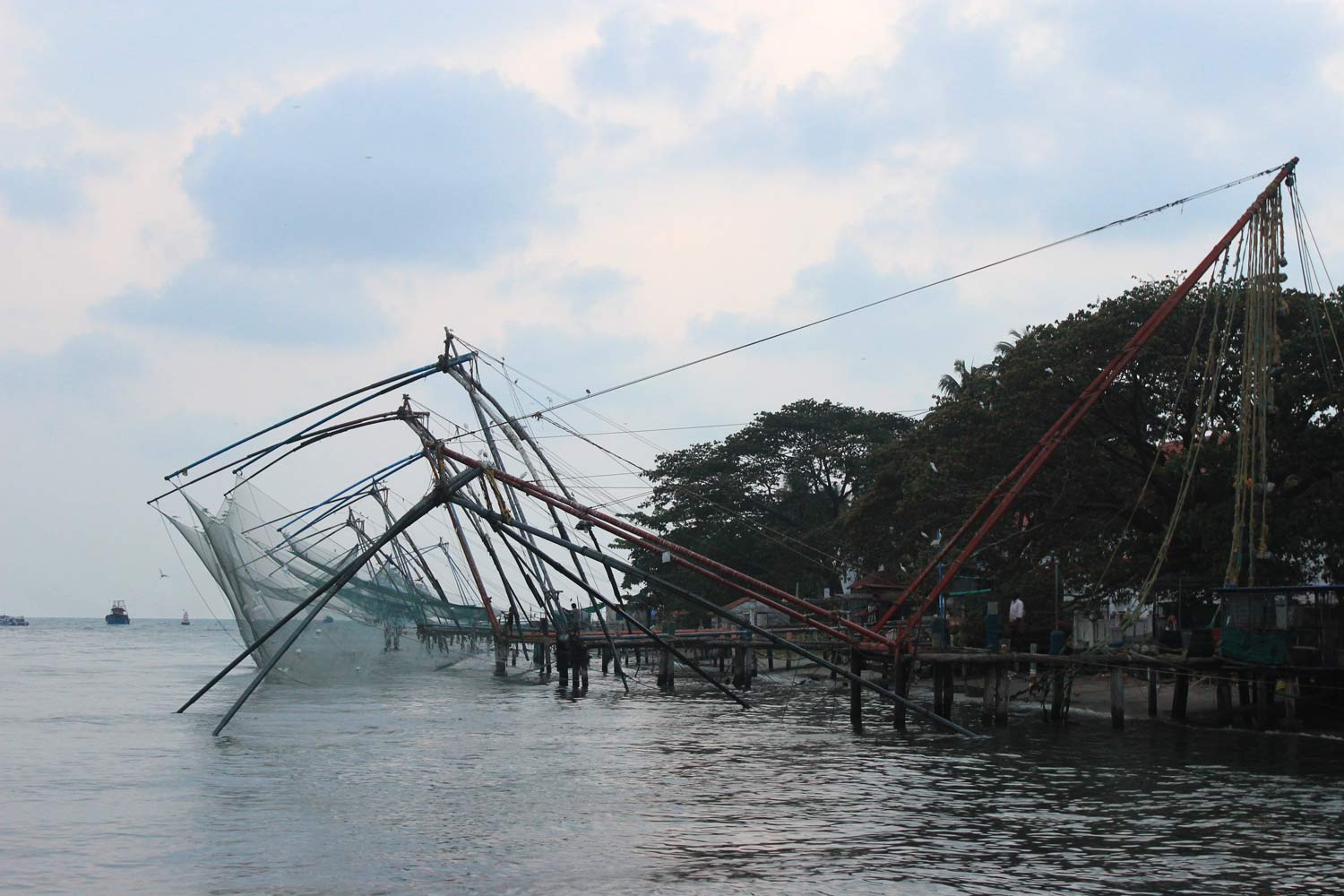
● Fort Kochi — the Chinese fishing nets are iconic for a reason, and they're most atmospheric at dawn when the fishermen are actually working them. The colonial architecture of the Dutch and Portuguese quarters adds another layer to an already visually rich city.
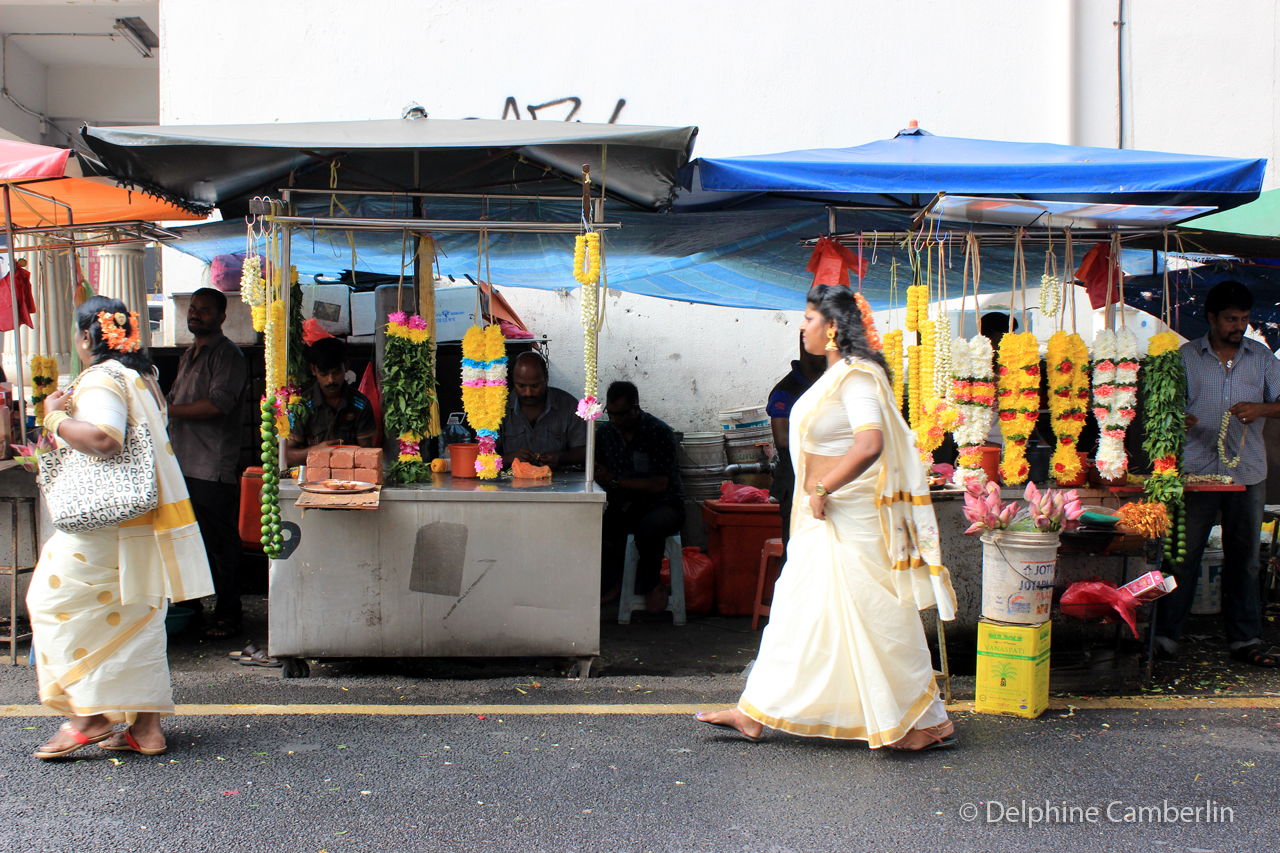
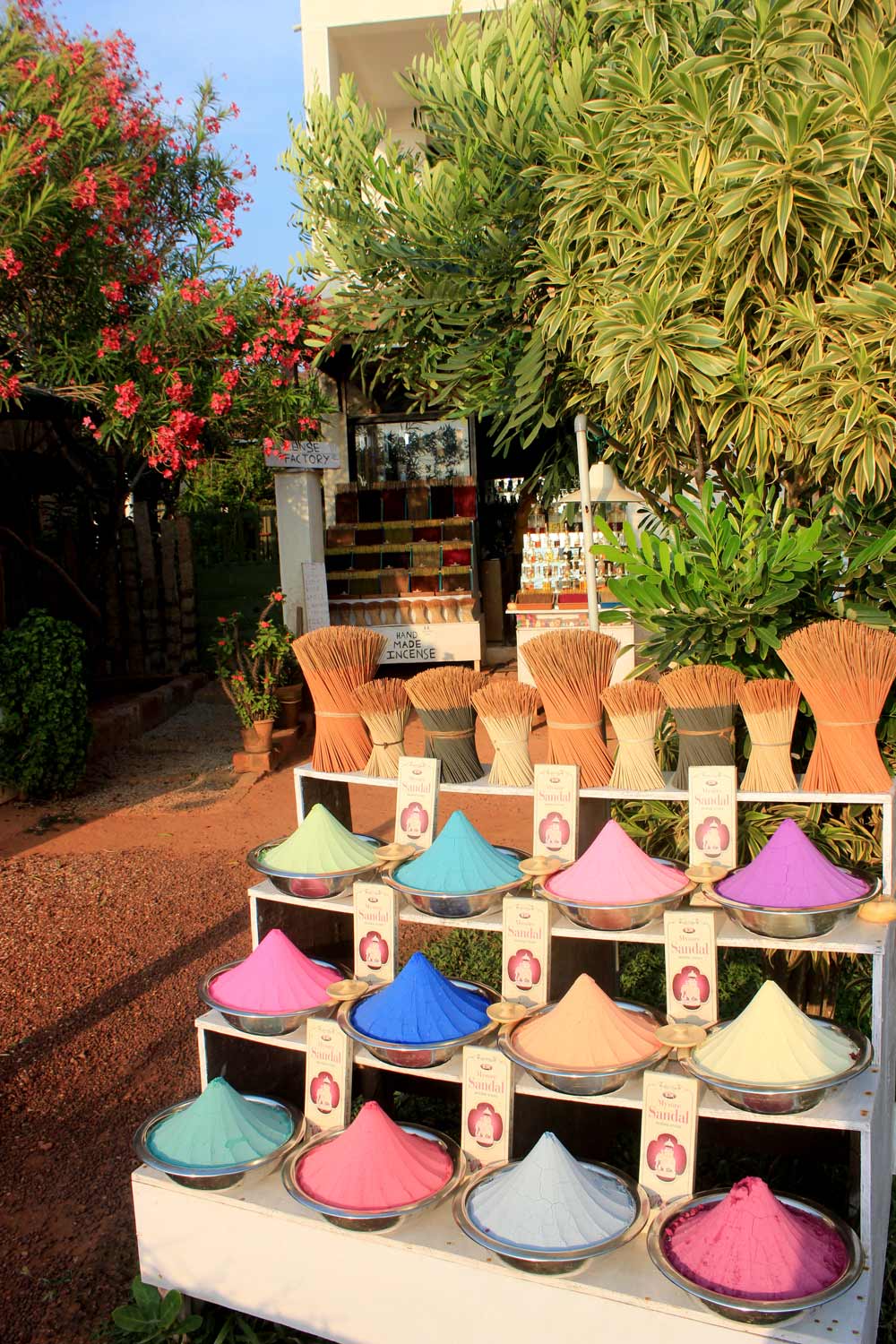
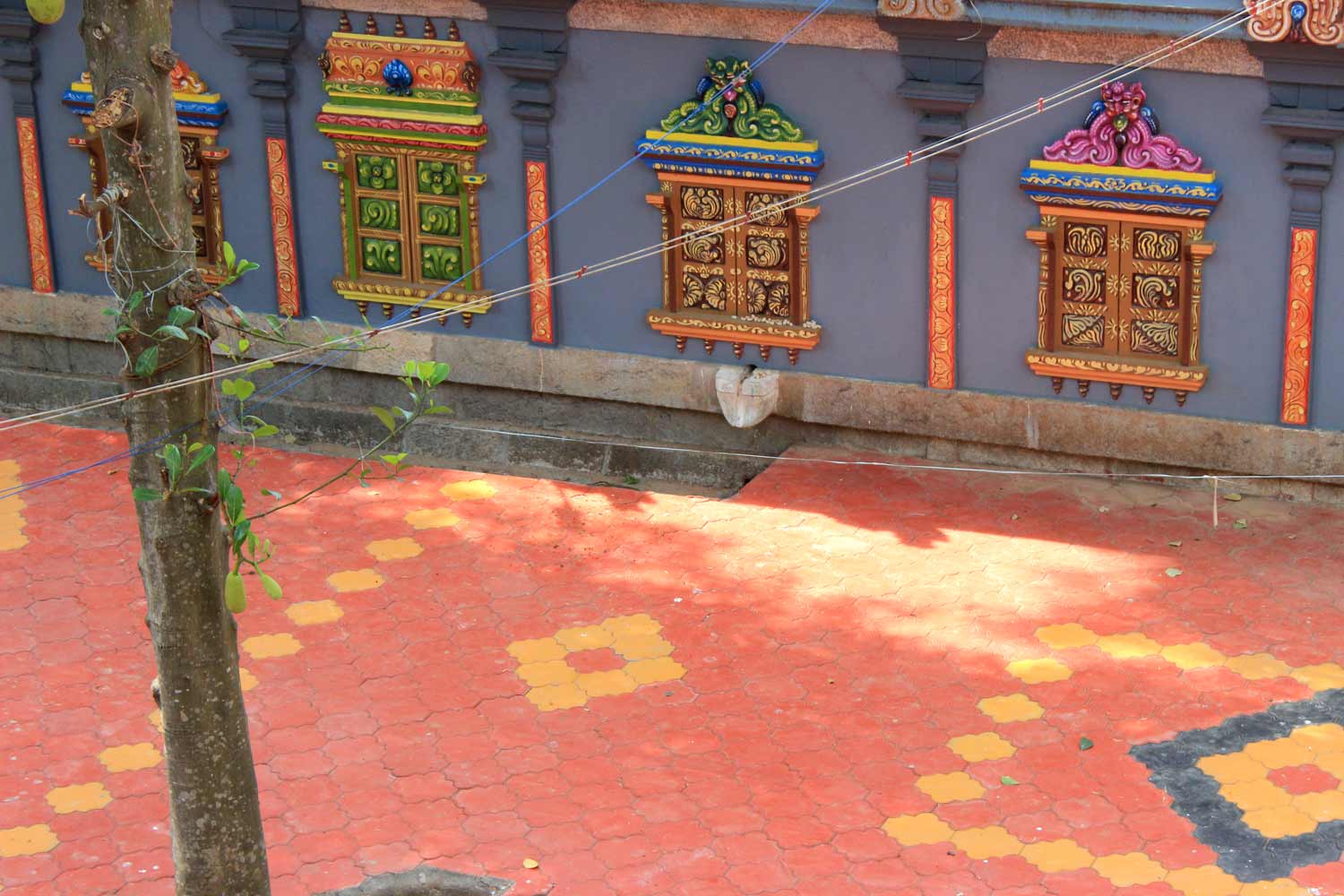
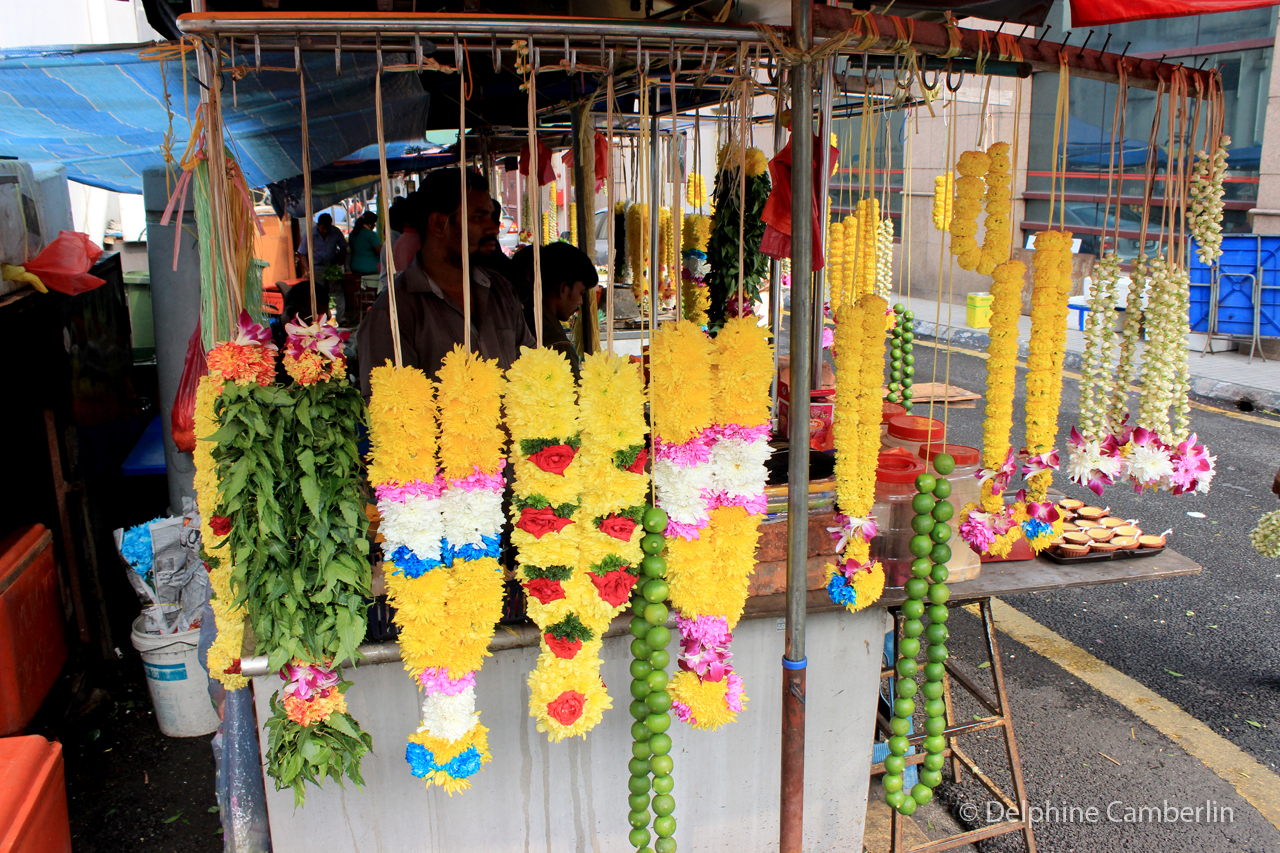
● Temple murals and flower markets — India's ritual and decorative arts are extraordinary photographic subjects. Kolam patterns drawn fresh each morning on doorsteps, temple murals depicting Hindu mythology in vivid colours, and the flower garlands at Kochi's markets are all deeply photogenic.
India rewards those who slow down. Moving quickly between cities on a tight itinerary produces stress and surface-level impressions; staying in one region for a week or more produces photographs and experiences that feel genuinely personal. Kerala is a particularly good starting point for first-time visitors — it's India at a more manageable pace, with excellent infrastructure for travellers.
| 🗓️ | Recommended stay | 14 – 21 days |
| 🎒 | Budget / day | €25–45 / $28–50Guesthouse, thalis & street food, trains |
| 🥂 | Luxury / day | €100–250 / $110–275Heritage hotel, Ayurvedic retreat, private driver |
| 📅 | Best months | October – March |
| 🌡️ | Climate | 22–34°C (Kerala coast)Humid · Avoid Apr–Sep monsoon season in the south |
| ✈️ | Visa | e-Visa required ($25–80 depending on duration) · Apply minimum 4 days before travel |
| 💵 | Currency | INR · Cards in cities · Cash essential everywhere else |
| 🚂 | Getting around | Trains (book on IRCTC well in advance!) · Auto-rickshaw · Local buses · Rapido / Ola apps |
| 🛡️ | Safety | Medium — generally safeStay alert in crowds · Use trusted transport apps |
| 🍜 | Must-try food | Kerala fish curry, dosa, appam, biryani, fresh coconut water straight from the shell |
| 💬 | Language | English widely spoken in tourist areas · Hindi / Malayalam in Kerala · A respectful "Namaste" opens doors |
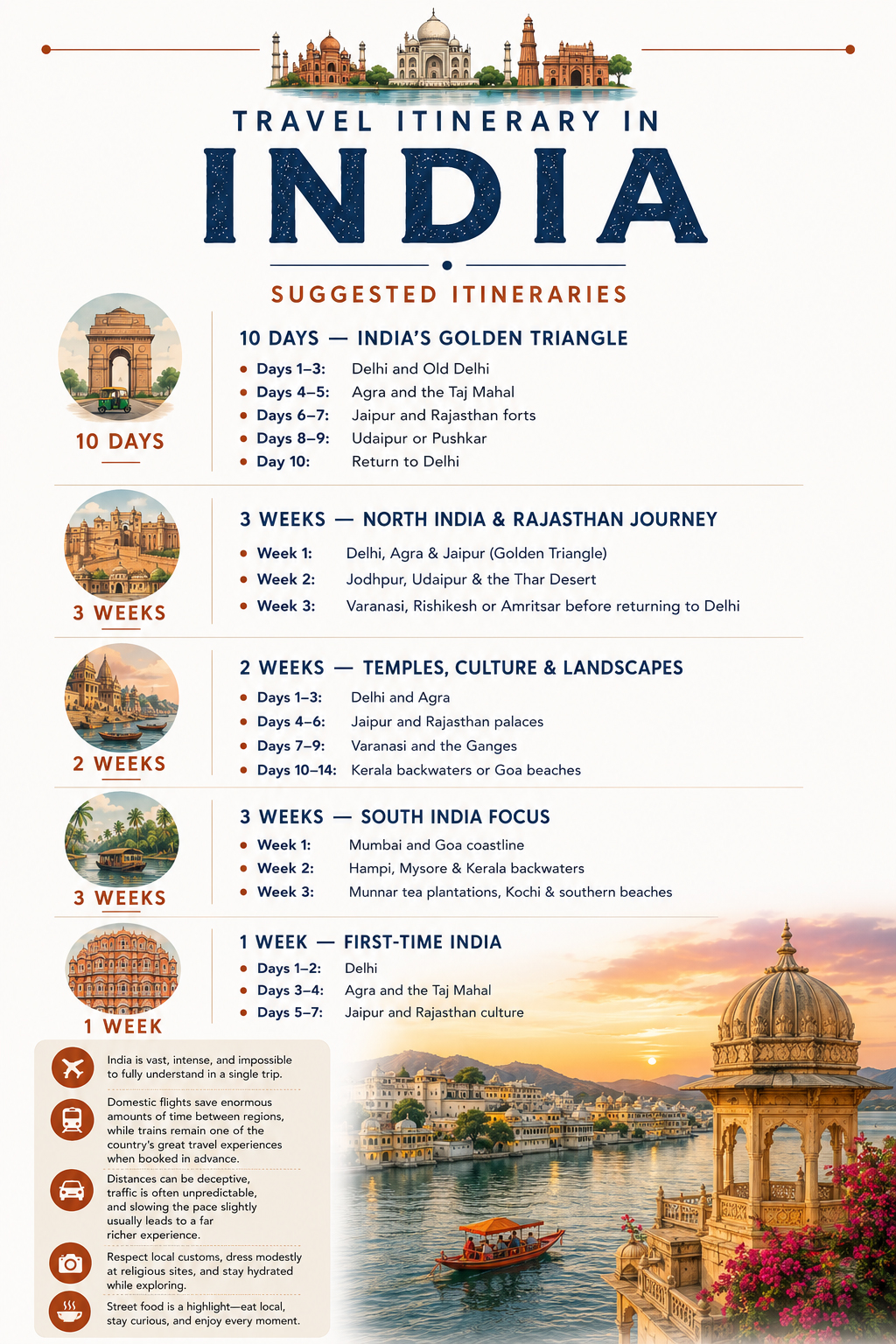
The Golden Triangle — Delhi, Agra, and Jaipur — is India's most well-worn tourist circuit, and it remains well-worn for a reason. No other journey delivers this concentration of UNESCO World Heritage Sites, historical layers, and visual intensity within such a manageable distance. It is India on full volume, and it is the right place to start for a first visit.
Delhi (New Delhi & Old Delhi) — the capital is two cities simultaneously. New Delhi with Humayun's Tomb and the Qutub Minar; Old Delhi — the Mughal city — with the Red Fort, the Jama Masjid, and the extraordinary Chandni Chowk market quarter where streets so narrow that motorcycles barely fit are filled with spice sellers, street food vendors, and 400 years of daily chaos. Eat the chole bhature, the parathas, the jalebis dripping with syrup.
Agra & the Taj Mahal — the Taj is one of the rare cases where the cliché is entirely earned. No photograph prepares you for the scale at dawn, when the sky is still lavender and the reflection pool is mirror-still. Come at opening time. Come again at sunset. And walk to the Mehtab Bagh across the river — the view of the Taj at golden hour with no crowds is the one worth waiting for.
Varanasi — the city on the Ganges — one of the world's oldest continuously inhabited cities, and India's holiest. The ghats at dawn are unlike anywhere else: pilgrims bathing in the sacred river, priests performing puja, flower offerings floating on the current, and cremation fires burning continuously at the Manikarnika Ghat. Varanasi is confrontational, intense, occasionally overwhelming, and unforgettable. Take a boat on the river at dawn. Stay two nights minimum.
Rajasthan is the most visually extravagant region in a country that does not do understatement. The "Land of Kings" was ruled for centuries by Rajput warrior clans who built palaces, forts, and cenotaphs on a scale that turns every horizon into a composition. The five major cities each have a distinct character and colour palette.
Jaipur — the Pink City — repainted pink in 1876 to welcome the Prince of Wales. The City Palace still functions as a royal residence, the Hawa Mahal (Palace of Winds) with its 953 tiny windows is the most photographed facade in Rajasthan, and the hilltop Amer Fort is one of the great fort complexes of northern India.
Udaipur — the City of Lakes — the most romantic city in India, built around a series of artificial lakes with white marble palaces seemingly floating on them. The Lake Palace Hotel sits in the middle of Lake Pichola and was the filming location for the James Bond film Octopussy. The evening boat ride watching the palaces turn gold at sunset is essential.
Jodhpur — the Blue City — the old city is painted entirely in shades of blue. The Mehrangarh Fort, rising 120 metres on a volcanic rock outcrop, is one of the most formidable fort complexes in India. The view from its ramparts over the blue-washed city below is one of India's great vistas.
Jaisalmer — the Golden City — built entirely from golden-yellow sandstone on the edge of the Thar Desert. The fort town is still inhabited and the havelis with their extraordinary carved sandstone facades are astonishing. Camel treks into the sand dunes at sunset, sleeping under desert stars, remain extraordinary.
South India is a different country from the north — culturally, linguistically, and culinarily. The Dravidian languages bear no relation to Hindi. The food changes completely: rice replaces wheat, coconut oil replaces ghee, seafood replaces lamb. The temples are Dravidian gopuras (towering gateways covered in thousands of coloured figures) rather than Mughal domes. And the pace of life, particularly in Kerala, drops to something approaching the genuinely unhurried.
Kerala — the backwaters of Alleppey are best experienced on a traditional kettuvallam houseboat, sleeping on the water as the paddy fields glow in the evening light. The cliff beaches of Varkala (red laterite cliffs above the Arabian Sea) are among the finest beach settings in India. Kochi (Cochin) has extraordinary cultural layering — 14th-century Chinese fishing nets, the Portuguese church, the Dutch Palace, the Jewish Quarter.
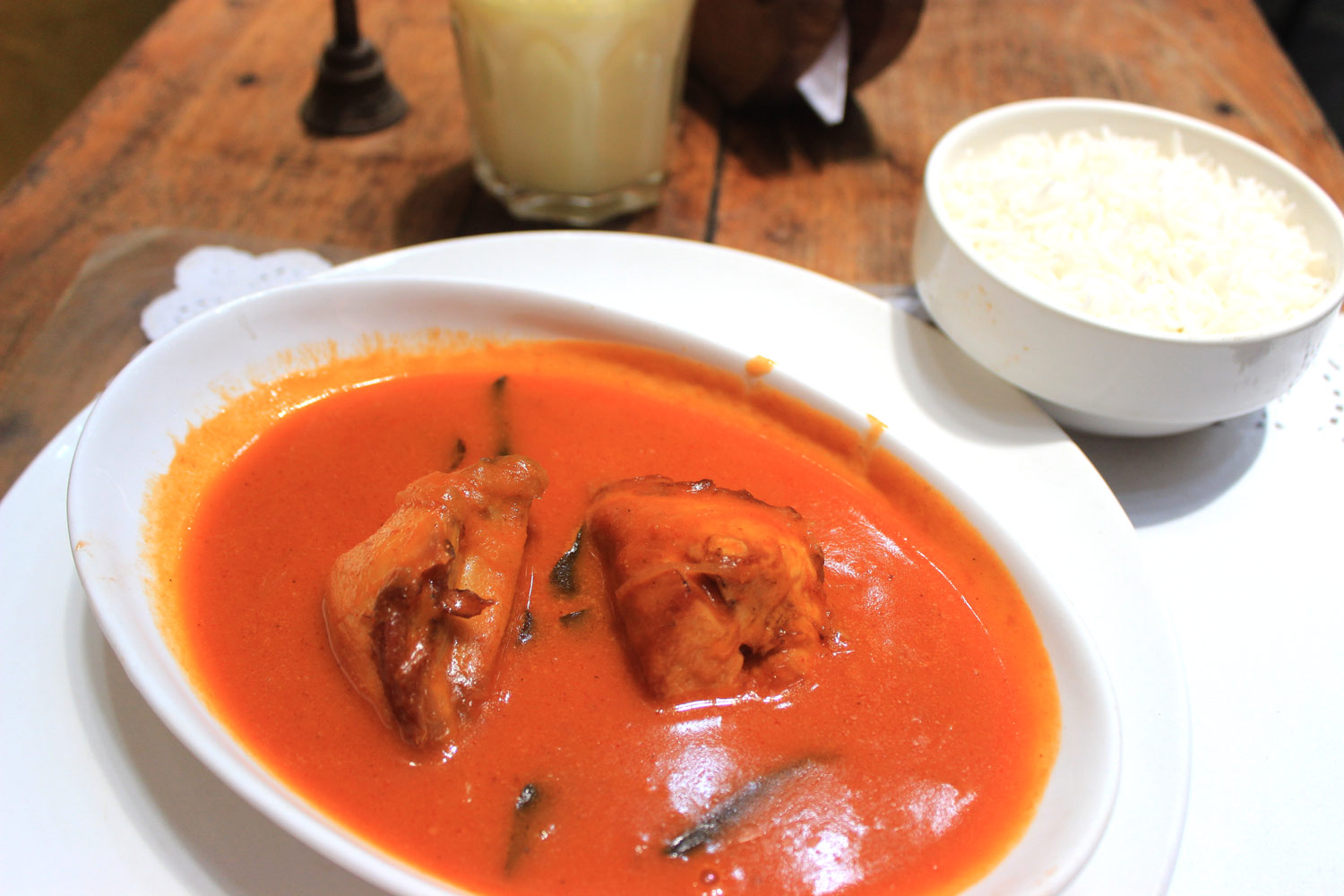
Goa — the most Portuguese of Indian states. North Goa beaches are busier and nightlife-oriented; South Goa beaches (Palolem, Agonda, Patnem) are quieter and better suited to peaceful beach time. The fish curry rice — fresh fish in a sour coconut curry with rice and a cold Kingfisher beer at a beach shack — is one of India's great simple meals.
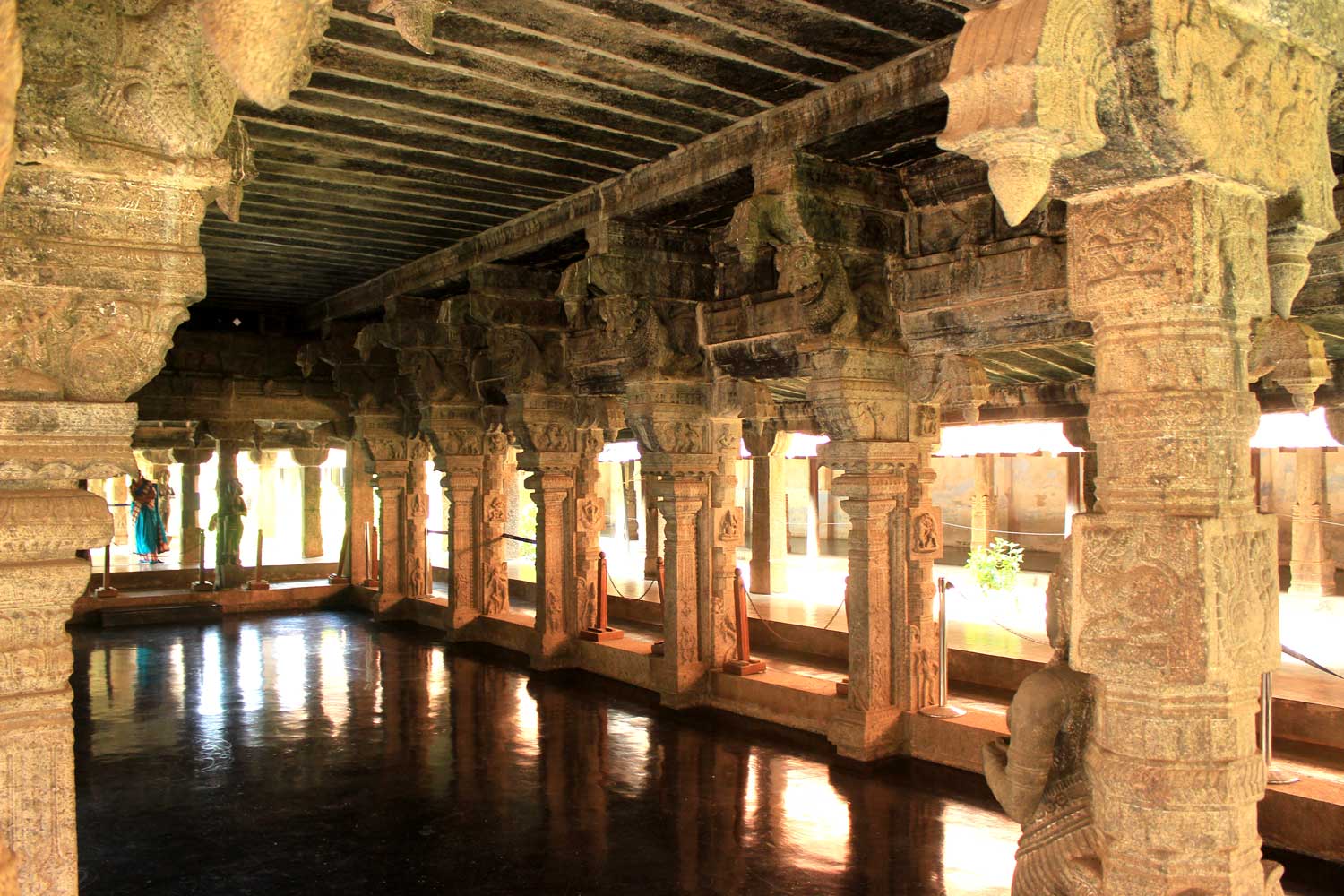
Tamil Nadu — Madurai's Meenakshi Amman Temple is one of the largest in India, its four gopuras rising 50 metres and covered in over 14,000 painted figurines. Mahabalipuram's 7th-century stone carvings and the Shore Temple directly on the Bay of Bengal are among the finest examples of Pallava art.
Ladakh — the most remote and extraordinary region accessible in India: a high-altitude (3,500–5,000m) Buddhist kingdom in the far north, sandwiched between the Himalayas and the Karakoram range. The landscape is lunar — bare brown mountains under deep blue sky, glacial rivers, and ancient monasteries perched on impossible cliff faces. Leh is the base for monastery visits (Thiksey, Hemis, Diskit), the extraordinary Pangong Tso lake, and the Nubra Valley with its Bactrian camels at 3,000 metres. Best visited June–September; altitude acclimatisation is essential.
Himachal Pradesh — Dharamsala & Spiti — Dharamsala (McLeod Ganj) is the home of the Tibetan government-in-exile and where the Dalai Lama resides. Spiti Valley — a cold desert landscape with ancient Buddhist monasteries at 4,000 metres — is one of the most remote inhabited places in India.
Rishikesh & Uttarakhand — Rishikesh, on the banks of the Ganges in the Himalayan foothills, is the yoga capital of the world. The Beatles came here in 1968 to study with Maharishi Mahesh Yogi; their time influenced the White Album. Today, Rishikesh has hundreds of yoga schools, meditation centres, and Ayurvedic clinics. The evening Ganga Aarti ceremony — fire worship at the river's edge — is one of North India's most moving daily rituals.
India is vast, intense, and impossible to fully understand in a single trip. Domestic flights save enormous amounts of time between regions, while trains remain one of the country’s great travel experiences when booked in advance. Distances can be deceptive, traffic is often unpredictable, and slowing the pace slightly usually leads to a far richer experience.
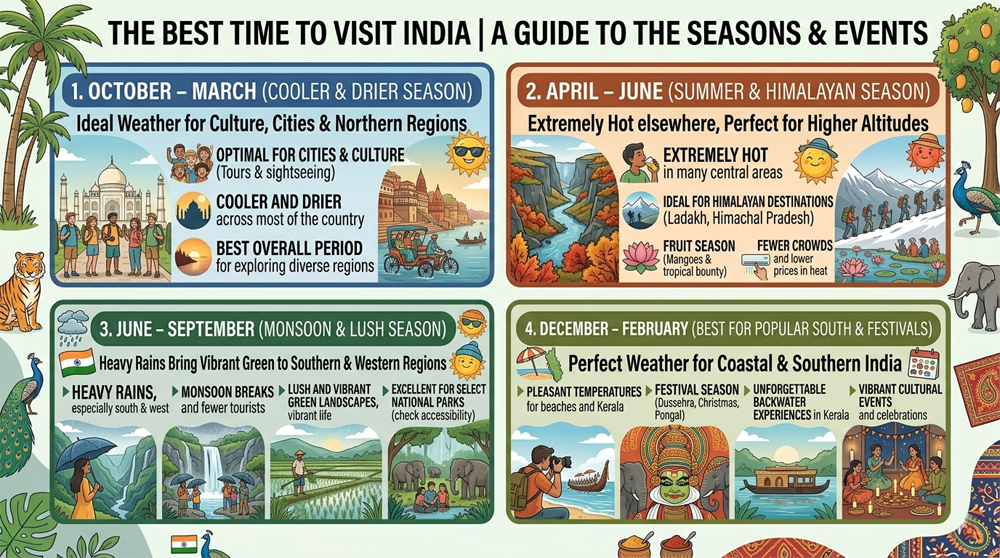
Cooler and drier across most of the country. Best overall period for cities, culture, and northern regions.
Extremely hot in many areas, but ideal for Himalayan destinations like Ladakh and Himachal Pradesh.
Monsoon season brings heavy rains, especially in the south and west, but landscapes become lush and vibrant.
Perfect for Rajasthan, Kerala, and Goa with pleasant temperatures and festival season.
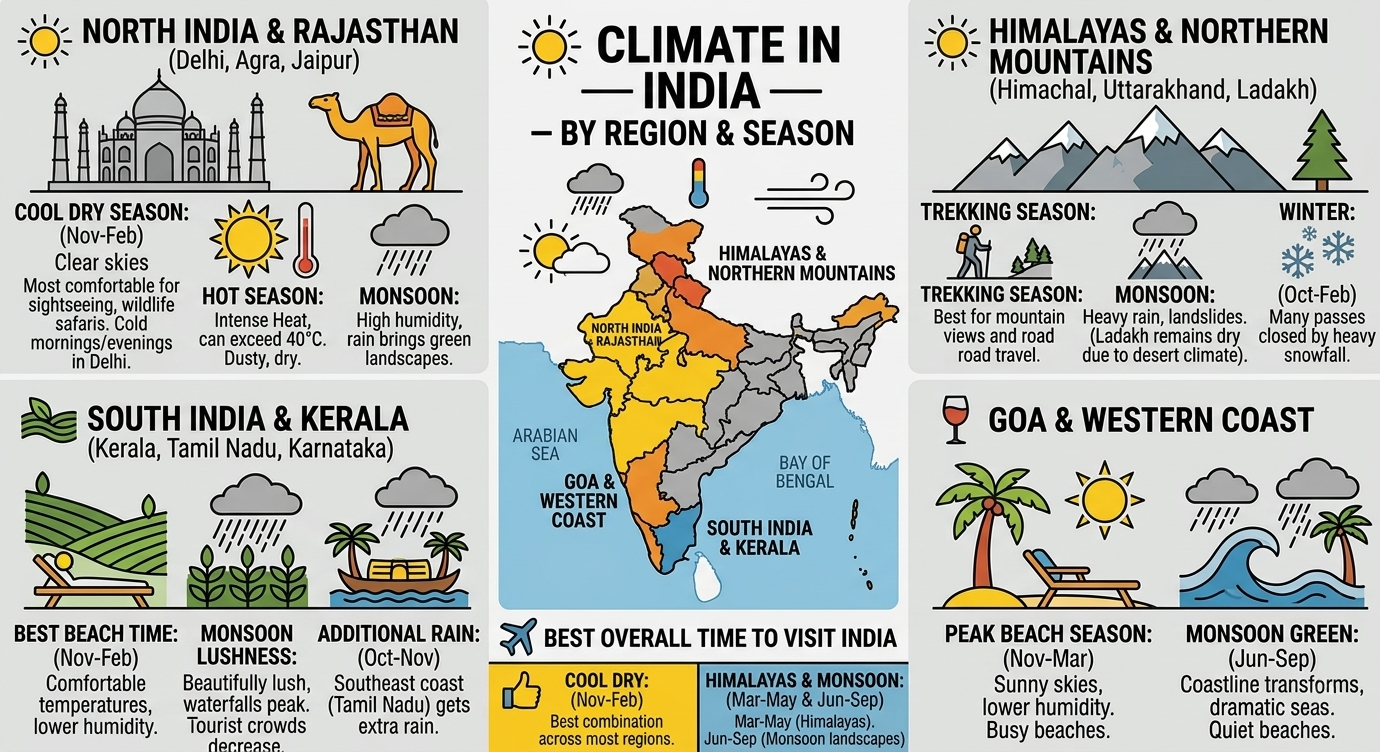
India has one of the most diverse climates in the world, ranging from the Himalayan cold of the north to the tropical beaches of the south. Weather patterns vary enormously between regions, altitudes, and seasons, but the country is generally divided into three main periods: the cool dry season, the hot season, and the monsoon season.
Because of its vast size, there is almost always a part of India with excellent travel conditions at any time of year.
Best Overall Time to Visit
These are the most comfortable months for travelling across much of India, with cooler temperatures, lower humidity, and generally clear skies.
December and January can become surprisingly cold in northern India, especially in Delhi and Rajasthan during the mornings and evenings.
Intense Heat but Fewer Tourists
Temperatures rise dramatically across much of the country before the arrival of the monsoon, often exceeding 40°C in northern and central regions.
Southern India and coastal areas remain humid, while the north becomes extremely dry and dusty.
Lush Landscapes & Dramatic Atmosphere
The southwest monsoon transforms much of India into intensely green landscapes with heavy but often short-lived rain showers.
Travel disruptions occasionally occur due to flooding or train delays, particularly in rural areas.
October to March
Best season for cities, culture, and the Golden Triangle with comfortable temperatures.
April to June
Extremely hot — best avoided for city travel, though early mornings remain manageable.
June to September
Monsoon rains bring lower temperatures but can disrupt travel in rural areas.
June to September
Best season for trekking, mountain scenery, and road travel. Ladakh remains dry due to its high-altitude desert climate.
July to August
Monsoon affects lower Himalayan regions with heavy rainfall and occasional landslides.
Winter
Heavy snowfall closes many mountain passes.
November to February
Most comfortable temperatures with lower humidity and ideal beach conditions.
June to September
Monsoon rains create lush tropical scenery, particularly in Kerala.
October to November
The southeast coast, especially Tamil Nadu, receives additional rainfall from the northeast monsoon.
November to March
Peak beach season with sunny skies and lower humidity.
June to September
Heavy monsoon rains transform the coastline into vibrant green landscapes with dramatic seas and quieter beaches.
Skip the SIM hunt on arrival. A travel eSIM lets you activate local data before you board — no plastic card, no roaming fees, instant setup. Roamic covers this destination and most countries in the Galerie.
Get Your Travel eSIM →For tours and experiences in India, KKday often has deeper inventory than the global platforms — strong on local operators, particularly in Asia. Worth comparing alongside GetYourGuide before booking.
Browse India tours on KKday →🎟️ GetYourGuide: "A private backwater houseboat overnight and a kathakali performance with a pre-show makeup demonstration are two experiences I'd book well in advance."
Stock Photography
Browse and license the full Asia photography collection — available for commercial and editorial use on Shutterstock.
View on Shutterstock →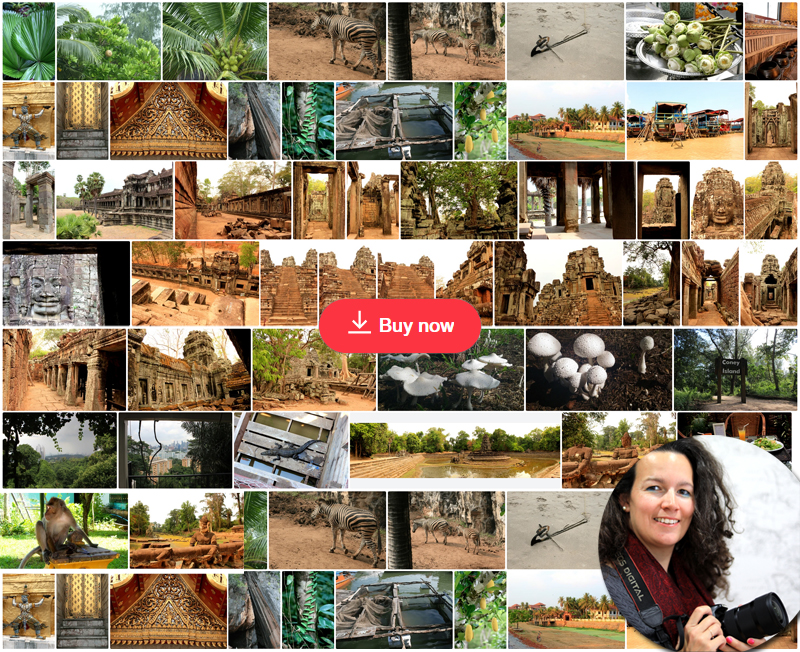
Stock Photography
Browse and license the full Animals photography collection — available for commercial and editorial use on Shutterstock.
View on Shutterstock →