Search across 18 country guides, eco articles, photography, and travel resources.

ALL DESTINATIONS Indonesia — Temples, rice fields and volcanoes — archipelago travel
Asia

IndonesiaBali, Yogyakarta, Borobudur, Lombok, Bromo

The reason to Visit Indonesia this year!

Indonesia is 17,000 islands and a lifetime of photography. Bali alone — with its terraced rice fields at Tegallalang, the temple of Tanah Lot silhouetted against the sea at sunset, the Kecak fire dance at Uluwatu's clifftop amphitheatre, and the extraordinary spiritual density of Ubud — could occupy a dedicated photographer for weeks. Beyond Bali, the Buddhist monument of Borobudur at dawn is one of Asia's great travel experiences, the active volcano of Bromo rising from a sea of cloud is like nothing else I've seen, and the blue fire of Kawah Ijen, visible only at night, produces photographs that look supernatural.

③ Photography Highlights

Borobudur at sunrise — arriving before dawn and climbing to the upper terraces as the mist burns off the surrounding jungle is one of the finest photographic experiences in Southeast Asia. The stupa-lined terraces with the Kedu Plain stretching out below glow in the early light in a way that afternoon visits completely miss.

Bali's rice terraces — Tegallalang near Ubud is the most-photographed, but Jatiluwih in the west is larger, less crowded, and has a UNESCO designation for good reason. The stepped geometry of the paddies, bright green in growing season, is endlessly compositional.

Mount Bromo — the volcanic complex of Bromo-Tengger-Semeru, with its smoking crater and surrounding sea of volcanic sand, is best photographed from Penanjakan viewpoint before sunrise. The drive up in a jeep in the dark, arriving at the viewpoint as the sky lightens, is one of the great adventure photography experiences in Indonesia.

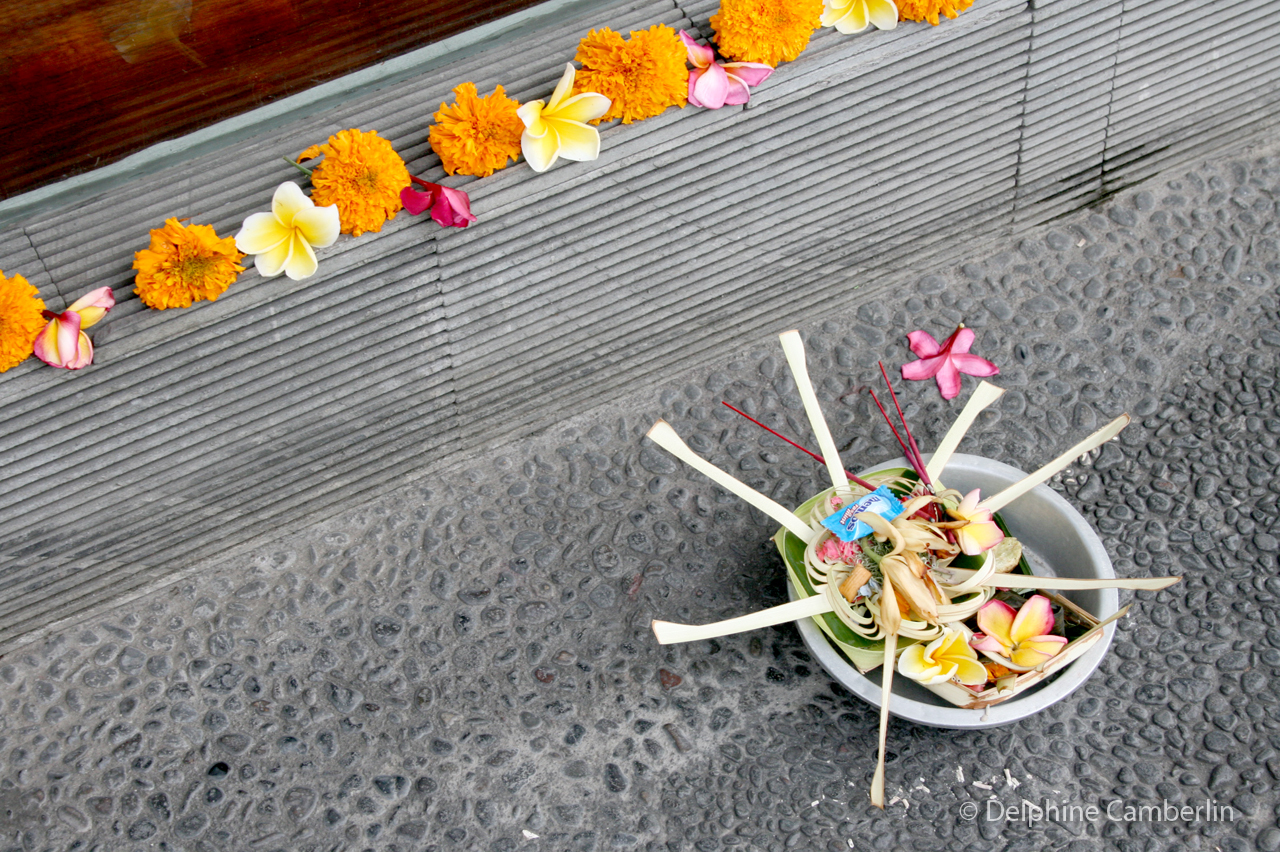
Ubud's offerings and temple life — Bali's spiritual life is lived publicly. Women place daily offerings outside every home and business, temple festivals happen constantly, and the combination of incense, flowers, and prayer creates an atmosphere that's deeply photogenic without ever feeling staged.

Travel Information about Indonesia

Indonesia offers extraordinary value — particularly outside Bali's tourist belt — and the diversity of landscapes and cultures across the archipelago means you can design very different trips even on return visits. The key logistical challenge is the distances between islands: domestic flights are essential for anything beyond Bali and Java, and they're inexpensive if booked in advance.

🗓️Recommended stay14 – 21 days
🎒Budget / day€25–45 / $28–50Guesthouse, warungs (local eateries), scooter rental
🥂Luxury / day€120–350 / $132–385Villa with pool, private guide, fine dining
📅Best monthsApril – October
🌡️Climate26–34°C · Tropical year-roundDry Apr–Oct · Wet & humid Nov–Mar
✈️VisaVisa on arrival or e-VOA ($35) for most nationalities · 30 days, extendable
💵CurrencyIDR (millions — takes getting used to!) · Cards in tourist areas · Cash for rural & outer islands
🛵Getting aroundScooter rental in Bali · Domestic flights between islands · Ferries · Grab app in cities
🛡️SafetyMedium — safe in tourist areasNatural disaster awareness needed (volcanoes, earthquakes)
🍜Must-try foodNasi goreng, satay, gado-gado, rendang, tempeh, fresh fruit juices
💬LanguageEnglish in tourist areas · Bahasa Indonesia useful outside Bali · People very friendly and patient
Region 01

Bali — The Island of the Gods

Rice terraces
Rice terraces — Bali's iconic stepped paddies in the afternoon light · © Delphine Camberlin

Bali is not one destination — it is several, stacked on top of each other depending on where you go and how long you stay. The spiritual, creative heartland of Ubud in the centre. The dramatic clifftop temples and surf beaches of the south. The volcanic highlands around Kintamani and Mount Batur. The quieter rice-terrace villages of the north and west that most visitors never reach. It is one of the most intensely photogenic places on Earth, and it is also genuinely overcrowded in parts — but knowing where to go and when solves most of the problem.

Ubud — Bali's cultural core, set in the forested hills of the island's interior. The Monkey Forest, the rice terraces of Tegallalang (beautiful, but arrive before 8am), the daily ritual offerings placed outside every home and business, the Kecak fire dance at Pura Uluwatu — these are the Bali that stays with you. Ubud also has one of Southeast Asia's finest concentrations of yoga studios, wellness centres, and plant-based restaurants, reflecting the enormous international community that has settled here. Rent a scooter for a day and get lost in the surrounding villages — Penestanan, Sayan, Campuhan — where the pace drops immediately.

Seminyak, Canggu & the south — Seminyak is the upmarket beach strip: boutique hotels, rooftop bars, sunset cocktails. Canggu has absorbed the backpacker-turned-digital-nomad crowd with its surf breaks, rice paddies, and coffee shops. Kuta — once the beating heart of Bali's tourist scene — is louder, cheaper, and best avoided if you're not specifically there for the nightlife. Uluwatu, at the southern tip of the peninsula, has Bali's best surf (advanced breaks at Padang Padang and Uluwatu itself) and the extraordinary clifftop Pura Luhur Uluwatu temple, where the Kecak fire dance is performed at sunset with the Indian Ocean below.

Nusa Penida & Nusa Lembongan — two small islands off Bali's southeast coast, a 45-minute fast boat from Sanur. Nusa Penida has become one of Indonesia's most Instagrammed destinations for good reason: the clifftop viewpoint at Kelingking (the T-Rex rock formation), the crystal-clear waters of Angel's Billabong and Broken Beach, and manta ray snorkelling at Manta Point. Go on a weekday — weekends are busy. Nusa Lembongan is quieter and more laid-back, good for mangrove tours, seaweed farming villages, and more relaxed snorkelling.

Flower offerings
Flower offerings — daily Hindu ritual woven into every street corner in Ubud · © Delphine Camberlin

Bali Travel Tips

  • Rent a scooter (around 70,000 IDR/day) — it is the only practical way to explore independently
  • Tegallalang rice terraces at dawn (before 8am) are magical; by 10am they are full of Instagram content creators
  • Wear a sarong at temples — always available for hire at the entrance, and required
  • The Kecak fire dance at Uluwatu runs at sunset daily — book ahead in high season
  • Mount Batur (1,717m) volcano hike: leave at 3am to reach the summit for sunrise — a guide is required and worth it
  • Jatiluwih rice terraces (UNESCO-listed) are less crowded and more dramatic than Tegallalang
  • Avoid Kuta on Nyepi (Balinese New Year's Day of Silence) — the entire island shuts down completely
  • Best surf: Uluwatu (advanced), Padang Padang (intermediate-advanced), Canggu (all levels), Medewi (long left-hander)
Region 02

Java — Yogyakarta, Jakarta & the Volcanoes

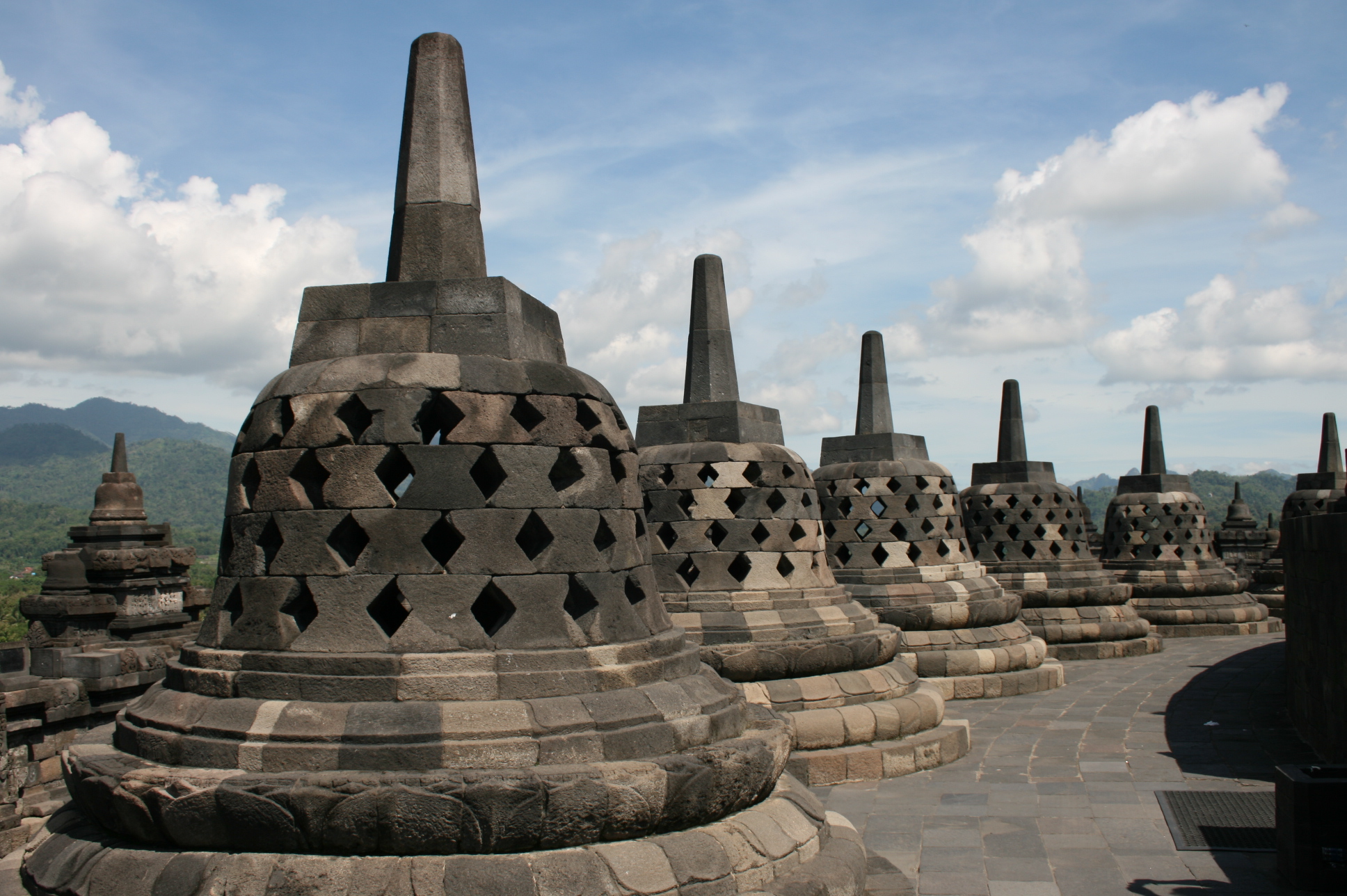
Borobudur
Borobudur — the world's largest Buddhist temple rising from the jungle plains of Java · © Delphine Camberlin

Yogyakarta (Jogja) is Java's cultural soul — a royal city of ancient temples, living arts, and volcanic drama, where the Sultan still resides in his palace and students outnumber tourists outside peak season. It is the essential Java experience, and it rewards at least three days.

Borobudur — the world's largest Buddhist monument, built in the 9th century, is 45 minutes from Yogyakarta. Arriving before dawn and climbing to the upper terraces as the mist lifts from the Kedu Plain and the surrounding volcanoes catch the first light is one of the most photographically extraordinary experiences in Asia. The stupa-lined terraces, each bell-shaped stupa containing a seated Buddha figure visible through the stone lattice, glow in the early morning in a way that afternoon visits completely miss. Book the sunrise access ticket in advance.

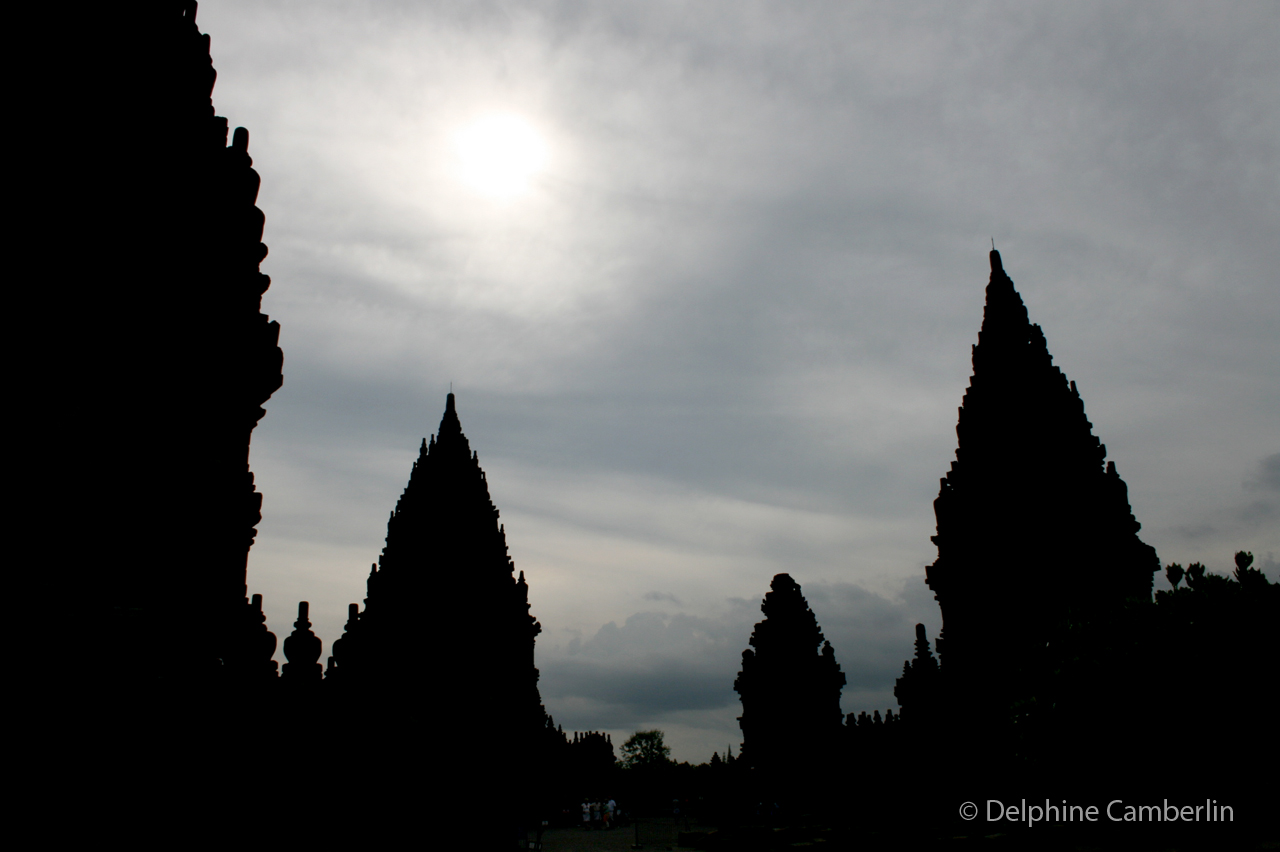
Prambanan — a 9th-century Hindu temple complex 18km from Yogyakarta, with soaring spires rising 47 metres, dedicated to the Hindu trinity of Brahma, Vishnu, and Shiva. The Ramayana Ballet, performed at an open-air theatre with Prambanan as backdrop, is one of the great live performances in Southeast Asia — on full-moon nights it is simply extraordinary.

Kraton Yogyakarta — the Sultan's palace, still inhabited by the royal family. Guided tours by local university students (who do this as part of their internship) offer genuine insight into Javanese court culture, gamelan music, and traditional dance. The Taman Sari Water Castle nearby — a partly ruined 18th-century royal bathing complex — has an underground mosque and hidden passages worth exploring.

Mount Merapi — one of Indonesia's most active volcanoes looms directly over Yogyakarta (its name means "Mountain of Red Fire"). A jeep tour through the Merapi National Park takes you past lava flows, the Sisa Hartaku memorial village (preserved exactly as it was when Merapi erupted in 2010), and viewpoints where on clear mornings you can watch the summit smoking. A full summit hike requires experience and a guide — the lower slopes tours are accessible to everyone.

Malioboro Street — Yogyakarta's famous pedestrian shopping street, lined with batik shops, warungs, street musicians, and the beautiful chaos of Javanese street life. Batik is Java's great textile art form — wax-resist dyeing on cotton or silk producing patterns of extraordinary intricacy. A batik workshop (available throughout Yogyakarta) is one of the finest craft experiences you can have in Indonesia.

Jakarta — Indonesia's capital of 10 million people (and a metropolitan area of 30 million) is not on most tourist itineraries, but it rewards a day or two. Kota Tua (the old Dutch colonial quarter) has fine warehouses converted into museums and cafés, overlooking Fatahillah Square. The National Museum holds extraordinary archaeological and cultural collections. Jakarta's food scene — and specifically its street food — is exceptional: soto ayam (chicken broth soup), nasi uduk (coconut rice), and kerak telor (a spiced egg omelette unique to Jakarta) are city specialities worth seeking out.

Yogyakarta
Yogyakarta — the cultural capital of Java where batik wayang and gamelan traditions live · © Delphine Camberlin

Java Travel Tips

  • Borobudur sunrise tickets must be booked in advance — sell out weeks ahead in July and August
  • Hire a driver for the Borobudur + Prambanan day trip from Yogyakarta — far easier than public transport
  • The Ramayana Ballet at Prambanan runs May to October — check dates and book in advance
  • Mount Merapi jeep tours depart from Kaliurang (30 min from Yogyakarta) — morning light is best for photography
  • Kawah Ijen (East Java) — the blue fire phenomenon is visible only at night and in the early hours before sunrise; a demanding hike but one of the world's most extraordinary natural spectacles
  • Mount Bromo jeep tours (East Java) involve a 2am start for the Penanjakan viewpoint sunrise — entirely worth it
Region 03

Lombok & the Gili Islands — Turtles, Surf & the Rinjani Climb

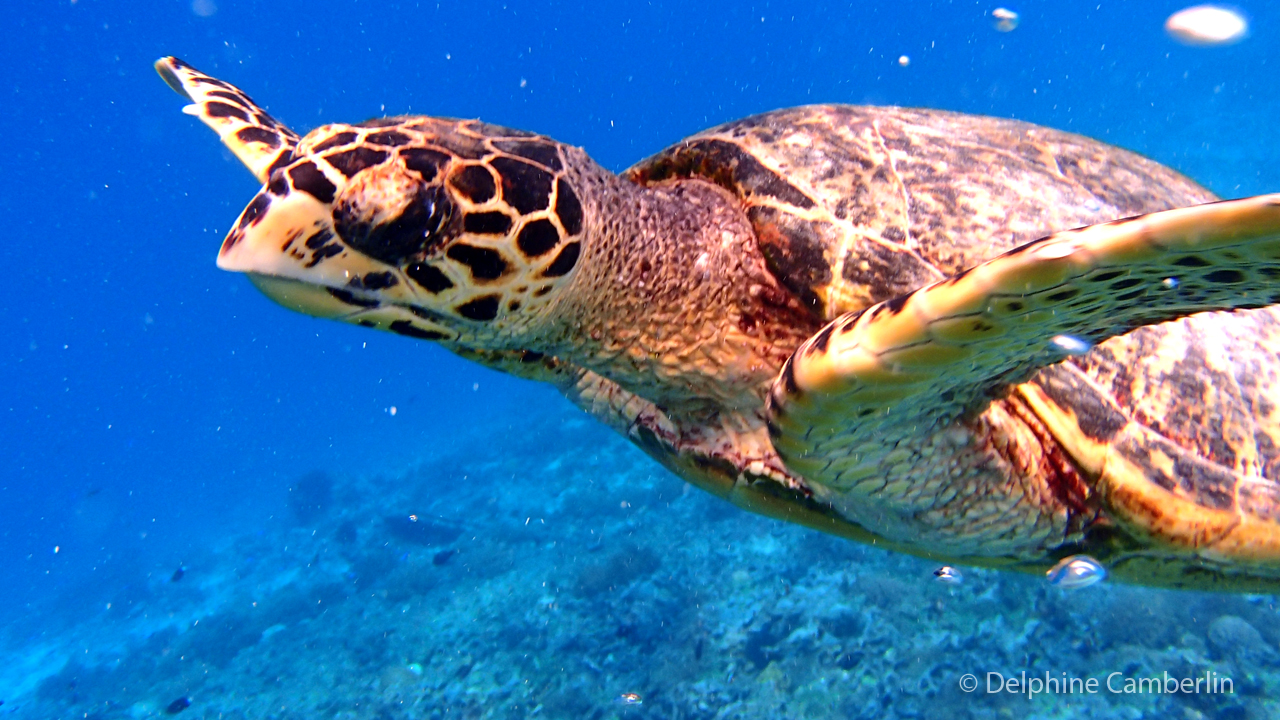
Sea turtle
Sea turtle — the Gili Islands are one of the best places to snorkel alongside turtles · © Delphine Camberlin

Lombok sits just east of Bali — 35 minutes by fast boat or 20 minutes by plane — and yet feels entirely different. It is quieter, more devoutly Muslim, and dominated by the extraordinary conical silhouette of Gunung Rinjani (3,726m), Indonesia's second-highest volcano, which rises from the island's centre and rewards the 3-day trek to the summit rim with views over a vast turquoise crater lake. The south coast, particularly around Kuta Lombok (not to be confused with Kuta Bali), has some of the finest and least crowded surf beaches in Southeast Asia — crescent bays of white sand, powerful swells, and almost no one around.

The Gili Islands — three small islands off Lombok's northwest coast, each with a distinct character and a no-motorised-vehicle rule that makes all three feel remarkably peaceful. Gili Trawangan (Gili T) is the largest and most social — vibrant bar scene, sunset swing photos over the water, and some of the finest turtle snorkelling in Indonesia. Walk into the sea from the eastern beach and you are almost guaranteed to find green sea turtles feeding on the seagrass within 10 minutes. No dive gear needed — just a mask. The Turtle Point on the northern tip, and the drift snorkel south along the eastern reef, deliver encounters so close and frequent they can feel almost unreal. Gili T also has excellent diving (coral walls, shipwrecks, reef sharks) and a lively Malioboro-style night market.

Gili Meno — the smallest and quietest island, popular with honeymooners and those escaping Gili T's energy. Fewer restaurants, fewer people, pristine reef, and an underwater installation of ceramic statues (the Nest sculpture) that makes for extraordinary snorkelling. Gili Air sits between the two in every sense — livelier than Meno, calmer than Trawangan, good for families and those who want a balance of activity and peace.

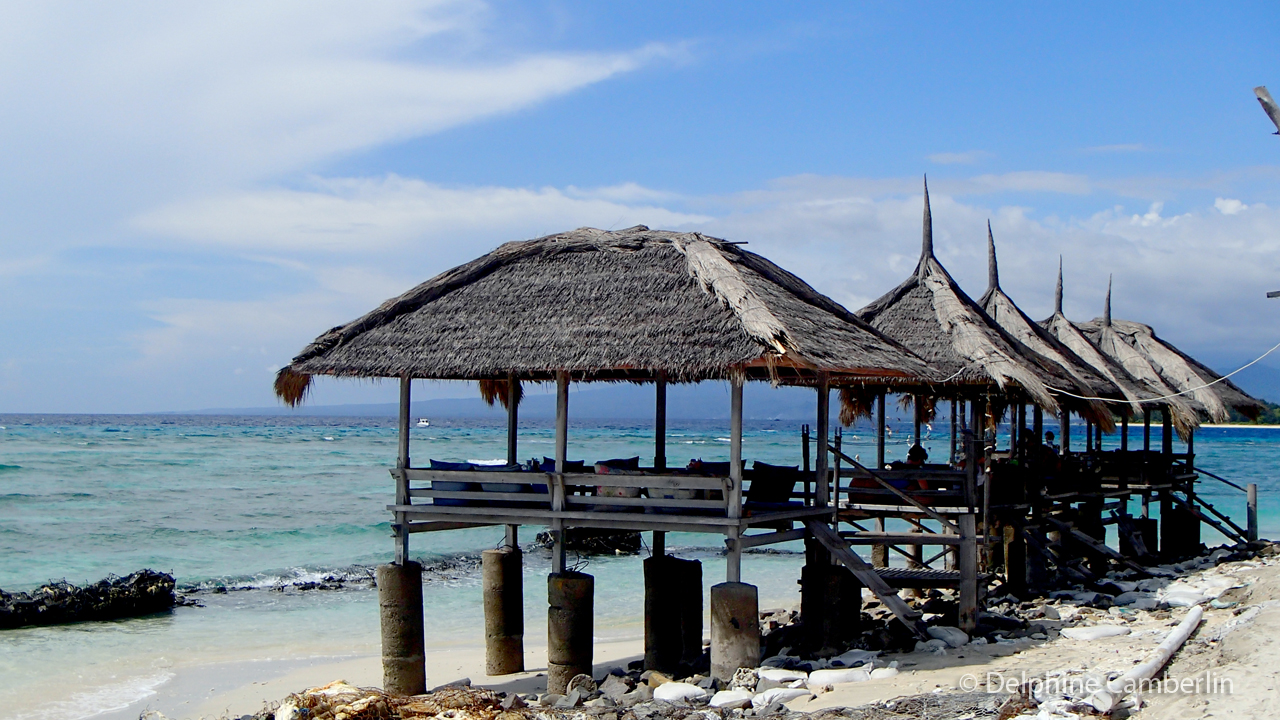
Beach huts Lombok
Beach huts Lombok — the quieter less-visited neighbour of Bali · © Delphine Camberlin

Lombok & Gili Travel Tips

  • Fast boat from Bali (Padang Bai or Serangan) to Gili T takes around 2 hours — book a reputable operator, several have had accidents
  • Gili Trawangan turtle snorkelling: wade in from the eastern beach at any time — bring your own mask or rent one cheaply on the beach
  • The three Gili Islands can be visited in a single day by island-hopping boat (arrange with any local boat operator)
  • Rinjani trek: 3 days minimum for the crater rim; 4 days to reach the summit. A licensed guide is mandatory and genuinely necessary. Book through a reputable trekking agency in Senggigi or Mataram.
  • Kuta Lombok (south coast) is entirely different from Kuta Bali — quiet, dramatic bays, excellent surf, very few tourists even in high season
  • There are no ATMs on the Gili Islands — bring cash from Lombok or Bali
  • Lombok's south coast surf: Selong Belanak (beginners), Gerupuk (intermediate), and Are Guling (experienced) all within 30 minutes of Kuta Lombok
Beyond the Tourist Trail — Eco, Indigenous & Extraordinary

Indonesia Is 17,000 Islands. Most Visitors See Three.

Raja Ampat, West Papua — the most biodiverse marine environment on Earth. Raja Ampat contains around 75% of all the world's coral species — a figure that defies comprehension until you put your head underwater for the first time and understand what it actually means. Manta rays, whale sharks, pygmy seahorses the size of a fingernail, schooling fish in numbers that block the light — this is the Coral Triangle at its most concentrated. Two decades ago, local Papuan communities made a historic decision: rather than allow industrial fishing, they created marine protected areas, established local patrol teams to stop dynamite fishing, and invited responsible travellers to come and see what they were protecting. The eco-lodges of Raja Ampat — Kri Eco Resort, Papua Diving, Raja Ampat Biodiversity — run almost entirely on solar power, employ local staff, and reinvest in reef monitoring and education. Getting here requires a flight to Sorong (via Makassar or Manado) then a boat — expensive and genuinely remote — but for divers and underwater photographers, it is simply the best in the world.

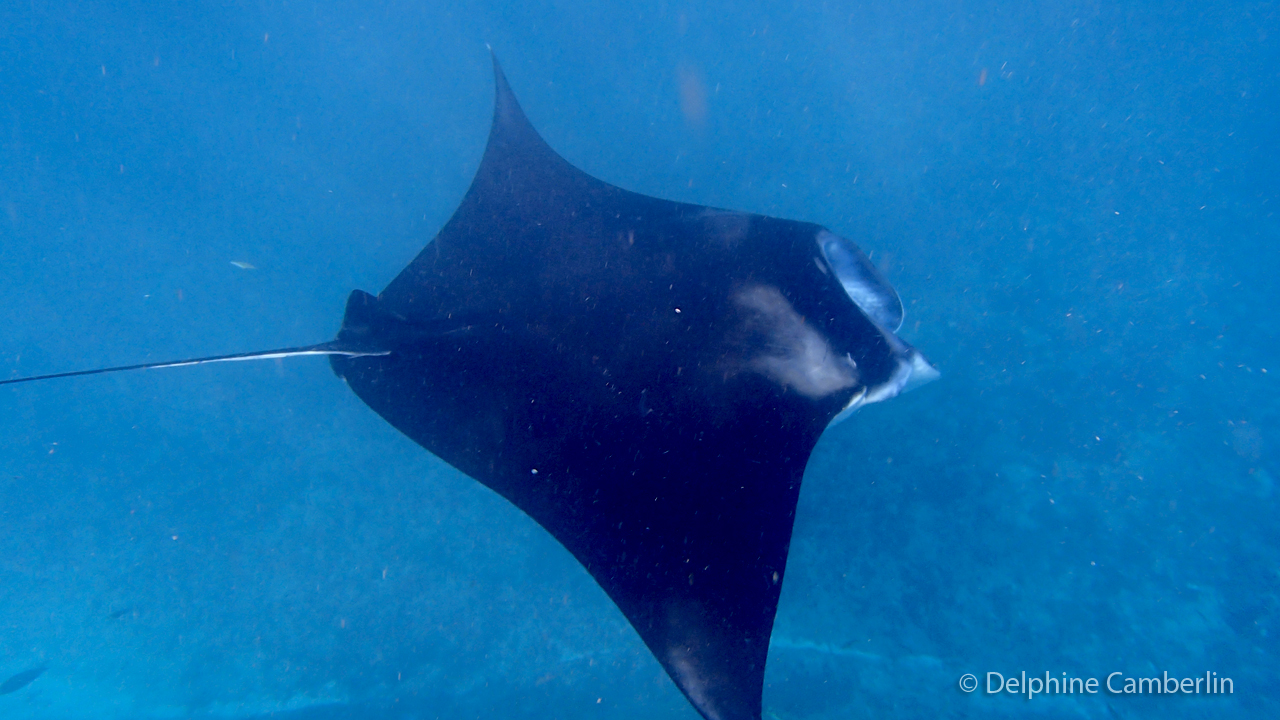
Manta Ray Indonesia
Manta ray in Nusa Lembongan — Indonesia's waters are home to some of the most extraordinary marine life on the planet · © Delphine Camberlin

Tana Toraja, Sulawesi — high in the mountains of South Sulawesi, the Toraja people have maintained one of the most distinctive and complex cultures in Southeast Asia. Their traditional tongkonan houses — with their extraordinary boat-shaped roofs curving up at both ends — dot the green mountain landscape in a way that looks entirely unlike anything else in Indonesia. But what draws most visitors is the funeral culture: Torajan funerals are enormous multi-day festivals involving hundreds or thousands of guests, traditional music, ceremonial buffalo sacrifice, and the journey of the deceased to elaborate cliff-carved tombs (liang pa'). The tau-tau — effigies of the deceased placed in balconies cut into the rock face — look down over the valleys with an eeriness that is unlike anything else in the world. Torajan funerals happen throughout the year, particularly July to September, and visitors are generally welcome to observe respectfully.

Komodo & Flores — Komodo National Park, in East Nusa Tenggara, is home to the Komodo dragon — the world's largest lizard, which can reach 3 metres and kill prey with a venomous bite. The guided walk on Komodo or Rinca island to see the dragons in their natural habitat is extraordinary. The surrounding waters are among the best diving in Indonesia — strong currents attract manta rays, sharks, and extraordinary fish life. The nearby pink-sand beach of Pantai Merah is one of the most unusual in the world. Flores island itself is largely untouched by mass tourism, its 14 volcanoes, traditional ikat weaving villages, and the multicoloured volcanic crater lakes of Kelimutu making it one of Indonesia's most rewarding overland journeys.

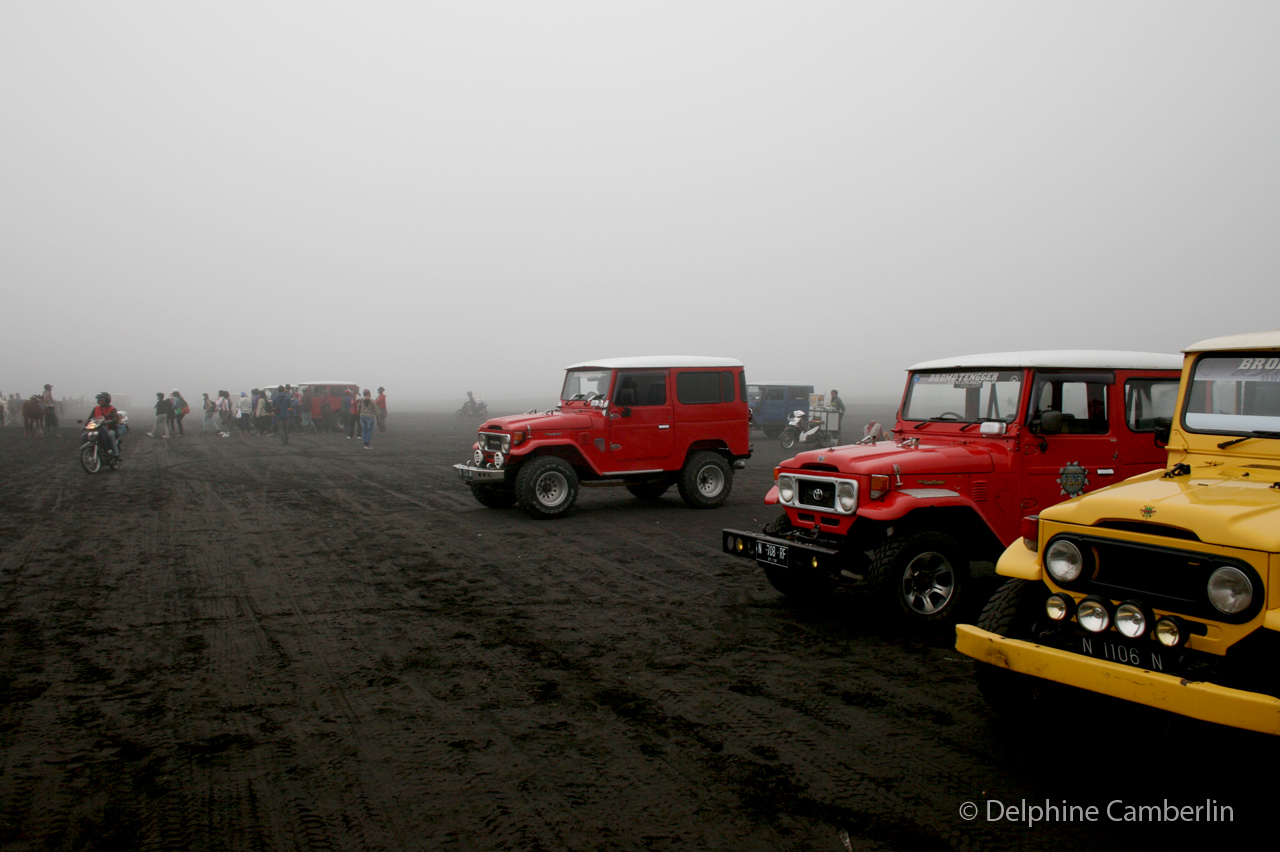
Mount Bromo Indonesia
Jeep at Mount Bromo — one of Indonesia's most dramatic volcanic landscapes, Java · © Delphine Camberlin

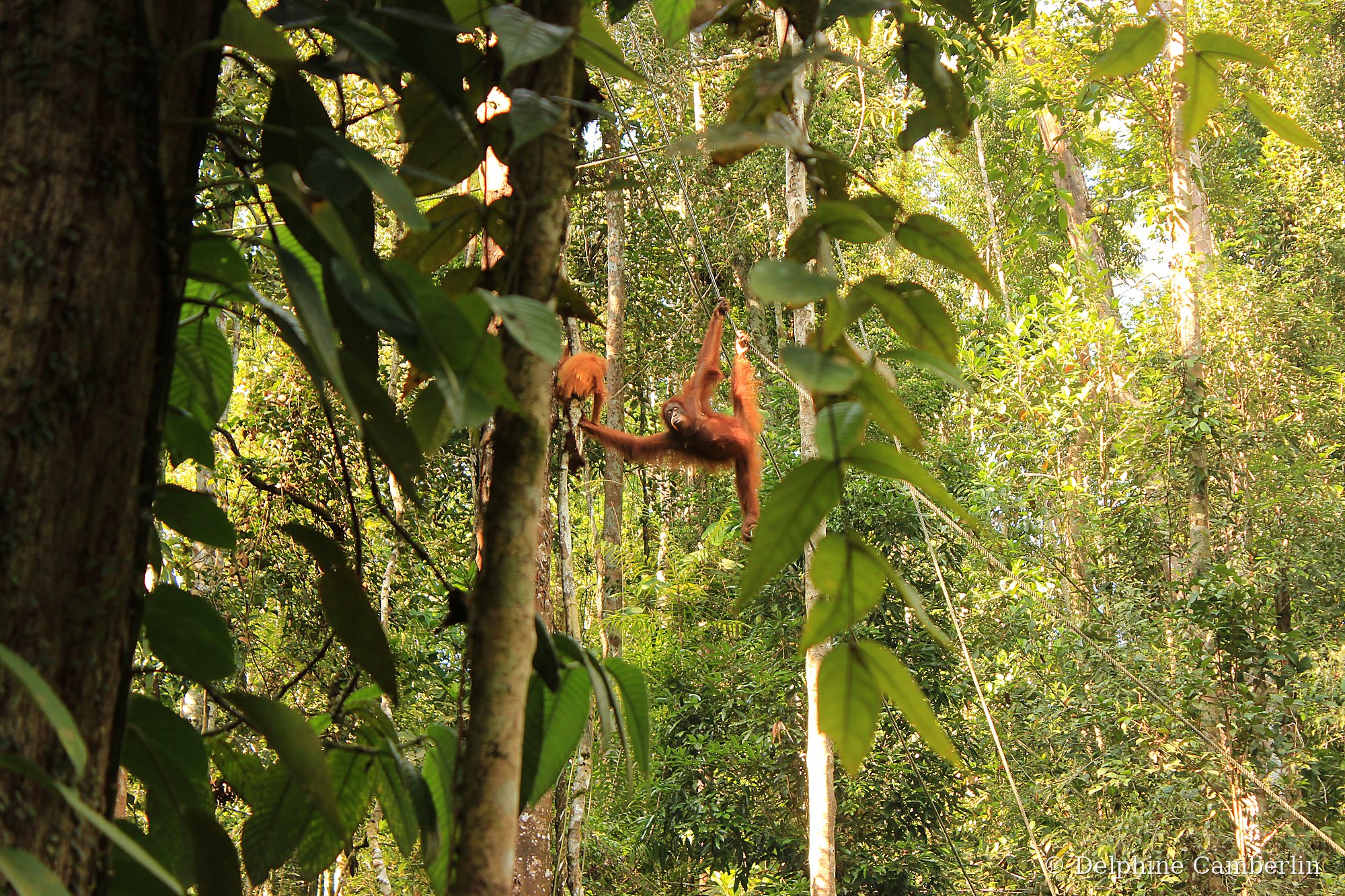
Sumatra — Orangutans & the Rainforest — Gunung Leuser National Park in North Sumatra, accessible from Bukit Lawang, offers one of the world's last opportunities to observe semi-wild orangutans in their natural rainforest habitat. A 2–3 day jungle trek with a licensed guide takes you deep into the rainforest, sleeping in basic camps along the river, and watching these extraordinary creatures — sharing 97% of our DNA — build nests, forage, and interact with completely matter-of-fact dignity. The Sumatran orangutan is critically endangered; an estimated 14,000 remain in the wild.

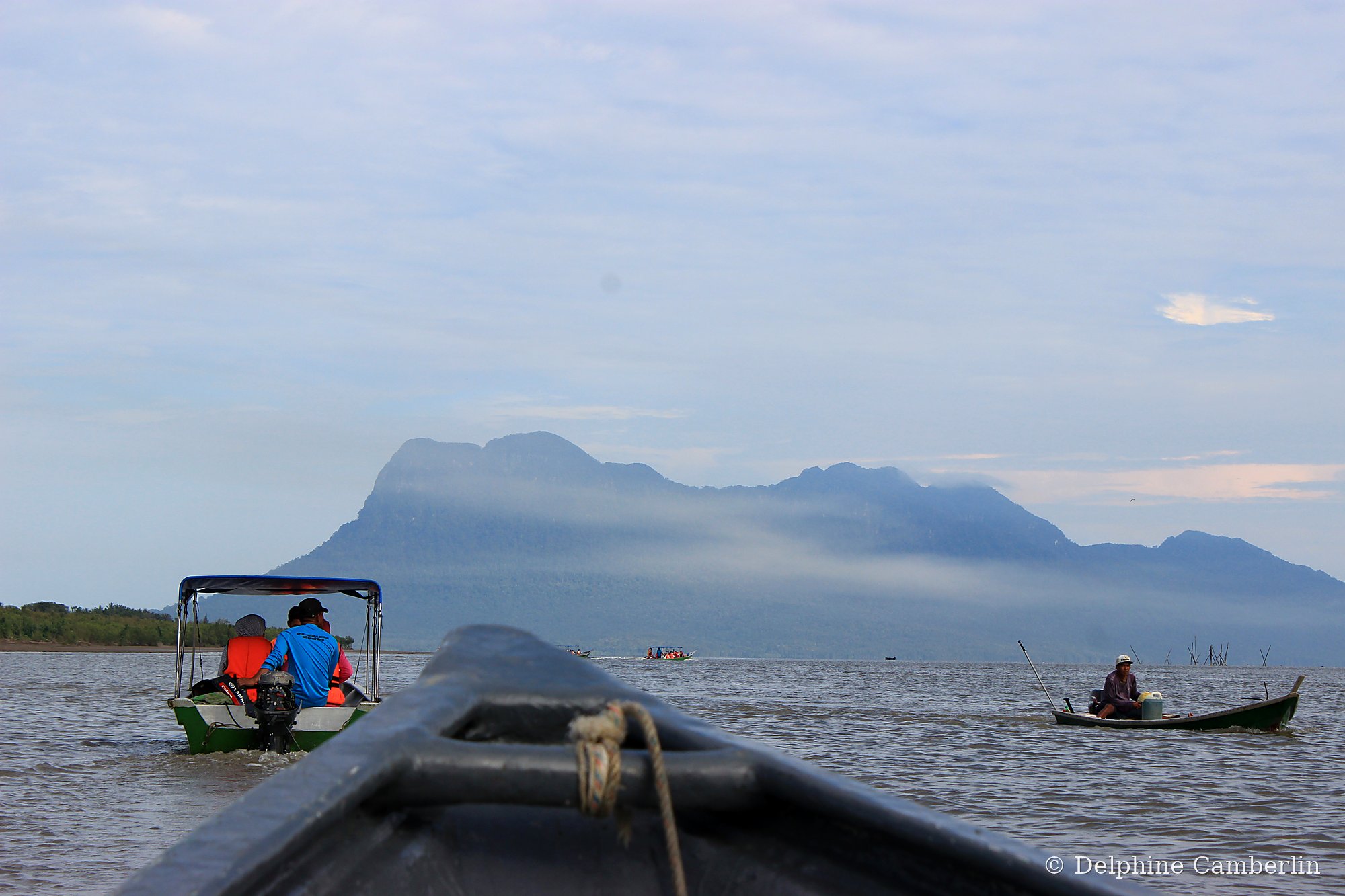
Kalimantan (Borneo) — the Indonesian portion of Borneo remains one of the world's great wilderness frontiers. Tanjung Puting National Park offers klotok (wooden houseboat) river safaris through dense lowland rainforest. Camp Leakey, a famous orangutan research station deep in the park, allows visitors to observe semi-wild orangutans at close range. The Dayak people — Borneo's indigenous communities — maintain longhouse traditions and offer community homestays in some of the most remote river villages in Southeast Asia.

Wakatobi, Sulawesi — a remote marine national park considered one of the finest and most pristine diving destinations in the world. Unlike Raja Ampat, it remains almost entirely off the general tourist radar. The coral reefs here have never been dynamite-fished and the marine life density is extraordinary. Access requires a domestic flight to Wangi-Wangi — remote, expensive, and completely worthwhile.

The Spice Islands & North Sulawesi — Where History Began

Ternate, Halmahera, Manado — and the Routes That Changed the World

Before Bali existed on any European map, before Indonesia was a country, before the VOC or the British East India Company had been imagined — the islands of North Maluku were the most valuable real estate on Earth. Cloves, nutmeg, and mace grew only here, in the volcanic soil of a handful of tiny islands in the Banda Sea, and their value was so extraordinary that European powers sent entire fleets and fought wars over them. The Portuguese, Spanish, Dutch, and British all carved their names into this landscape — in forts, in trade routes, in the genetic heritage of the local population — and the traces of that history are still visible and largely unvisited by anyone.

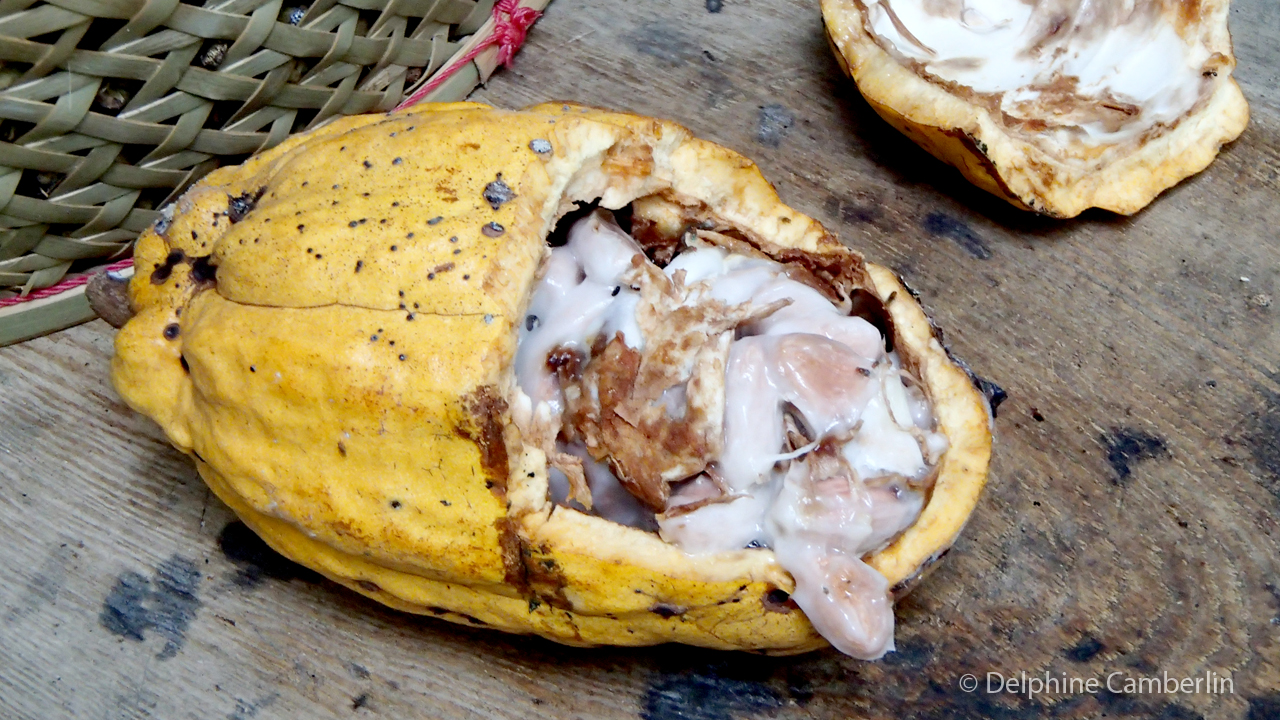
Cacao broad bean Indonesia
Cacao pod — the spices and tropical crops of the Indonesian archipelago shaped global trade routes for five centuries and triggered European colonial expansion · © Delphine Camberlin

Ternate — a small, cone-shaped volcanic island dominated by Mount Gamalama, an active volcano whose slopes are still planted with clove trees as they have been for centuries. Ternate was, from the 14th through 18th centuries, the capital of one of the most powerful sultanates in eastern Indonesia and the centre of the global spice trade. Fort Oranje (built by the Dutch in 1607 as the first VOC office in Indonesia) and Fort Tolukko (Portuguese, 1512) still stand in remarkable condition overlooking the sea. Ternate is also where Alfred Russel Wallace independently formulated the theory of evolution — the house where he wrote his famous letter to Darwin still stands and can be visited. This is a destination for the historically curious — but for anyone fascinated by the hidden threads of global history, it is extraordinary.

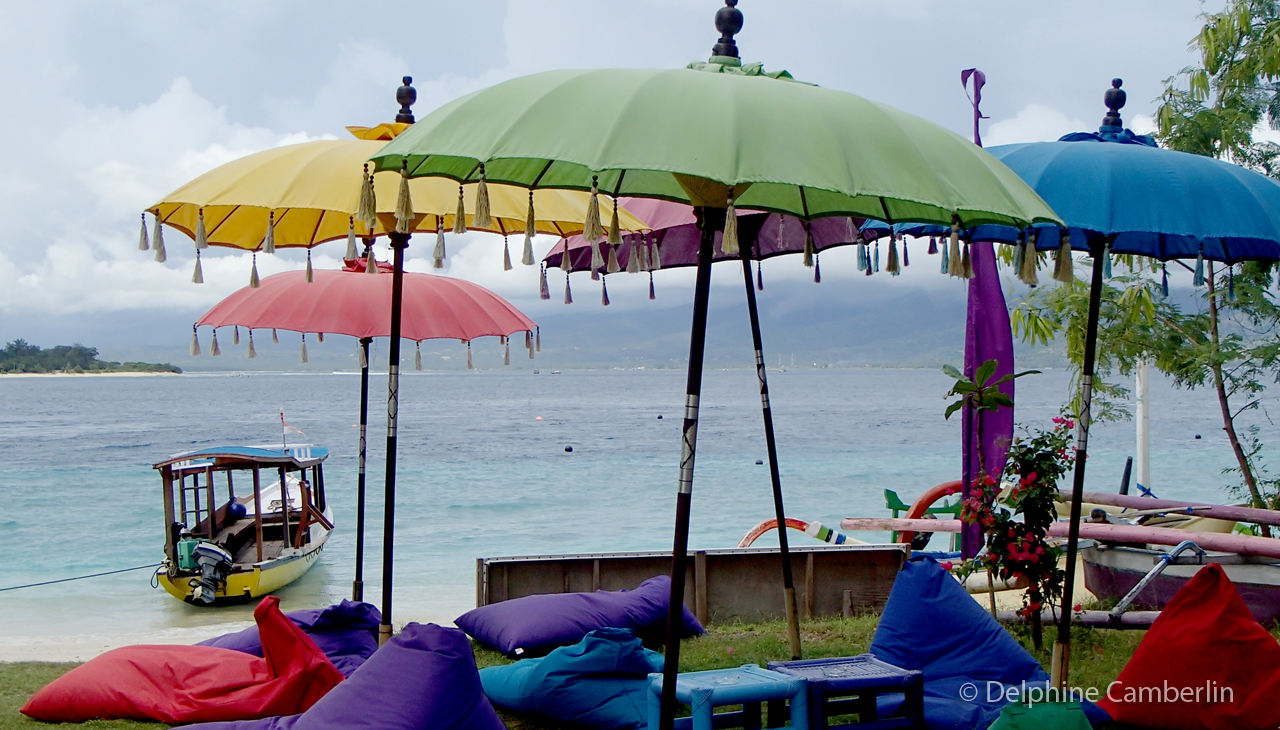
Colourful umbrellas Indonesia
Colourful umbrellas — the visual richness of Indonesian festival and temple culture is inseparable from the islands' layered history · © Delphine Camberlin

Halmahera — the largest island in North Maluku, almost entirely unknown to international tourism. Its interior remains one of the last significant patches of primary rainforest in the Maluku islands, home to endemic bird species found nowhere else on Earth (the Wallace Line runs just west of here — the boundary between Asian and Australian fauna zones that Wallace himself identified). The bays and reefs around Halmahera's coasts offer diving comparable to Bunaken with almost none of the visitors.

Manado & North Sulawesi — the gateway to one of the great diving clusters in the world. Bunaken National Marine Park, 40 minutes by boat from Manado, was one of Indonesia's first marine protected areas — coral walls dropping vertically into the deep, with over 70% of all fish species found in the Indo-Western Pacific. Lembeh Strait is considered the world capital of "muck diving" — slow-paced macro photography in black volcanic sand, where mimic octopus, rhinopias, hairy frogfish, blue-ringed octopus, and dozens of rare pygmy seahorse species live. Photographers come from around the world specifically for Lembeh.

A personal note: this section was inspired by a LinkedIn comment from Karin Schraverus, whom I met in Belgium, whose Indonesian mother was born on Ternate in 1927 and whose grandfather had coconut plantations on Halmahera. Her family's connection to these islands is a reminder that Indonesia's history is woven through the personal stories of millions of people, many of them far from home.

Timor-Leste (East Timor) — Asia's Youngest Country

Is It Worth Visiting? Is It Safe? Yes, and Yes — With Your Eyes Open.

Timor-Leste is one of the most extraordinary and least-visited countries in Southeast Asia. Occupying the eastern half of the island of Timor, it became the world's first new country of the 21st century when it achieved independence from Indonesia in 2002 — after 450 years of Portuguese colonisation, a brutal 24-year Indonesian occupation (1975–1999), and a UN-administered transition period. The name itself is a small linguistic curiosity: timor means "east" in Indonesian, and leste means "east" in Portuguese — so the country is literally called "East East." It is the only Portuguese-speaking country in Asia.

Manta ray Nusa Lembongan Indonesia
Manta ray off Nusa Lembongan — the waters surrounding Timor-Leste and eastern Indonesia contain some of the highest recorded marine biodiversity on Earth · © Delphine Camberlin

Is it safe? The honest answer is: generally yes, with normal precautions, but not without caveats. The US State Department rates it Level 2 ("Exercise Increased Caution") due to crime and occasional civil unrest. Avoid being out alone at night in Dili. But most travellers who visit — particularly those going for diving and eco-tourism — report a safe and deeply memorable experience. Atauro Island, the main diving destination, is notably safer and more peaceful than Dili. The Timorese people are almost universally described as extraordinarily warm and welcoming to visitors.

Sea turtle Lombok Indonesia
Sea turtle in Indonesian waters — Atauro Island's waters contain 642 reef fish species per square kilometre, the highest recorded density on Earth · © Delphine Camberlin

Why go?

Atauro Island — 30 kilometres north of Dili, accessible by ferry (2–3 hours) or speedboat. Scientists have identified Atauro's waters as containing the highest recorded density of reef fish species in the world — 642 species in the surrounding waters, more per square kilometre than anywhere else on Earth. The diving and snorkelling here is world-class and almost entirely undiscovered by international tourism. Community-based eco-lodges run by local fishing communities offer simple accommodation and extraordinary ocean access. Whale watching off Atauro is also remarkable — spinner dolphins, sperm whales, and blue whales are all regularly seen in the Ombai Strait.

History — Dili's Resistance Museum tells the story of the Indonesian occupation and the independence struggle with dignity and without softening the horror of what happened here. The Cristo Rei statue (a 27-metre Christ figure on the eastern headland of Dili, reached by a staircase of 520 steps) offers panoramic views over the capital and the Banda Sea.

Jaco Island — at the far eastern tip of Timor-Leste, a pristine uninhabited island considered sacred by local Timorese. Landing requires permission and respect — some operators offer snorkelling and day trips in the surrounding waters, which are exceptional.

Practical notes — Dili is accessible by direct flight from Bali, Darwin (Australia), and Singapore. Visa on arrival is available for most nationalities (30 days, tourist). Bring cash — there are no ATMs on Atauro or Jaco. US dollars are the official currency. The cost of living is surprisingly high relative to Indonesia — this is not a budget destination despite its remoteness.

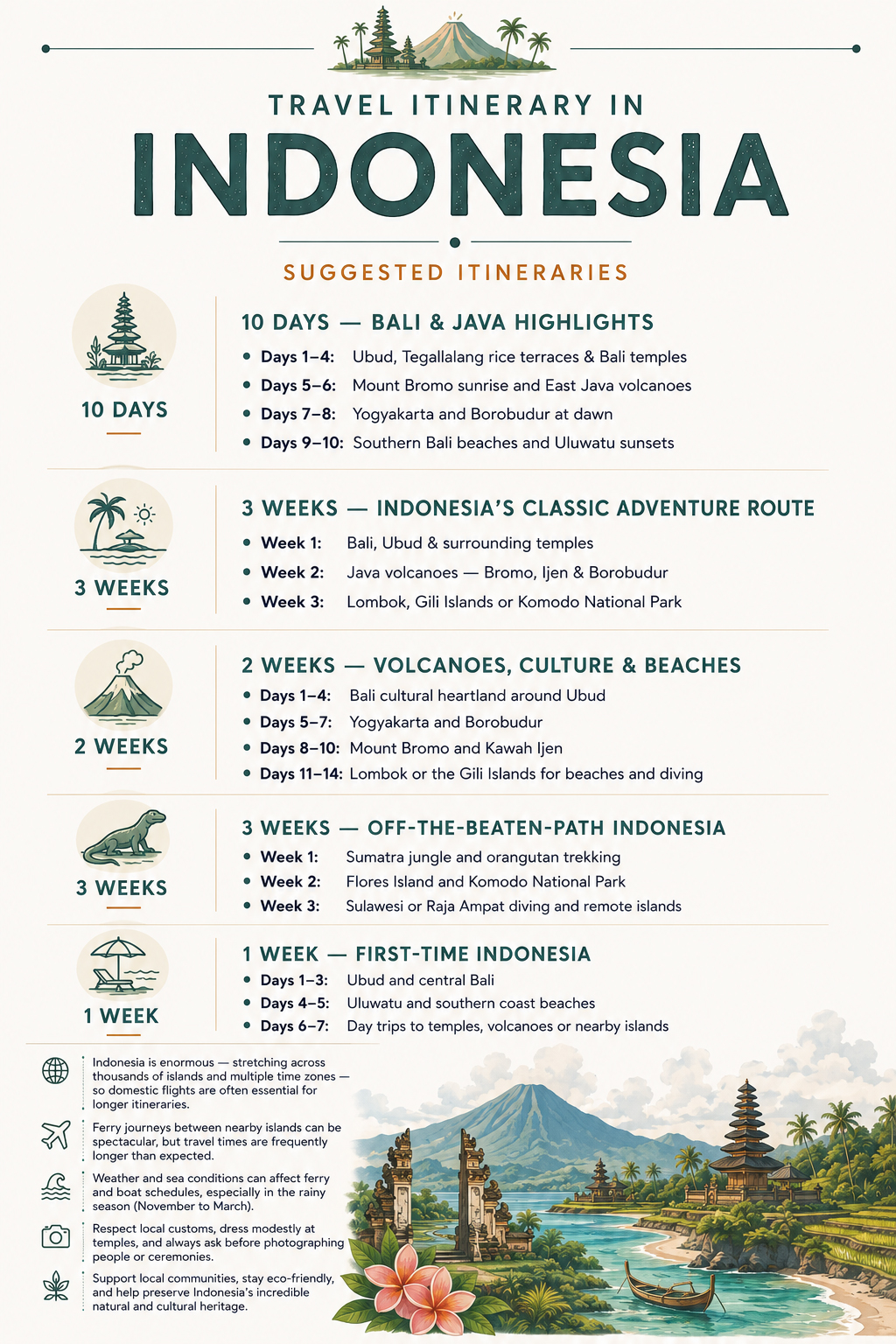
Suggested Itineraries in Indonesia

10 days — Bali & Java Highlights

  • Days 1–4: Ubud, Tegallalang rice terraces & Bali temples
  • Days 5–6: Mount Bromo sunrise and East Java volcanoes
  • Days 7–8: Yogyakarta and Borobudur at dawn
  • Days 9–10: Southern Bali beaches and Uluwatu sunsets

3 weeks — Indonesia’s Classic Adventure Route

  • Week 1: Bali, Ubud & surrounding temples
  • Week 2: Java volcanoes — Bromo, Ijen & Borobudur
  • Week 3: Lombok, Gili Islands or Komodo National Park
    • 2 weeks — Volcanoes, Culture & Beaches

      • Days 1–4: Bali cultural heartland around Ubud
      • Days 5–7: Yogyakarta and Borobudur
      • Days 8–10: Mount Bromo and Kawah Ijen
      • Days 11–14: Lombok or the Gili Islands for beaches and diving
        • 3 weeks — Off-the-Beaten-Path Indonesia

          • Week 1: Sumatra jungle and orangutan trekking
          • Week 2: Flores Island and Komodo National Park
          • Week 3: Sulawesi or Raja Ampat diving and remote islands
            • 1 week — First-Time Indonesia

              • Days 1–3: Ubud and central Bali
              • Days 4–5: Uluwatu and southern coast beaches
              • Days 6–7: Day trips to temples, volcanoes or nearby islands

Indonesia is enormous — stretching across thousands of islands and multiple time zones — so domestic flights are often essential for longer itineraries. Ferry journeys between nearby islands can be spectacular, but travel times are frequently longer than expected. Building in slower days between major moves makes the experience far more enjoyable.
Itineraries in Indonesia

When are the Best Time To Visit Indonesia?

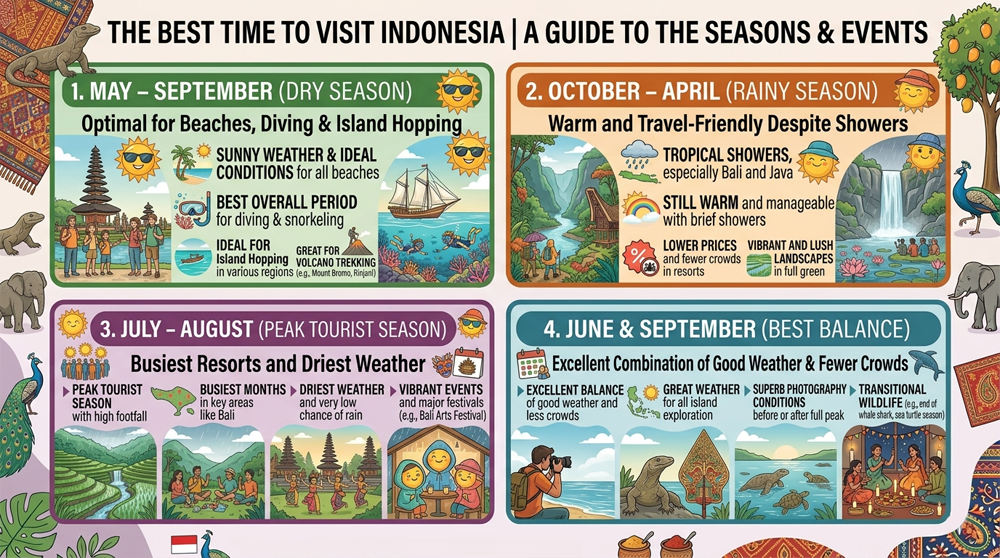
The Best Time to visit Indonesia

May – September

Dry season with sunny weather and ideal conditions for beaches, diving, and island hopping.

October – April

Rainy season with tropical showers, especially in Bali and Java. Still warm and travel-friendly.

July – August

Peak tourist season with the driest weather and busiest resorts.

June & September

Excellent balance of good weather and fewer crowds.

Visit Indonesia By Season & Region

Indonesia has a tropical climate with warm temperatures and high humidity throughout the year. Spread across more than 17,000 islands and several time zones, the country experiences significant regional differences between the dry season and the monsoon season.
While weather patterns vary from island to island, Indonesia is generally divided into two main seasons: the dry season and the wet season. Thanks to its size and diversity, there is almost always a part of Indonesia with favourable travel conditions somewhere in the archipelago.

Bali & Lombok

April to October
Dry, sunny weather with warm temperatures and ideal beach conditions.

November to March
Higher humidity and regular tropical showers, though long sunny periods still occur.

Bali remains a year-round destination despite the wetter months.

Java & Volcano Regions — (Bromo, Ijen, Borobudur)

May to September
Best visibility for volcano landscapes, sunrise photography, and trekking conditions.

Wet Season
Volcanic landscapes become greener and more atmospheric, though clouds and rain are more frequent.

Temperatures are cooler at higher elevations, especially before sunrise.
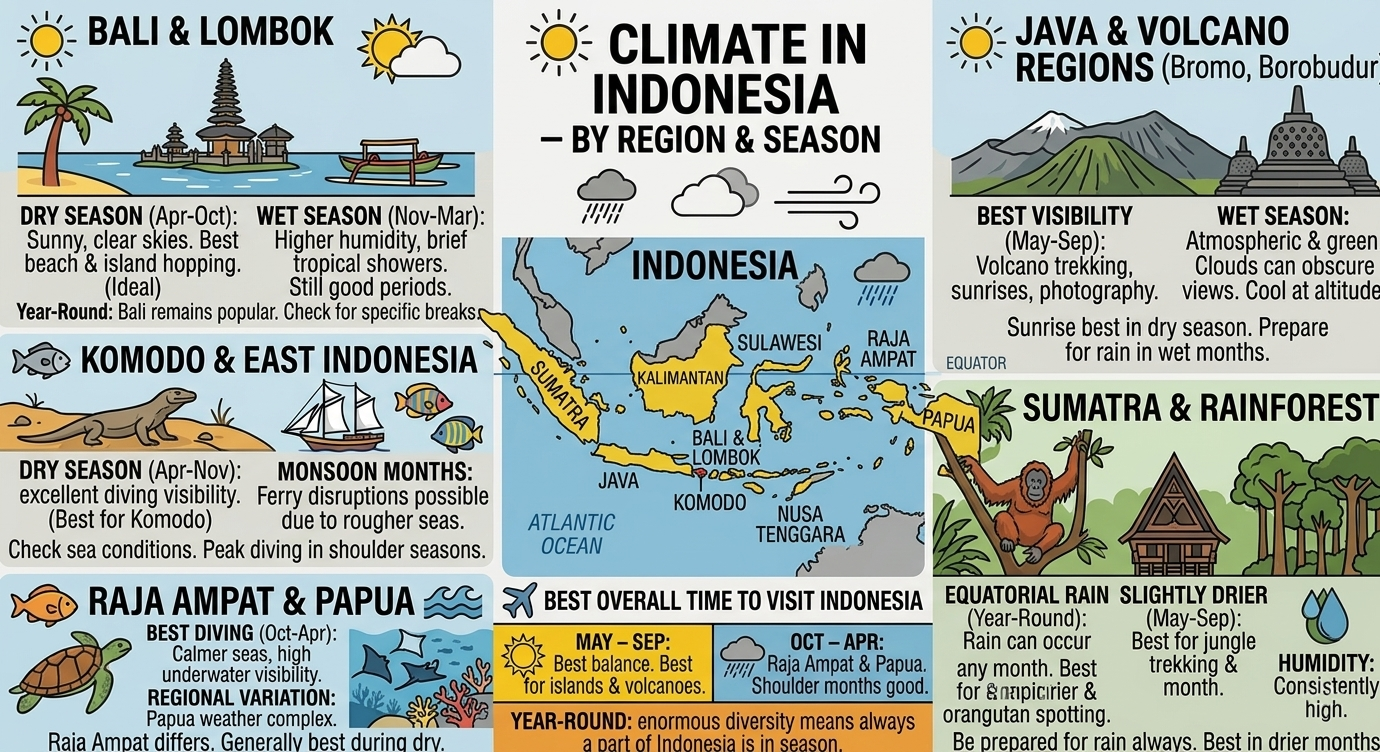
Climate in Indonesia

Komodo, Flores & Eastern Indonesia

April to November
Excellent diving visibility, dry conditions, and calmer seas.

December to March
Some islands experience rougher seas and reduced ferry services during heavy monsoon periods.

Sumatra & Rainforest Regions

Year-Round
Tropical rain can occur in any month due to the equatorial climate.

May to September
Generally slightly drier and better for jungle trekking and orangutan expeditions.

Humidity remains consistently high throughout the year.

Raja Ampat & Papua

October to April
Generally considered the best season for diving with calmer seas and excellent underwater visibility.

May to September
Conditions remain good, though regional weather patterns vary significantly across Papua.

📶 Stay Connected

Skip the SIM hunt on arrival. A travel eSIM lets you activate local data before you board — no plastic card, no roaming fees, instant setup. Roamic covers this destination and most countries in the Galerie.

Get Your Travel eSIM →
Asian Tours · Affiliate

Local-Asia Tours via KKday

For tours and experiences in Indonesia, KKday often has deeper inventory than the global platforms — strong on local operators, particularly in Asia. Worth comparing alongside GetYourGuide before booking.

Browse Indonesia tours on KKday →
Experiences to Book

🎟️ GetYourGuide: "Borobudur sunrise with a local guide, a Mount Bromo jeep tour, and a Kecak fire dance at Uluwatu are three bookings I'd make before leaving home."

Search and Book your flight to Indonesia with : Kiwi.com

Subscribe to the Newsletter

New quizzes, travel stories, and photography from 18 countries — straight to your inbox. One email at a time, no spam.

✓ Thanks! Check your inbox shortly.

Stock Photography

Permaculture Collection

Browse and license the full Permaculture photography collection — available for commercial and editorial use on Shutterstock.

View on Shutterstock →
Permaculture Collections Delphine Camberlin ShutterStock

Stock Photography

Asia Collection

Browse and license the full Asia photography collection — available for commercial and editorial use on Shutterstock.

View on Shutterstock →
Asia Collections Delphine Camberlin ShutterStock