Search across 18 country guides, eco articles, photography, and travel resources.

ALL DESTINATIONS Malta — Mediterranean light on Baroque stone
EUROPE

MaltaValletta, Mdina, Blue Grotto, Gozo

Why Visit Malta?

Malta is a Mediterranean island that most visitors underestimate until they arrive. In an area smaller than the Isle of Wight, it contains some of the world's oldest freestanding structures (the Ġgantija and Mnajdra temples predate Stonehenge by a thousand years), the baroque capital of Valletta (a UNESCO World Heritage city since 1980), the medieval walled city of Mdina, the vivid blue of the Blue Lagoon on Comino, and a harbour whose history includes the Knights of St John, Napoleon, and the WWII siege that earned the island the George Cross. For photographers, Malta is a gift of light, honey-coloured limestone, and history at every turn.

③ Photography Highlights

Valletta at golden hour — the Grand Harbour from the Upper Barrakka Gardens, with the Three Cities across the water turning amber as the sun drops, is one of the finest urban harbour views in the Mediterranean. The baroque architecture of Republic Street in the same light is worth an hour of slow walking.

Mdina at dawn — Malta's ancient walled city is almost deserted before 9am, and the honey-stone streets and carved doorways in the low morning light are extraordinary. This is the version of Mdina that the Game of Thrones crews came for.

The Blue Lagoon, Comino — the turquoise water really is that colour. Go early or in September/October to avoid the summer crowd boats; in low season you can have the lagoon almost to yourself, which makes for very different photographs.

The luzzu boats — Malta's traditional painted fishing boats, brightly coloured with the Eye of Osiris on the prow, are one of the most distinctive visual elements in the Mediterranean. The fishing harbours of Marsaxlokk on Sunday morning, when the market is in full swing, are the best place to find them.

Travel Information about Malta

Malta is one of Europe's most accessible island destinations — a short flight from most European capitals, with no language barrier (English is official), a reliable bus network, and enough to fill 5–10 days without repeating yourself. The climate means it's genuinely enjoyable year-round, though the summer heat in July and August is intense.

🗓️Recommended stay5 – 10 days
🎒Budget / day€50–75 / $55–83Guesthouse, pastizzerija lunches, buses
🥂Luxury / day€150–280 / $165–308Boutique palazzo hotel, boat charters, fine dining
📅Best monthsApril – June · September – November
🌡️Climate13–32°C · Hot dry summers · Mild winters · Very sunny year-roundOver 300 days of sunshine per year
✈️VisaSchengen — EU / EEA free · US / UK visa-free 90 days
💵CurrencyEUR · Cards accepted widely
🚌Getting aroundBuses cover the main island · Ferries to Gozo & Comino · Walking in Valletta
🛡️SafetyLow — very safe, small island community
🍜Must-try foodPastizzi (flaky pastry filled with ricotta or peas), rabbit stew (fenek), ftira bread, kinnie soda
💬LanguageEnglish is an official language — zero barrier · Maltese is fascinating to listen to
Region 01

Valletta & the Main Island — Baroque Capital & Living History

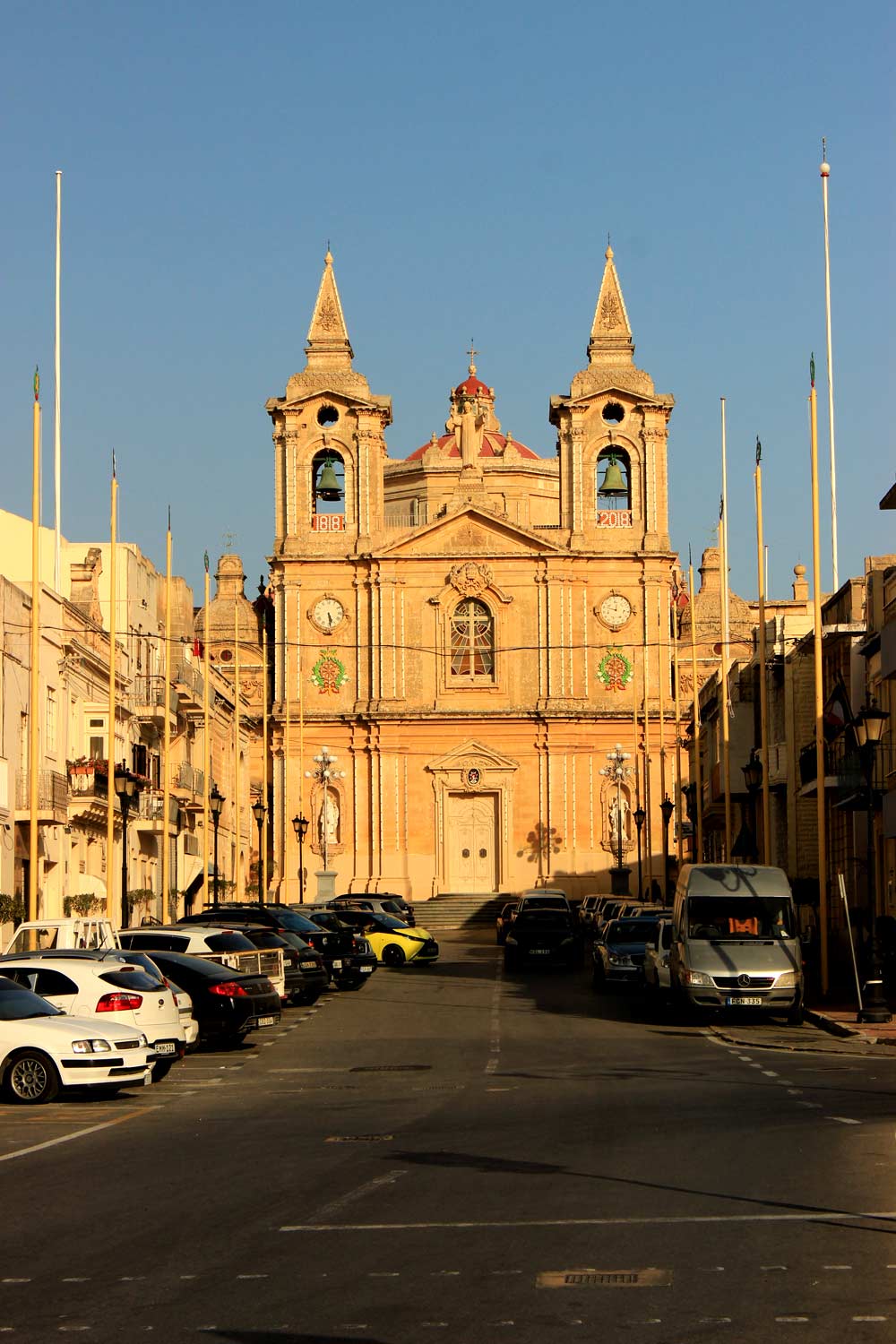
Maltese baroque church
Maltese baroque church — the island's skyline is defined by domes and bell towers · © Delphine Camberlin

Valletta is Europe's smallest capital city by area and one of its most concentrated. The entire city — a UNESCO World Heritage Site since 1980 — sits on a peninsula less than a kilometre long, fortified on every side by 16th-century walls of honey-coloured limestone. Within this compact space is one of the highest densities of historic monuments per square metre of any city in the world: baroque palaces, co-cathedrals with Caravaggio paintings, the Grand Master's Palace, underground wartime shelters, and the extraordinary views from every bastioned corner over the Grand Harbour and the Three Cities across the water.

St John's Co-Cathedral — the most important interior in Malta and one of the most extraordinary baroque church interiors in Europe. Built by the Knights of St John between 1573 and 1578, its floor is entirely composed of the marble tombstones of Knights — over 400 of them, each a differently coloured slab of inlaid heraldry. The ceiling is covered in paintings depicting the life of St John. In the Oratory hangs the largest painting Caravaggio ever made: The Beheading of Saint John the Baptist (1608), the only work he signed with his own name — in the blood of the saint. It is one of the great paintings of the Western tradition and must be seen in person.

The Three Cities — Vittoriosa, Senglea & Cospicua — across the Grand Harbour from Valletta, accessible by the traditional dghajsa water taxi (the most scenic approach) or by bridge. Vittoriosa (Birgu) is the oldest — the first home of the Knights of St John in Malta in 1530, and the site of Fort St Angelo, where the Knights held out during the Great Siege of 1565. Its streets are barely changed since the 16th century: narrow, quiet, and almost tourist-free even in summer. The Inquisitor's Palace (the only surviving Inquisitor's palace in the world, complete with intact prison cells and tribunal chambers) is extraordinary. Senglea's Safe Haven Garden looks directly across at Valletta in one of the finest harbour photographs you can take in the Mediterranean.

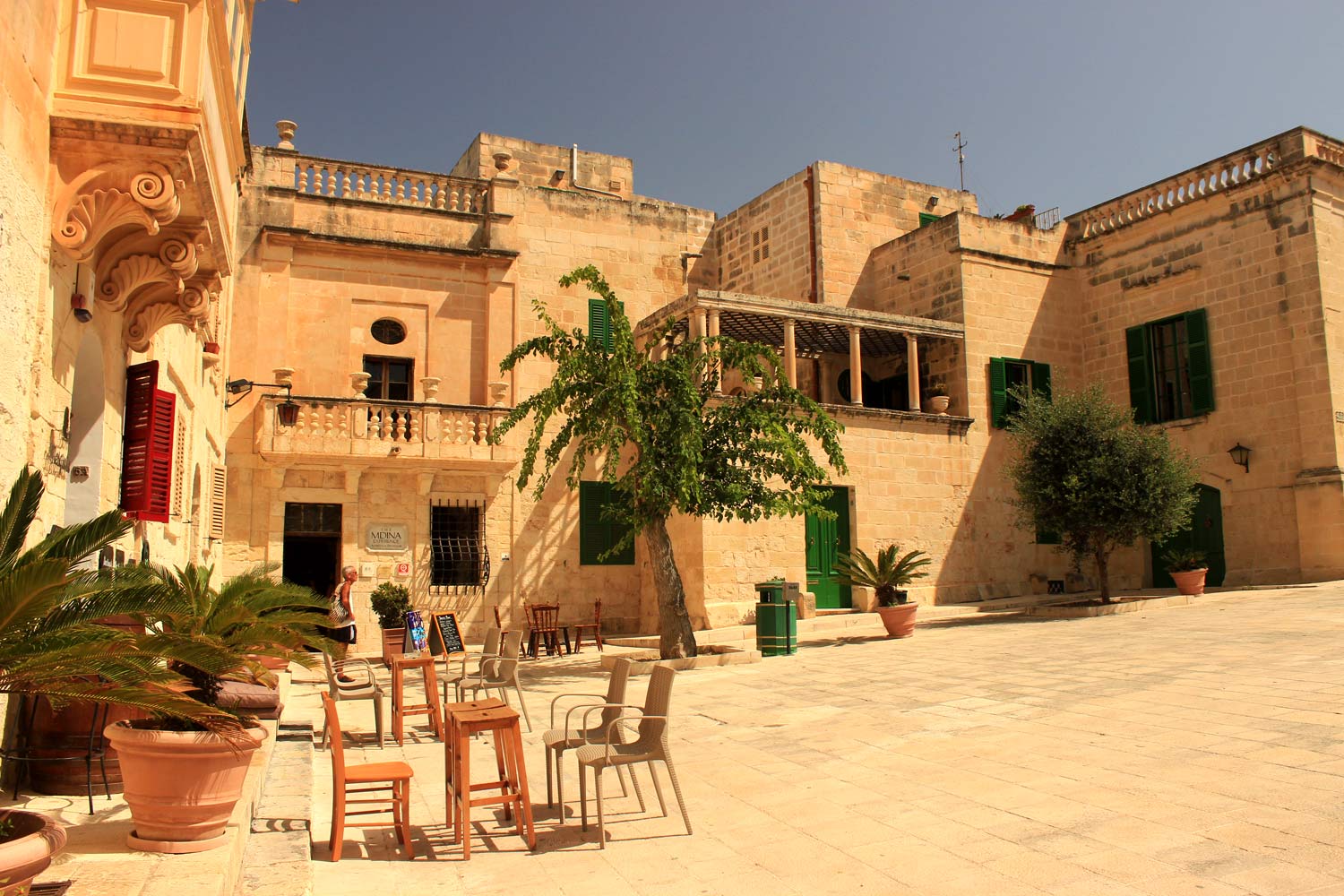
Mdina — the Silent City — Malta's ancient walled capital, abandoned as the administrative centre when the Knights built Valletta but preserved almost perfectly in its medieval form. The streets within the walls are so quiet — vehicles are prohibited — that you can hear your own footsteps on the limestone. At dawn, before the tour groups arrive, Mdina is one of the most atmospheric places in the Mediterranean: the honey-stone facades of the Norman cathedral and the baroque palaces, the carved Maltese Cross doorways, and the extraordinary view from the city walls across the island to the sea. Game of Thrones filmed its early Westeros street scenes here — the visual logic is immediately obvious. Rabat, immediately outside the walls, has Roman catacombs beneath the streets, still largely unexcavated.

Marsaxlokk — Malta's largest fishing village, on the southeast coast, and the best single half-day on the main island. The Sunday morning market alongside the harbour combines fresh fish, vegetables, honey, lace, and tourist goods in a genuinely local atmosphere, with the fleet of traditional luzzu fishing boats (their prows painted with the Eye of Osiris, derived from Phoenician tradition) moored in the foreground. Eat grilled fish at one of the quayside restaurants — fresh-caught that morning, simply prepared, with Maltese bread and local olive oil. The lampuki (mahi-mahi) pie when in season is extraordinary.

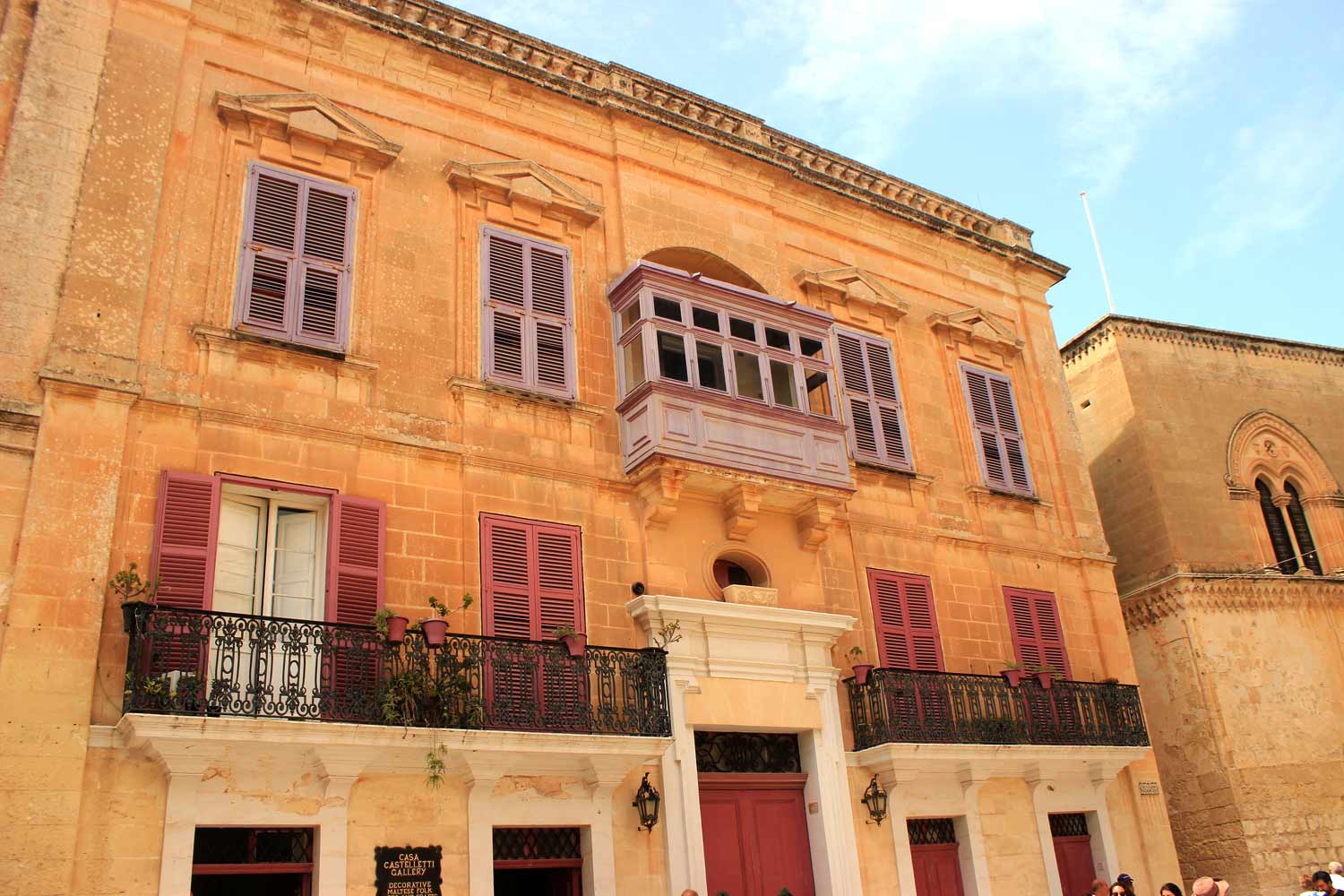
Mdina stonework
Mdina stonework — the ancient honey-coloured limestone of Malta's Silent City · © Delphine Camberlin

Main Island Tips

  • Valletta: park at the waterfront and walk in — the city is entirely pedestrianised inside the walls. The Upper Barrakka Gardens for the Grand Harbour view, then down through Republic Street at golden hour
  • St John's Co-Cathedral: buy tickets in advance online — queues are long in summer and entry is timed. Allow 90 minutes minimum
  • The Three Cities: take the dghajsa water taxi from Valletta's Lower Barrakka (a few euros, five minutes, unforgettable perspective)
  • Mdina: arrive before 9am or after 5pm to have the streets almost to yourself — summer midday is overwhelming with tour groups
  • Marsaxlokk fish market: Sunday morning, 7am onwards. At its best before 10am
  • Drive on the left in Malta — British colonial legacy, along with UK plug sockets (bring a universal adapter)
Region 02

Gozo — Slower, Greener, Wilder

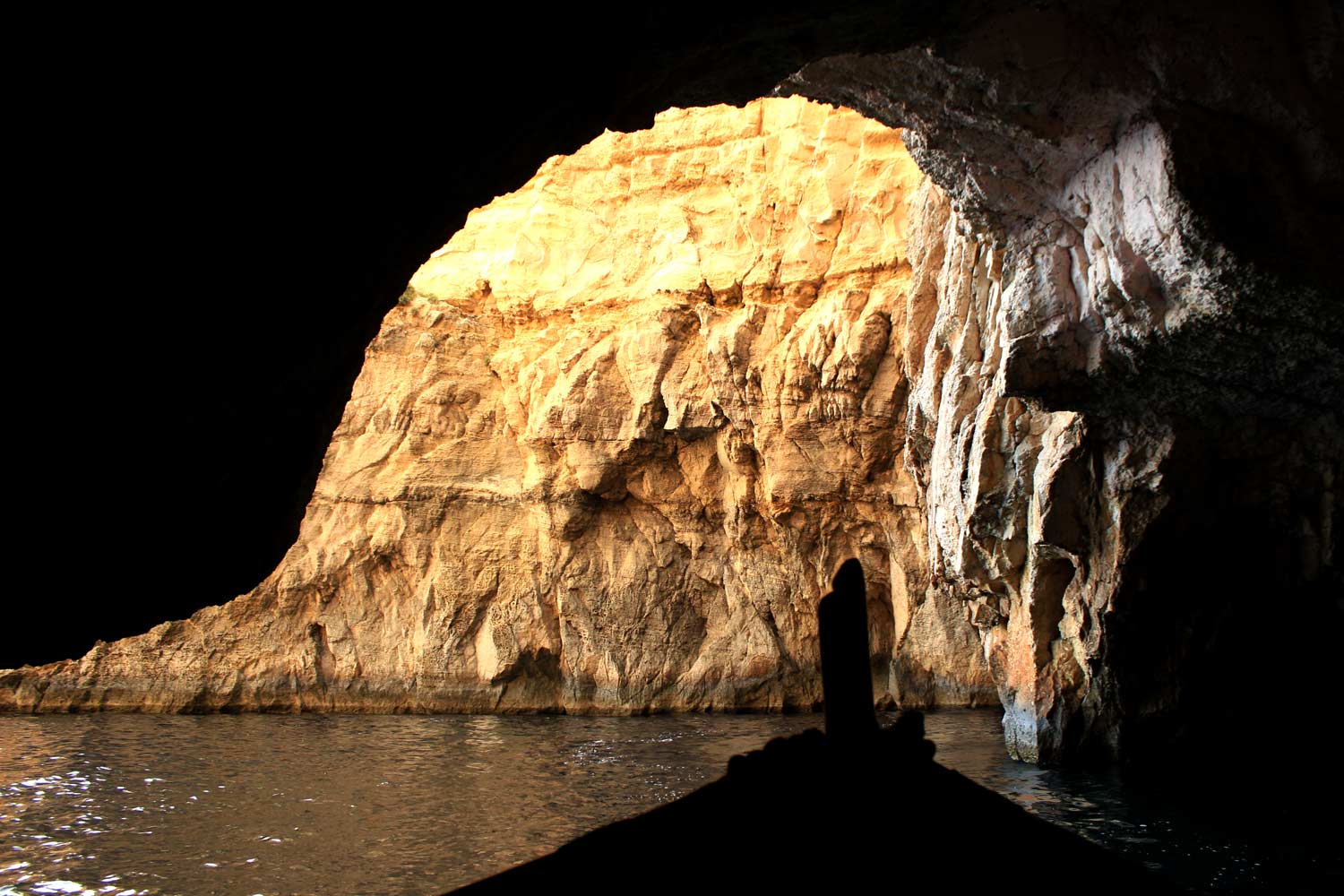
Blue Grotto sea cave
Blue Grotto sea cave — the stunning limestone arches of Malta's south coast · © Delphine Camberlin

Gozo is Malta's sister island — 25 minutes by frequent ferry from Ċirkewwa — and feels, immediately on arrival, like somewhere entirely different. Smaller (67 km²), more rural, quieter, and noticeably greener in spring, Gozo has preserved a pace of life that the main island has largely lost. The villages still function around their parishes and their patron saints. The food is better (Gozitan bread, sheep's cheese, local wine). The landscape — terraced hillsides, coastal cliffs, and deep bays — is more dramatic. And the diving, centred on Dwejra Bay, is among the finest in the Mediterranean.

The Citadella, Victoria (Rabat) — Gozo's capital is a small, bustling market town dominated by the Citadella — a medieval hilltop fortification of extraordinary completeness, with its cathedral, bastions, museums, and narrow streets largely unchanged since the Knights rebuilt it in the 17th century. The panoramic views from the Citadella walls — across Gozo's entire landscape to the sea in every direction — are among the finest in the Maltese archipelago. In summer the Citadella hosts open-air opera performances and cultural events that make Gozo briefly feel like one of the great cultural destinations of southern Europe.

Dwejra Bay — the Azure Window, the limestone sea arch that defined Gozo's visual identity for decades, collapsed into the sea during a storm in March 2017. It is gone and will not return. What remains at Dwejra is still extraordinary: the Inland Sea (a lagoon connected to the open sea through a tunnel in the cliff, used by small fishing boats), the Blue Hole (one of Europe's finest dive sites, immediately adjacent — a natural vertical shaft in the seabed), and the dramatic coastal geology of ancient coral reef turned to rock. The site remains worth visiting for the landscape and the diving; do not go expecting the Azure Window.

Ramla Bay — Gozo's finest beach, a sweep of unusual red-orange sand (the colour comes from the iron-rich sediment of the surrounding hills) backed by citrus and carob trees. It was quiet in a way that no beach on the main island can manage. The Roman ruins at one end (remains of a villa) and the cave above the beach (associated with Homer's Calypso, who kept Odysseus imprisoned on her island, which the Maltese have always claimed was Gozo) add texture to what would otherwise be an already excellent beach.

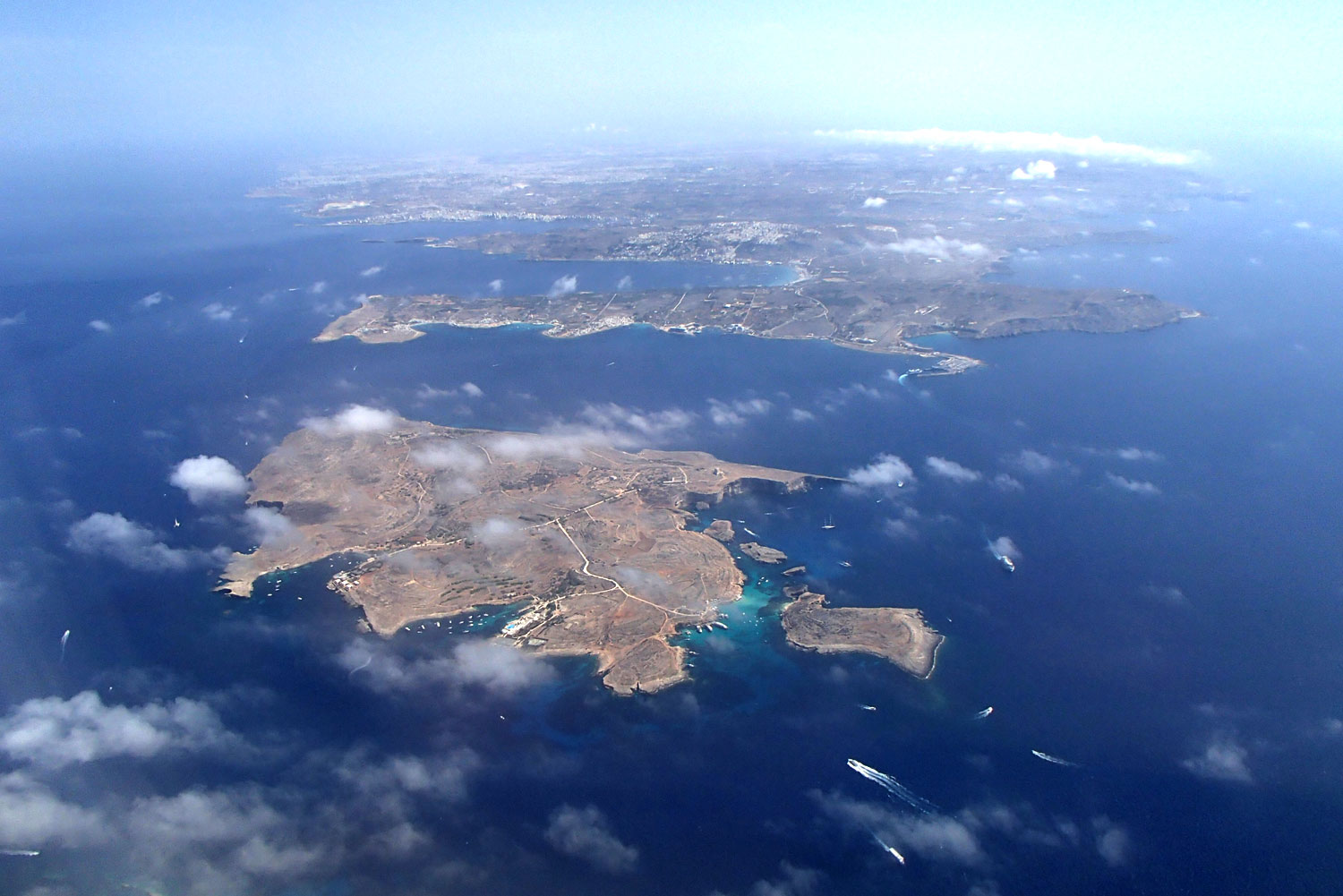
Comino — the tiny island (3 km²) between Malta and Gozo, permanently inhabited by only a handful of families, dominated entirely by the Blue Lagoon. The water is the colour of shallow Caribbean sea — turquoise, transparent, genuinely extraordinary — and in summer the lagoon is so crowded with day-trip boats that it loses much of its beauty. The solution is to visit in September or October (after the main season, when the water is still warm but the crowds have thinned), or to stay overnight in one of the island's tiny guesthouses. The circumference walk (about 2 hours) past the 17th-century Santa Marija Tower and the sea caves on the north shore is outstanding.

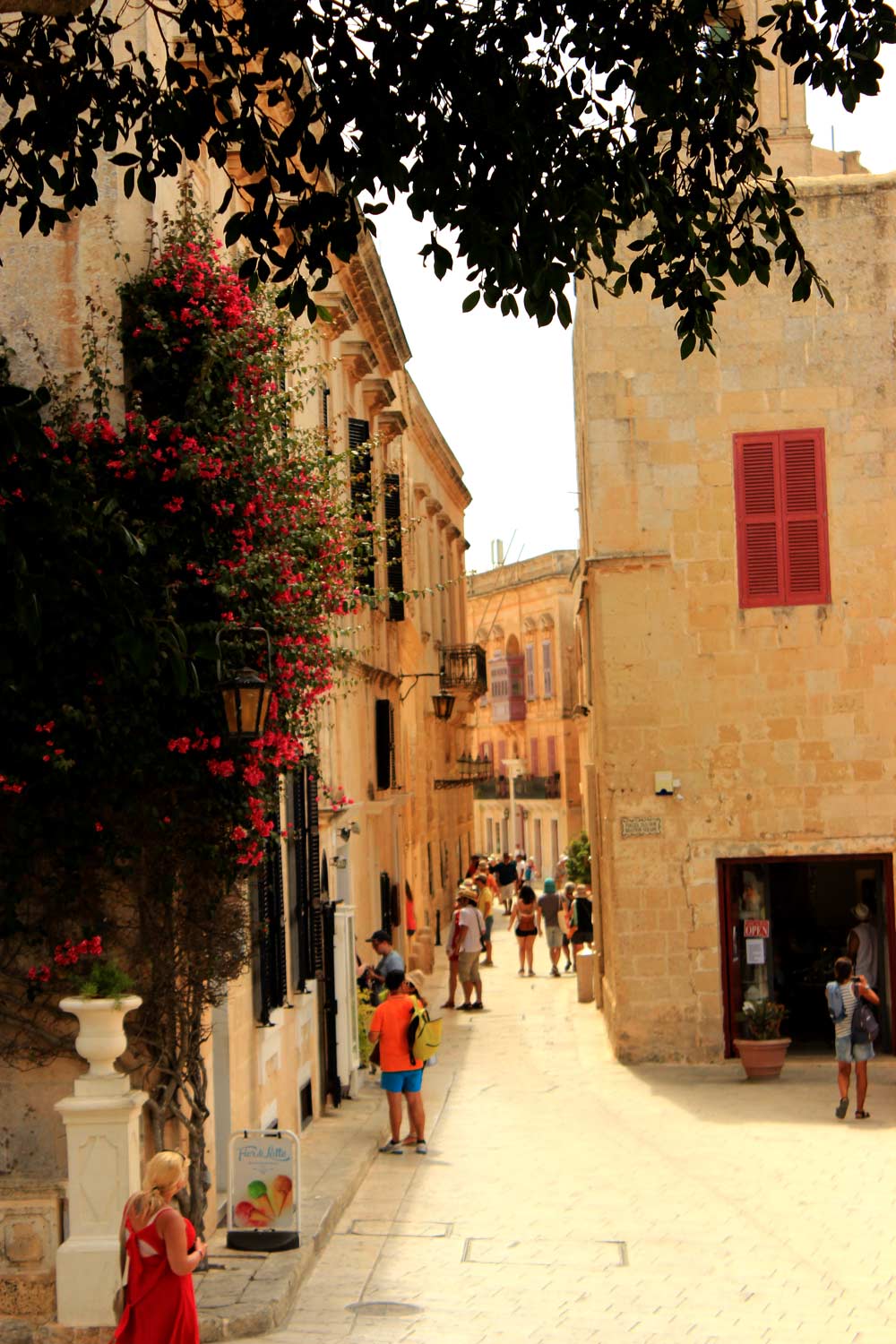
Flower-lined street Mdina
Flower-lined street Mdina — the medieval walled capital · © Delphine Camberlin

Gozo & Comino Tips

  • The Gozo ferry from Ċirkewwa runs frequently (every 45 minutes, more in peak season) — no booking needed, just turn up
  • Rent a car on Gozo — the island's villages, bays, and cliff walks are spread out and public transport is limited
  • Ġgantija Temples (UNESCO, 3600 BCE) near Xagħra are among the oldest free-standing structures in the world — older than Stonehenge, older than the Egyptian pyramids. Book in advance
  • Gozitan ġbejna (fresh sheep's cheese) from a village shop, eaten with local bread and sea salt, is the finest simple food in Malta
  • Blue Lagoon, Comino: the first and last boats of the day have far fewer people — a 7am arrival gives you an hour of relative peace before the day-trip flotillas arrive
  • Gozo's village festas (summer, particularly July and August) are extraordinary — marching bands, fireworks, church facades lit with hundreds of coloured bulbs. Nadur's festa is one of the finest
9,000 Years of History — Temples, Knights, Siege, and the George Cross

Malta's historical density is astonishing for an island of 316 km². The Maltese Archipelago has been continuously inhabited for over 9,000 years, and every layer of that habitation has left visible traces in the landscape.

The megalithic temples — Malta and Gozo contain the world's oldest free-standing stone structures, built between 3600 and 2500 BCE by a civilisation that disappeared entirely before the Bronze Age. The Ħaġar Qim and Mnajdra temples on the main island's southern coast, and the Ġgantija temples on Gozo, predate Stonehenge by over a thousand years and the Egyptian pyramids by several centuries. They are aligned with astronomical precision — the Mnajdra temples are orientated so that at the spring and autumn equinoxes, the rising sun illuminates the central corridor precisely. They are UNESCO World Heritage Sites and among the most remarkable archaeological monuments in Europe. The Ħal Saflieni Hypogeum — an underground temple carved entirely from rock around 4000 BCE — is so fragile that visitor numbers are strictly limited; book months in advance.

Honey-coloured limestone buildings Mdina Malta
Mdina — the Knights' Malta in honey-coloured limestone, unchanged since the 16th century · © Delphine Camberlin

The Knights of St John, 1530–1798 — the most formative period in Malta's modern history and the one whose physical legacy dominates every major town. The Knights Hospitaller, a medieval Christian military order founded in Jerusalem to care for sick pilgrims, had been driven successively from the Holy Land, Cyprus, and Rhodes by the Ottoman Empire. In 1530, Holy Roman Emperor Charles V ceded Malta to the Knights in perpetual lease for the annual tribute of one Maltese Falcon (a real arrangement). What followed was 268 years of extraordinary fortification building, baroque architecture, and Mediterranean warfare. The Great Siege of 1565 — when the Knights and their Maltese garrison of perhaps 9,000 people held off an Ottoman invasion force of 40,000 for nearly four months — remains one of the great military engagements of the 16th century. The Knights held. Malta was not taken. Grand Master Jean de Valette, who led the defence, founded the new capital that bears his name: Valletta. Napoleon took Malta from the Knights in 1798 without a battle — they had grown complacent and corrupt, and offered only token resistance. Two years later the Maltese rose against the French and asked Britain for protection.

Baroque church Malta village
A Maltese baroque church — the island's architecture tells 9,000 years of layered history · © Delphine Camberlin

WWII — "The George Cross Island" — Malta's most recent defining historical experience, and one still felt deeply in national memory. From 1940 to 1942, Malta — then a British Crown Colony housing critical naval and air bases — was subjected to the most sustained aerial bombardment of any territory in the entire Second World War. More bombs fell on Malta than on London during the Blitz. The harbours were bombed daily. The supply convoys were destroyed at sea. At one point in 1942 the island had supplies for only two weeks. The tanker SS Ohio — crippled, decks awash, towed into Grand Harbour by destroyers while Spitfires flew cover — became one of the iconic images of the war. In April 1942, King George VI awarded the George Cross — Britain's highest civilian bravery award — to the entire island of Malta, the only time in history a collective rather than an individual received it. The Cross now appears on the Maltese flag.

The Maltese language — one of the most linguistically distinctive languages in Europe. Maltese is the only Semitic language written in the Latin alphabet and the only Semitic language that is an official language of the European Union. Its core vocabulary and grammar are Arabic in origin (from the Arab occupation of 800–1090 CE), layered with Sicilian and Italian loanwords from the Norman and subsequent periods, English vocabulary from the British colonial era, and a distinctive sound system unlike anything else in the Mediterranean. Hearing it spoken — the gutturals of Arabic emerging from what looks like Italian — is one of the stranger and more fascinating linguistic experiences in Europe. Almost all Maltese people speak fluent English (another British legacy), making Malta uniquely accessible to Anglophone visitors.

Hollywood in the Mediterranean — Malta's Film Legacy

Malta has been one of the most productive film locations in the world for several decades, and for entirely logical reasons: the concentration of authentic medieval and baroque architecture, a Mediterranean light quality that is unequalled in northern Europe, a vast outdoor water tank (one of the largest in the world, located at Fort Ricasoli) that allows sea-scale filming in controllable conditions, and a film services industry built up over 40 years. The result is that walking around Valletta, Vittoriosa, and Mdina, you are constantly walking through film sets you have already seen.

Gladiator (2000) — Russell Crowe's Roman epic used Fort Ricasoli (the fortress at the entrance to Grand Harbour) for the film's battle sequences and key dramatic scenes. The same location served Gladiator II (2024). The Roman Villa in Rabat — the Domus Romana, with its extraordinary mosaic floors — doubled as Roman interior scenes. Vittoriosa's streets appear as Roman imperial Rome.

Mdina carved windows Malta Game of Thrones King's Landing
Mdina's carved limestone windows — King's Landing in Season 1 of Game of Thrones · © Delphine Camberlin

Game of Thrones, Season 1 (2011) — Malta provided the visual foundation for the first season of the show before production moved to Northern Ireland and Croatia. Mdina became King's Landing (and its streets are immediately recognisable from the show — this is where Ned Stark and Arya Stark had their first season scenes). Fort Manoel doubled as the Great Sept of Baelor — the site of Ned Stark's execution. Fort St Angelo served as the Red Keep. Gozo's Azure Window was the backdrop for Daenerys and Khal Drogo's wedding. The Azure Window is now gone, but the other locations are all still there and identifiable.

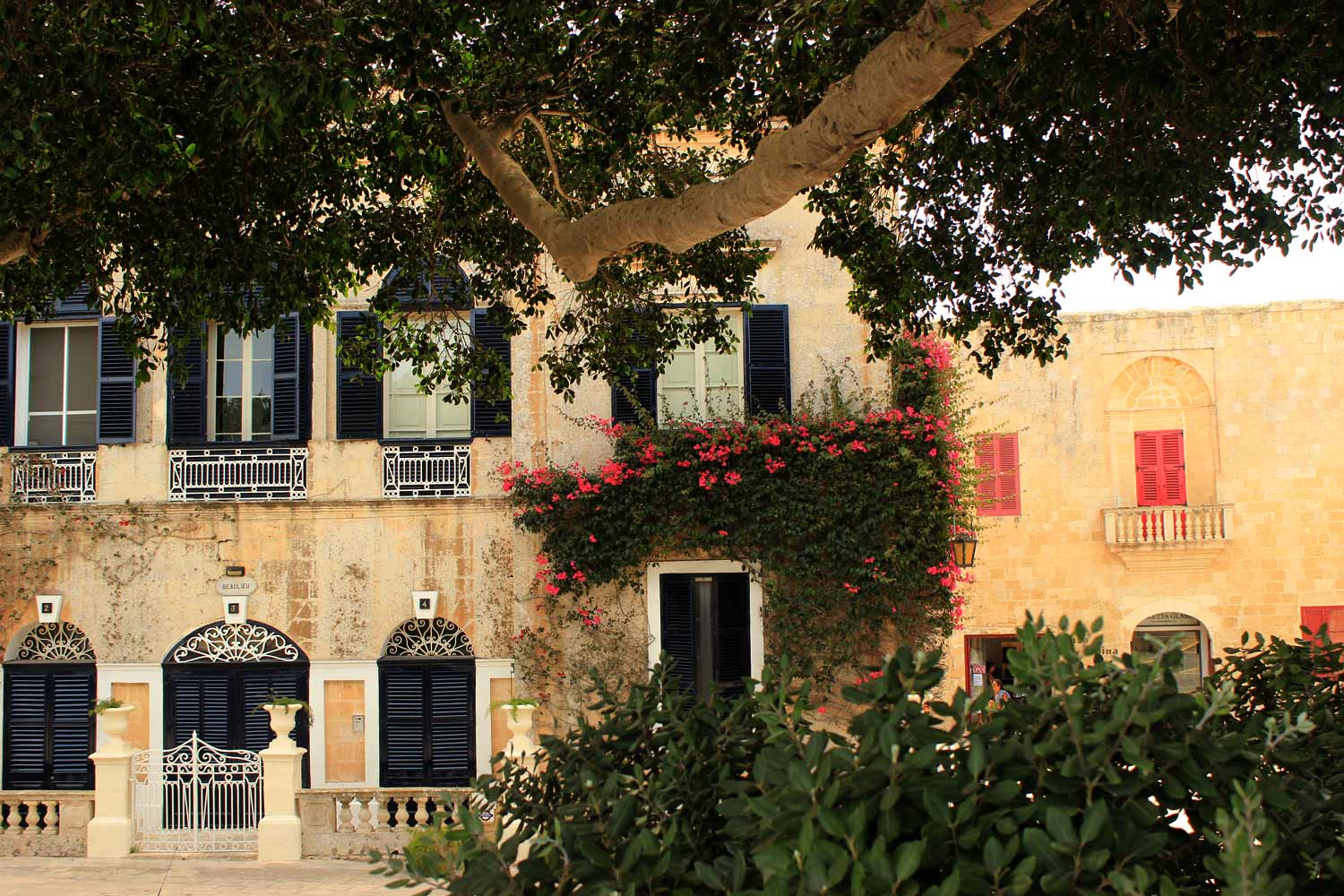
Mdina square Malta film location
Mdina's timeless streets — a film set for Gladiator, Troy, Game of Thrones and more · © Delphine Camberlin

Troy (2004) — Fort Ricasoli again, this time as the ancient walls of Troy itself. Brad Pitt, Eric Bana, Orlando Bloom. The scale of the fortification walls made Malta the only viable location in the Mediterranean for the siege sequences.

The Count of Monte Cristo (2002) — Comino's Santa Marija Tower as the Château d'If prison; Valletta and Vittoriosa's streets as 19th-century Marseille and Paris. The film's visual grammar is entirely Maltese.

Other productions: Captain Philips (Tom Hanks, 2013, Senglea harbour as the African coast), World War Z (Brad Pitt, 2013, Valletta streets as zombie-overrun Jerusalem), Jurassic World: Dominion (2022, Valletta and Vittoriosa), and the 1980 Popeye (Robin Williams — the set built at Anchor Bay in Mellieħa still stands and operates as Popeye Village, one of Malta's more surreal tourist attractions).

A dedicated film locations tour of Malta — running 4–5 hours by private car, taking in Valletta, Vittoriosa, Mdina, and Gozo's Dwejra — is one of the most entertaining half-days you can spend on the island, particularly if you rewatch Game of Thrones Season 1 in the days before arriving.

Maltese Food & the Village Festa — Mediterranean Soul

Maltese cuisine sits at the intersection of Sicily, North Africa, and the Levant — a Mediterranean diet shaped by centuries of trade routes, Ottoman occupation, Arab agricultural inheritance, and the limited but excellent produce of a small limestone island. It is not a glamorous cuisine by international standards, but it is honest, flavourful, and deeply embedded in local identity.

Pastizzi — the definitive Maltese snack, available at every pastizzeria (a ubiquitous small café serving essentially only pastizzi, coffee, and soft drinks) from early morning onwards. Flaky, greasy, diamond-shaped or round pastry parcels filled with either ricotta (pastizzi tal-irkotta) or mushy peas (pastizzi tal-piżelli). They cost around €0.30–0.50 each and are eaten hot, standing at a zinc counter, ideally with a bitter Kinnie (a Maltese soft drink made from bitter oranges and aromatic herbs, slightly medicinal in the best possible way). The pastizzeria is where Maltese social life actually happens: multigenerational, unhurried, entirely local.

Flower-lined street Mdina Malta village
A Maltese village street in bloom — local life runs at a Mediterranean pace · © Delphine Camberlin

Fenek (rabbit) — Malta's national dish and the one that most surprised me. Rabbit is eaten here with a frequency and devotion that reflects its historical importance as the primary source of meat protein on an island with limited cattle-grazing land. Fenek moqli (fried rabbit), fenek fil-inbid (rabbit braised in local wine and garlic) — the latter slow-cooked until the meat falls from the bone and the sauce becomes something deeply savoury and aromatic. The Sunday fenkata — a traditional family feast of rabbit, shared with wine and village bread — is a cultural institution. Order it at a village restaurant rather than a tourist establishment.

Ftira — Maltese sourdough bread, its texture denser and its crust thicker than Italian bread, made in a ring shape and traditionally eaten as an open sandwich topped with tomatoes, tuna, olives, capers, and ġbejna (sheep's cheese). The ftira tal-Malti as a lunch — bought from a village bakery, eaten sitting on a harbour wall — is one of the finest simple things to eat in the Mediterranean. In Gozo, the ftira ghawdxija is a thicker, pizza-like version stuffed with potatoes, tomatoes, anchovies, and local cheese.

Ġbejna — small round cheeses made from fresh sheep's milk (Gozo's herds graze on distinctive wild herbs that flavour the milk). Available fresh (mild, creamy), salt-cured (firmer, saltier), or peppered (rolled in coarsely cracked black pepper). An essential ingredient in Maltese cooking and one of the finest artisan cheeses in the Mediterranean. Buy from a farm shop in Gozo.

Lampuki pie — a seasonal treat, available August to November when the lampuki (mahi-mahi/dolphin fish) runs. Fresh lampuki in a savoury pastry case with spinach, olives, capers, and tomatoes. Malta's most elegant local dish and the one most worth seeking out in season.

Horse carriage Malta traditional village festa
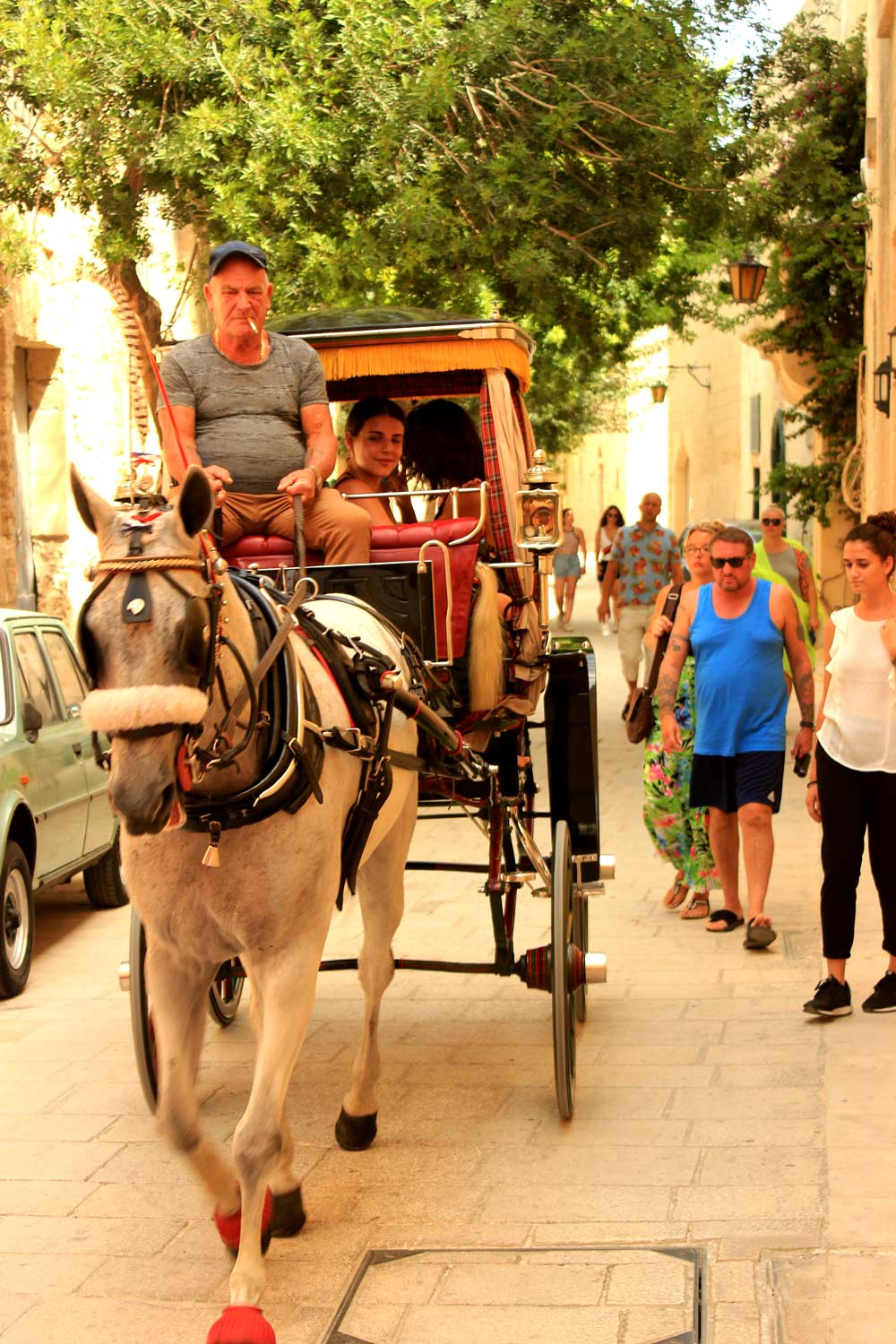
Traditional horse carriage — festa processions are a cornerstone of Maltese village culture · © Delphine Camberlin

The village festa — every Maltese village celebrates its patron saint's feast day with an intensity that must be experienced in person. The festa season runs May through September, peaking in July and August, with at least one village celebrating each weekend. The preparations begin weeks in advance: statues of the patron saint decorated with baroque gold, church facades covered in electric bulb outlines (thousands of individual coloured bulbs, not LED strips — the old-fashioned kind that give a warmer, more chaotic light), street arches of greenery and banners in the parish colours, rival band clubs marching through streets too narrow for them. The evening culminates in a fireworks display — Maltese fireworks are a tradition of extraordinary pyrotechnic ambition, ground-level as well as aerial, with the village square vibrating from the concussions. Being in a Maltese village during its patron saint's festa is one of the great European folk culture experiences.

Diving Malta — Europe's Finest Underwater Visibility

Malta consistently ranks among the top ten diving destinations in Europe, and for measurable reasons: water visibility of 30–45 metres (exceptional by Mediterranean standards), water temperatures warm enough for comfortable diving from April to November, an extraordinary variety of site types within a small area, and a well-developed dive industry with centres on all three islands.

The visibility is a function of Malta's geology — the islands are almost entirely limestone with very little sediment runoff, and the deep, clear water of the central Mediterranean surrounds them. On a calm day at a site like the Blue Hole in Gozo, the underwater visibility is so extraordinary that it creates a disorienting sense of scale.

Blue Grotto sea cave Malta crystal clear water
Blue Grotto sea cave — Malta's limestone geology creates extraordinary underwater clarity · © Delphine Camberlin

The Blue Hole, Dwejra, Gozo — consistently cited as one of the top dive sites in Europe. A natural rock chimney descends from the surface to 15 metres before opening through an arch (the "window") into open water. The outer face drops to 60 metres along a wall covered in gorgonian sea fans, sponges, and Mediterranean reef life. Entry is from the shore by ladder — no boat needed. The site is accessible to divers of all levels above beginner.

The Inland Sea tunnel, Dwejra — a short boat dive through a natural tunnel in the cliff, emerging from the sheltered lagoon into the open sea. The light effects as you move through the tunnel — blue filtered through rock, the open Mediterranean appearing as a circle of light at the end — are extraordinary. Entry from the small fishing boats that take dive groups through for a modest fee.

Blue Lagoon Comino Malta aerial view crystal water
Blue Lagoon, Comino — crystal-clear Mediterranean water surrounding Malta's limestone islands · © Delphine Camberlin

Wrecks — Malta has several accessible wreck dives, including the deliberately sunk Um El Faroud (a Libyan oil tanker, 105 metres long, now sitting upright at 25–35 metres off Wied iż-Żurrieq) and the HMS Maori (a WWII destroyer bombed in 1942, broken into sections in Valletta's harbour — historically significant and photographically extraordinary). The wrecks are new ecosystems now, colonised by grouper, barracuda, and octopus.

Practical notes — diving in Malta is available year-round but optimal April to November. Water temperatures peak at 27°C in August–September and drop to 14°C in January–February. Most dive centres offer PADI courses, equipment rental, and guided boat trips. The dive infrastructure is excellent and the English-speaking instructors are generally highly qualified. A 3mm wetsuit is sufficient for summer diving; 5mm for autumn and spring.

Suggested Itineraries in Malta

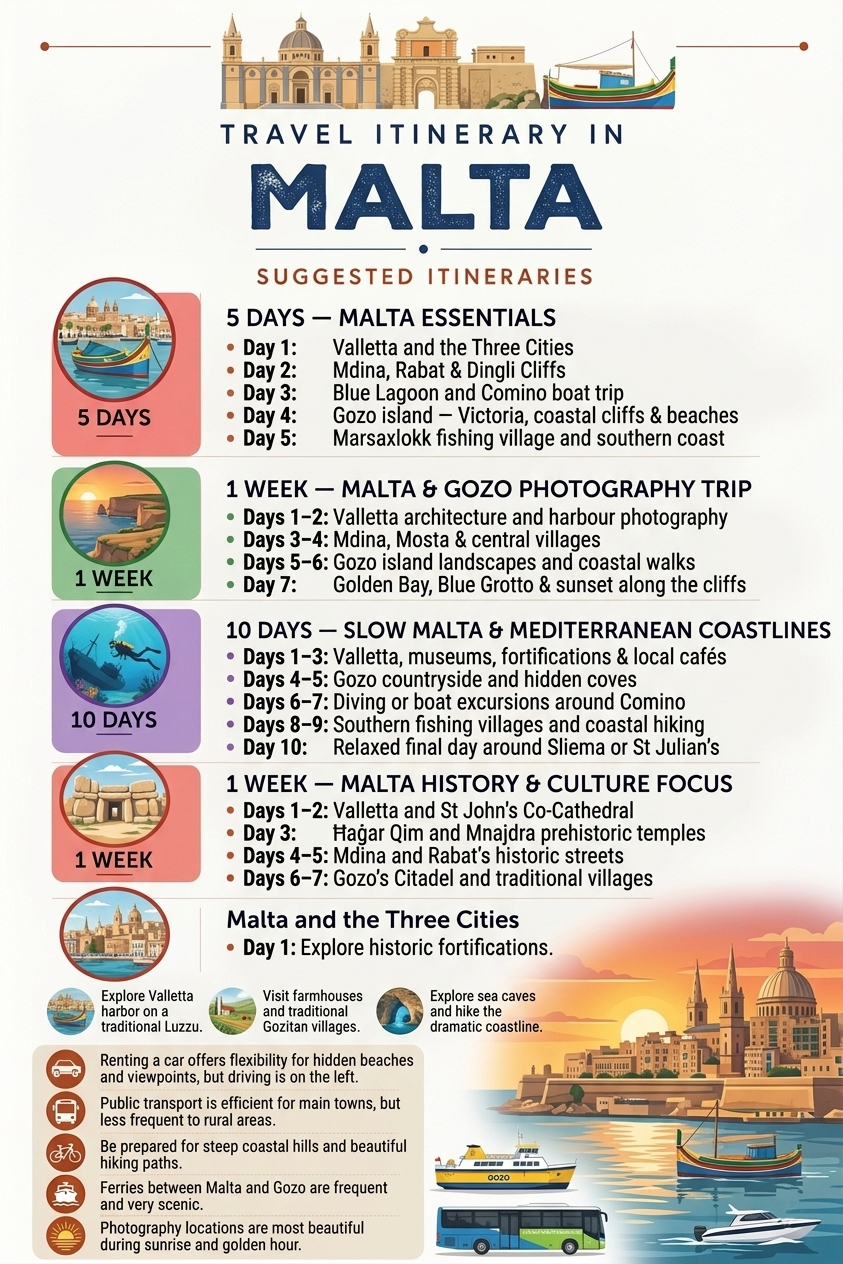
5 days — Malta Essentials

  • Day 1: Valletta and the Three Cities
  • Day 2: Mdina, Rabat & Dingli Cliffs
  • Day 3: Blue Lagoon and Comino boat trip
  • Day 4: Gozo island — Victoria, coastal cliffs & beaches
  • Day 5: Marsaxlokk fishing village and southern coast

1 week — Malta & Gozo Photography Trip

  • Days 1–2: Valletta architecture and harbour photography
  • Days 3–4: Mdina, Mosta & central villages
  • Days 5–6: Gozo island landscapes and coastal walks
  • Day 7: Golden Bay, Blue Grotto & sunset along the cliffs
    • 10 days — Slow Malta & Mediterranean Coastlines

      • Days 1–3: Valletta, museums, fortifications & local cafés
      • Days 4–5: Gozo countryside and hidden coves
      • Days 6–7: Diving or boat excursions around Comino
      • Days 8–9: Southern fishing villages and coastal hiking
      • Day 10: Relaxed final day around Sliema or St Julian’s
        • 1 week — Malta History & Culture Focus

          • Days 1–2: Valletta and St John’s Co-Cathedral
          • Day 3: Ħaġar Qim and Mnajdra prehistoric temples
          • Days 4–5: Mdina and Rabat’s historic streets
          • Days 6–7: Gozo’s Citadel and traditional villages
            • Malta is compact and easy to explore without long travel times, making it ideal for shorter trips. Renting a car offers flexibility for hidden beaches and coastal viewpoints, though driving is on the left-hand side. Ferries between Malta and Gozo are frequent, and many of the islands’ best photography locations are most beautiful during sunrise and golden hour.
Itineraries in Malta

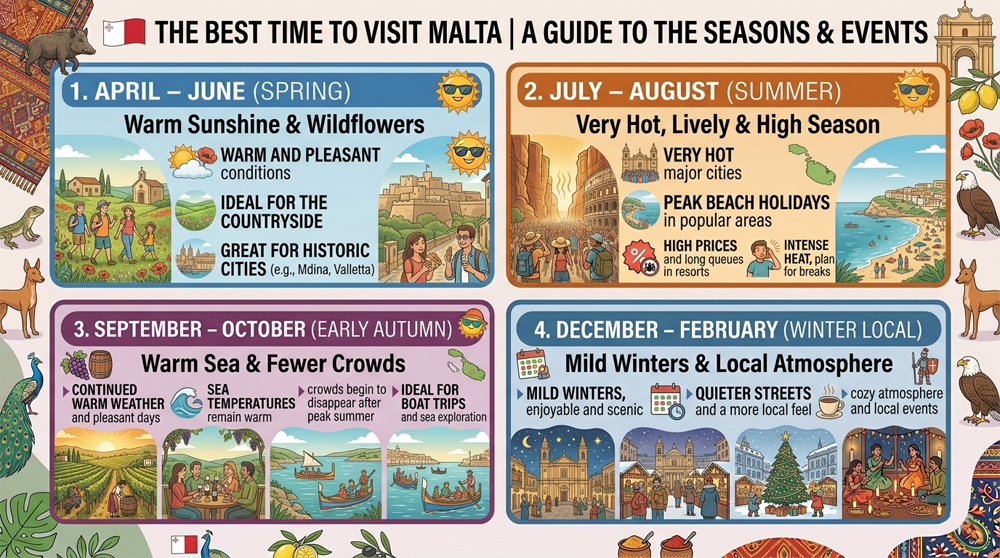
When are the Best Time To Visit Malta?

The Best Time to visit Malta

April – June

Excellent balance of sunshine, comfortable temperatures, and moderate crowds.

September – October

Warm sea temperatures and quieter travel conditions after peak season.

July – August

Best for beaches and nightlife, though often extremely hot and crowded.

Year-Round

Malta remains one of Europe’s best year-round Mediterranean destinations thanks to its mild winters, historic cities, and coastal scenery.

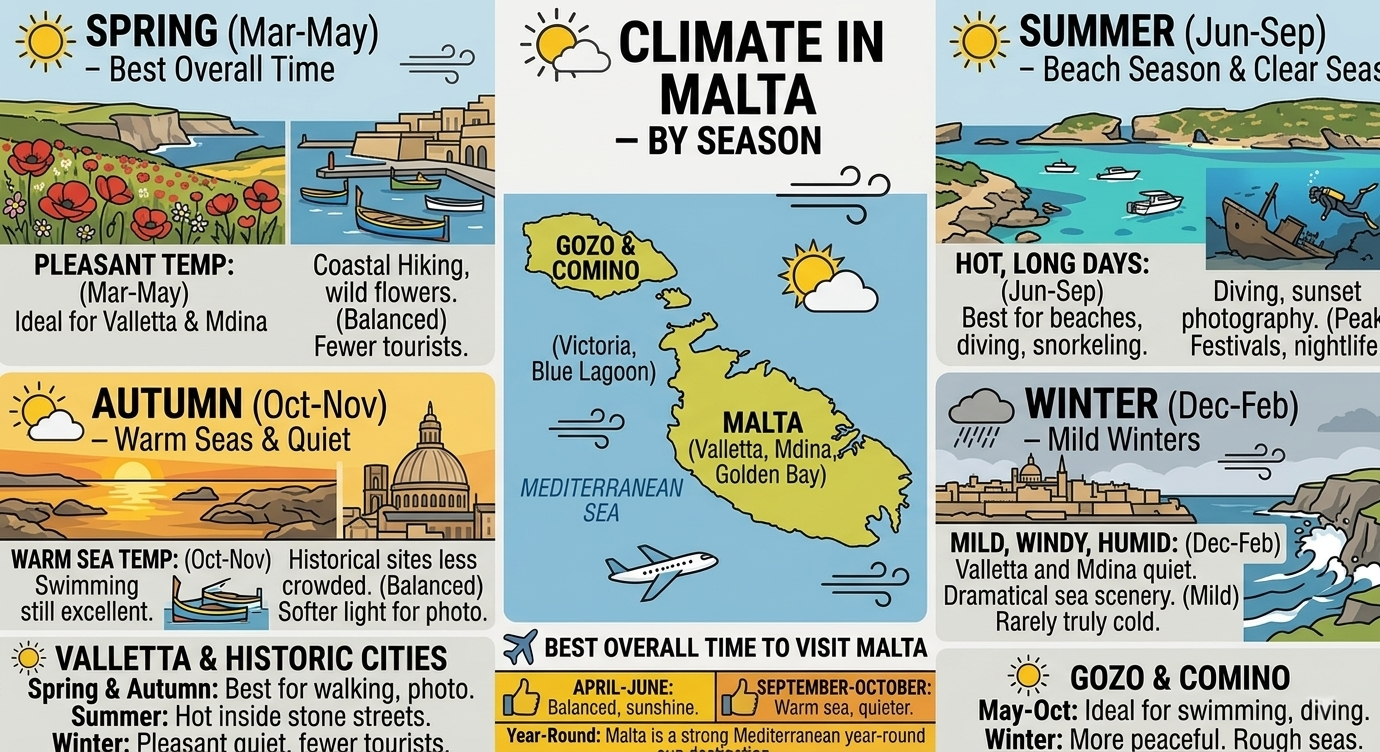
Climate in Malta — By Season & Region

Malta has a classic Mediterranean climate with long hot summers, mild winters, and over 300 days of sunshine per year. Located between Sicily and North Africa, the islands enjoy warm temperatures for much of the year, making Malta one of Europe’s strongest year-round sun destinations.

Despite its small size, seasonal differences significantly affect the atmosphere of the islands — from the busy beach energy of summer to the quieter, softer light of winter and spring.

Spring — March to May

Best Overall Time to Visit
Spring is one of the most pleasant seasons in Malta, with comfortable temperatures, blooming countryside, and fewer tourists before the summer rush.

  • Exploring Valletta and Mdina
  • Coastal walks and hiking
  • Photography and sightseeing
  • Boat trips around Gozo and Comino
  • Outdoor cafés and historical sites

Wildflowers cover parts of the countryside during March and April, especially on Gozo.

Summer — June to September

Beach Season & Crystal-Clear Seas
Summer brings hot temperatures, long sunny days, and vibrant nightlife across the islands.

  • Swimming and beach travel
  • Diving and snorkelling
  • Boat excursions and island hopping
  • Sunset photography and seaside dining
  • Festivals and nightlife

Sea temperatures become especially warm from July onwards. July and August are peak tourist months, with temperatures often exceeding 35°C.

Autumn — October to November

Warm Seas & Quieter Atmosphere
Autumn is often considered one of the best times to visit Malta. The sea remains warm after summer, while tourist crowds begin to decrease.

  • Swimming conditions remain excellent
  • Temperatures become more comfortable
  • Light becomes softer for photography
  • Historical sites feel less crowded

Rainfall gradually increases later in November.
Climate in Malta

Winter — December to February

Mild Winters & Dramatic Coastal Weather. Winters in Malta remain relatively mild compared to most of Europe, though conditions can become windy and humid.

  • Valletta and Mdina become quieter and more atmospheric
  • Coastal storms create dramatic sea scenery
  • Hiking conditions remain good
  • Temperatures rarely become truly cold

Swimming is still possible for some visitors, though sea temperatures are cooler.

Valletta & Historic Cities

Spring & Autumn Best conditions for walking, architecture photography, and cultural visits.

Summer Very hot during midday, particularly inside stone streets and fortified areas.

Winter Pleasantly quiet with mild temperatures and fewer tourists.

Gozo & Comino

May to October Ideal weather for swimming, diving, boating, and coastal exploration.

Winter More peaceful atmosphere with rougher seas and occasional ferry disruptions during storms.

Diving Season

April to November

  • Excellent underwater visibility and warm sea conditions for wreck diving and caves.
  • Peak Conditions
  • Late summer and early autumn usually provide the calmest seas and warmest water temperatures.

Swimming is still possible for some visitors, though sea temperatures are cooler.

📶 Stay Connected

Skip the SIM hunt on arrival. A travel eSIM lets you activate local data before you board — no plastic card, no roaming fees, instant setup. Roamic covers this destination and most countries in the Galerie.

Get Your Travel eSIM →
Experiences to Book

🎟️ GetYourGuide: "A full-day boat trip around the island including the Blue Lagoon and the sea caves of the southern coast is the single best day you can have in Malta."

Book your flight to Malta with : Kiwi.com

Malta is a natural stopover point between southern Europe and North Africa. Kiwi.com regularly finds good value connections from across Europe, often making it easy to add as an island break within a wider Mediterranean trip.

Stay in the loop

New quizzes, travel stories, and photography from 18 countries — straight to your inbox. One email at a time, no spam.

✓ Thanks! Check your inbox shortly.

Stock Photography

Malta & Mediterranean Collection

Browse and license the Malta, Mediterranean & architecture photography collection — available for commercial and editorial use on Shutterstock.

View on Shutterstock →
Malta & Mediterranean Collection — Delphine Camberlin on Shutterstock

Stock Photography

Asia & Architecture Collection

Browse and license the broader Asia & architectural photography collection — available for commercial and editorial use on Shutterstock.

View on Shutterstock →
Asia & Architecture Collection — Delphine Camberlin on Shutterstock