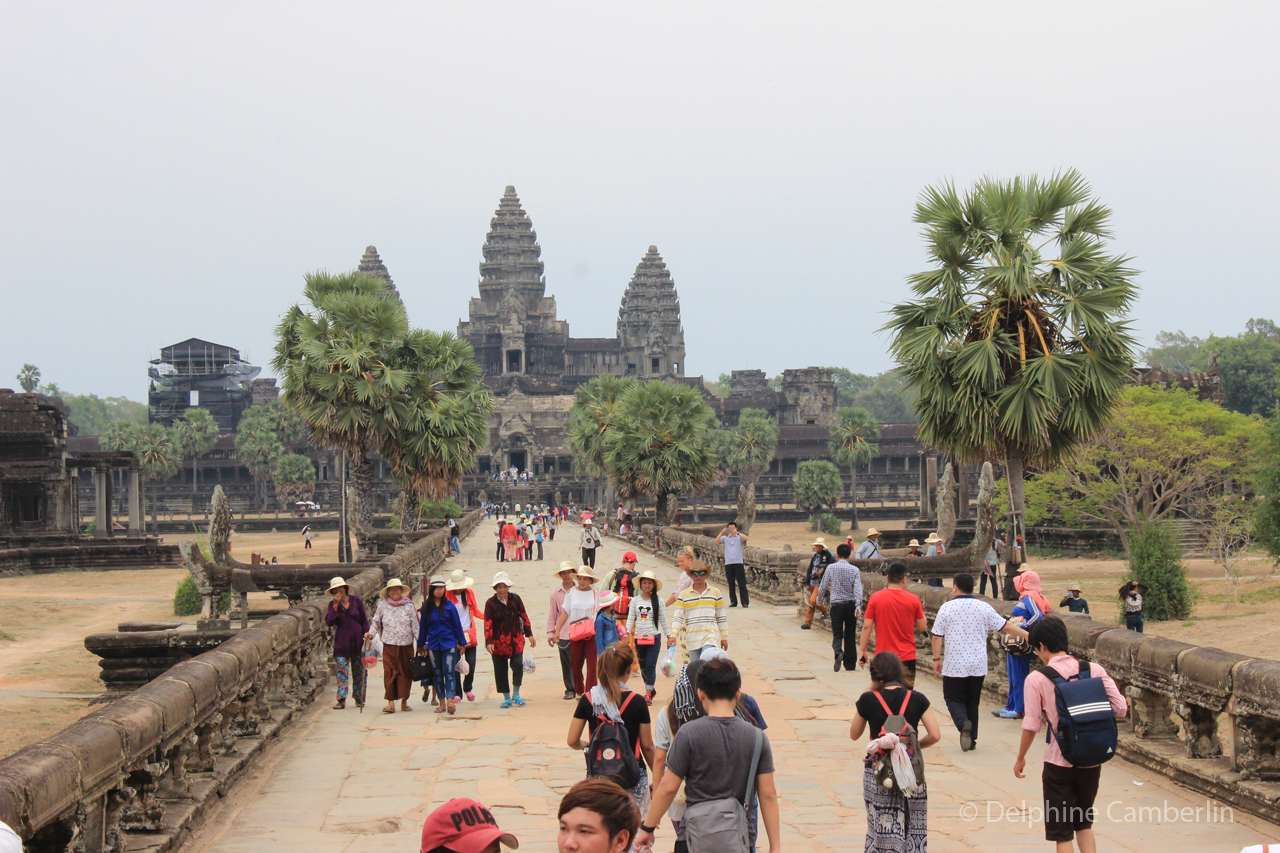
Cambodia contains one of the greatest photographic subjects on Earth — Angkor Wat — and the country around it is equally compelling. The temple complex at Angkor spreads across a jungle the size of a city, with dozens of distinct structures ranging from the grand symmetry of Angkor Wat itself to the moss-covered, tree-swallowed ruins of Ta Prohm. Beyond the temples, the floating villages of Tonle Sap Lake and the resilient street life of Phnom Penh add human depth to a destination that could easily become just a tick on a sightseers' list.
● Angkor Wat at sunrise is one of those experiences where the cliché is completely earned. The reflection of the five towers in the moat at first light, with the sky turning pink behind them, is genuinely one of the most beautiful things I've photographed. Get there at 5am — it's worth losing the sleep.
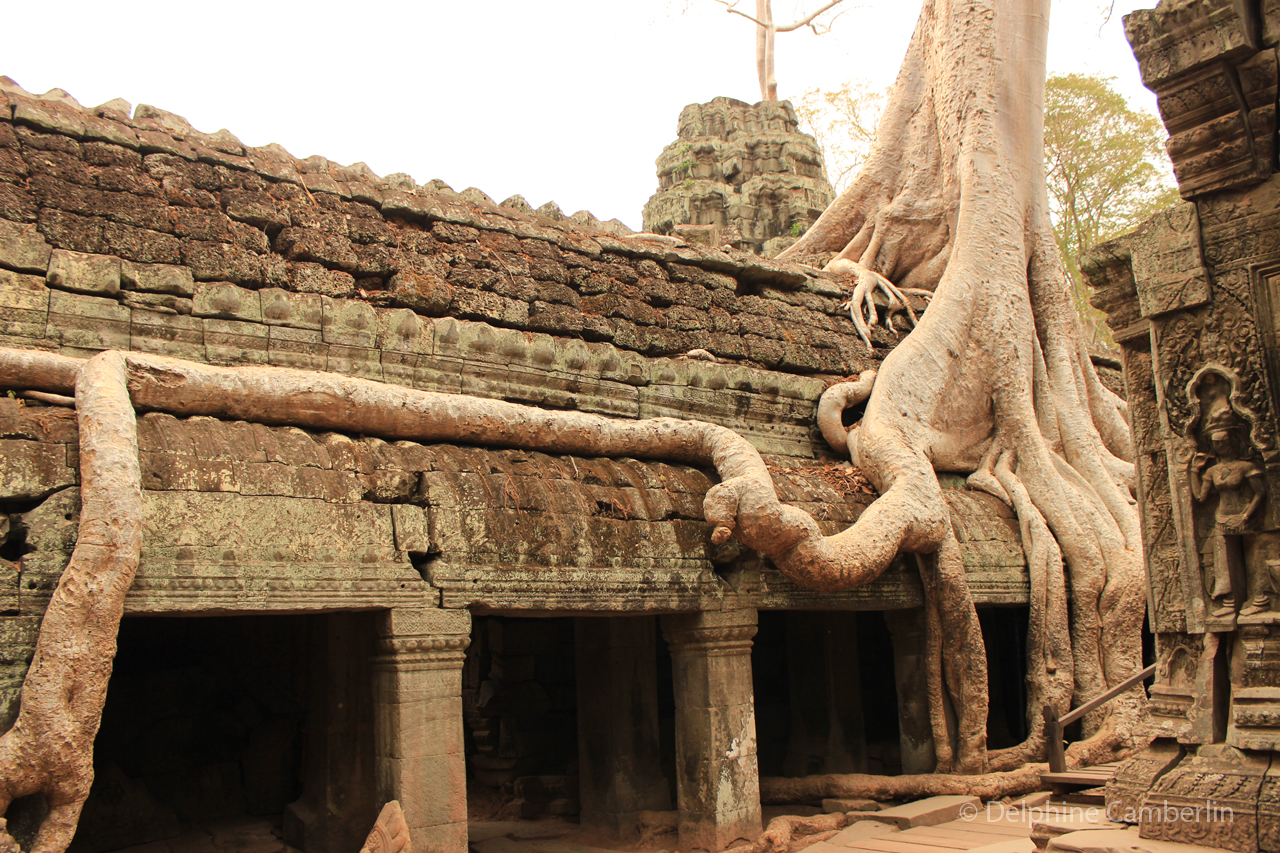
● Ta Prohm — the "Tomb Raider temple" — where enormous silk-cotton tree roots have swallowed stone walls and galleries. The dappled light filtering through the canopy here creates extraordinary conditions for available-light photography.
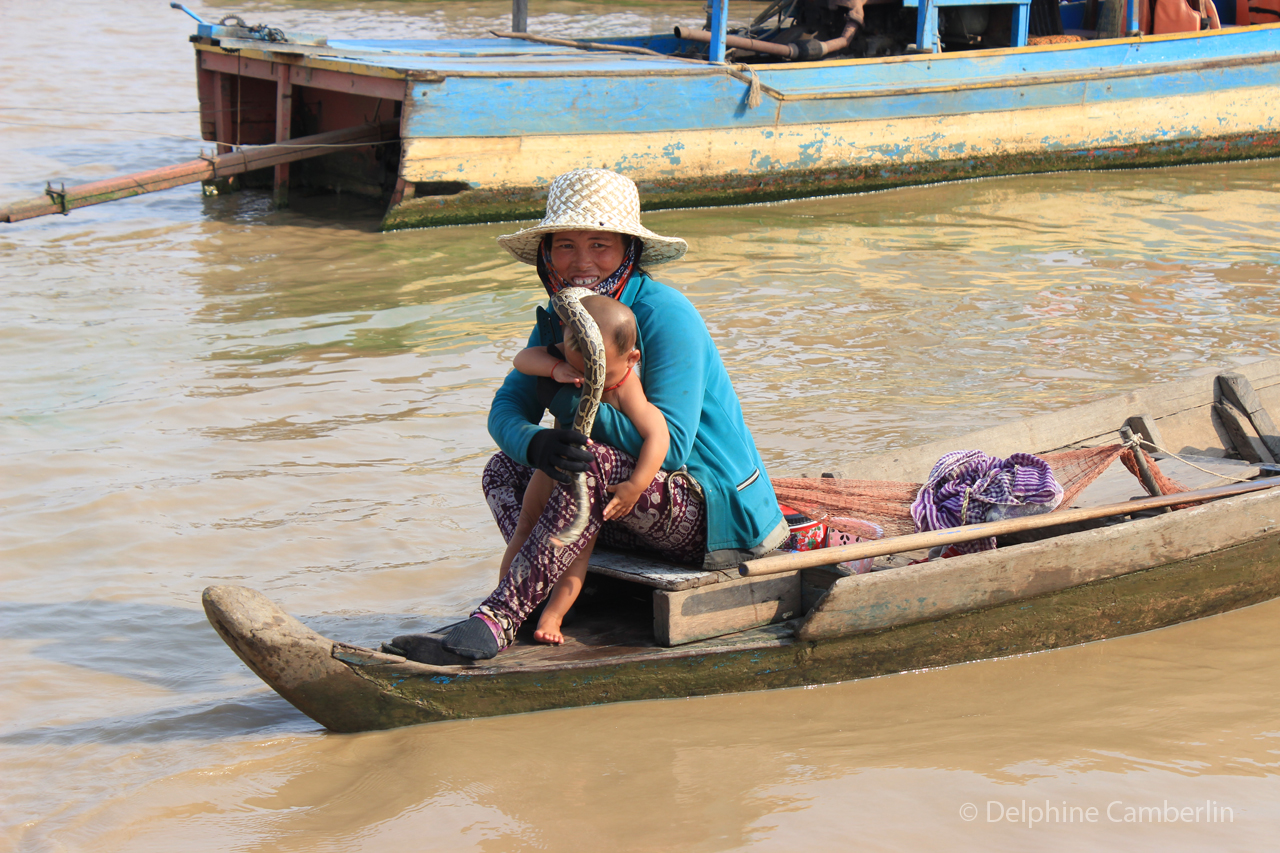
● Tonle Sap Lake — the floating villages are unlike anywhere else in Southeast Asia. Entire communities live on water — schools, pagodas, shops — and photographing daily life from a small boat gives you perspectives you simply can't get on land.
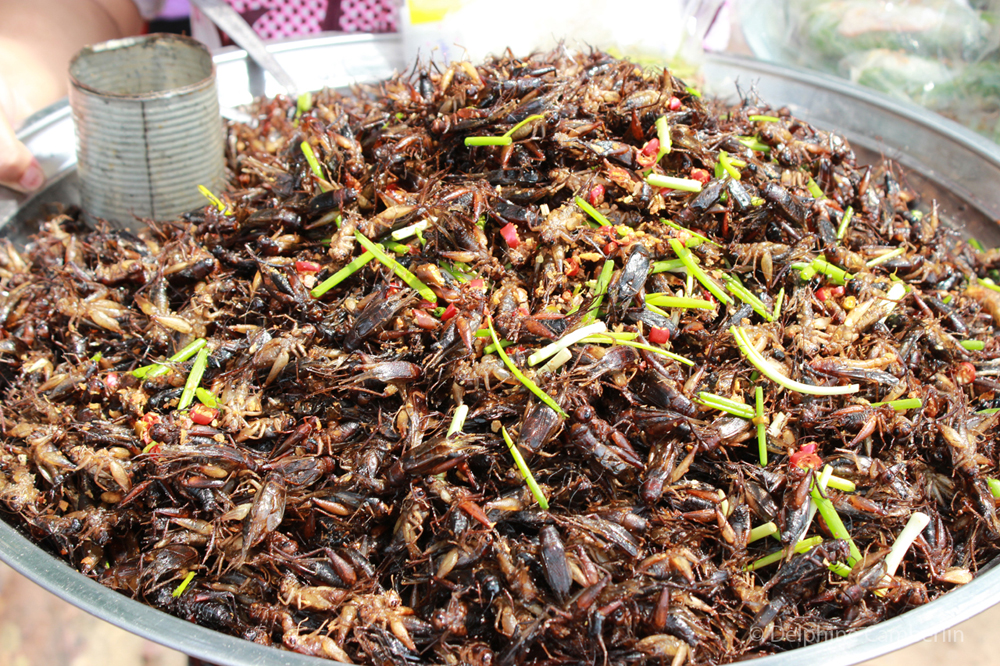
● Street food and market life in Siem Reap and Phnom Penh. Cambodia's food scene is visually rich — from insects on skewers to elaborate Buddhist offerings, the colour and texture are everywhere.
Cambodia is one of Southeast Asia's most accessible and affordable destinations, and the quality of guesthouses and food has improved dramatically in recent years. The main challenge for photographers is the heat — visiting in the dry season (November to March) keeps conditions manageable and the light cleaner.
| 🗓️ | Recommended stay | 7 – 14 days |
| 🎒 | Budget / day | €20–35 / $22–38Guesthouse, street food, tuk-tuks |
| 🥂 | Luxury / day | €80–180 / $88–200Boutique hotel, restaurant dinners, guided tours |
| 📅 | Best months | November – March |
| 🌡️ | Climate | 25–35°C · Dry Nov–AprHeavy monsoon Jun–Oct — very humid |
| ✈️ | Visa | e-Visa online ($36) or visa on arrival ($30) · 30 days |
| 💵 | Currency | USD widely used alongside Riel · Cards in tourist spots only |
| 🛺 | Getting around | Tuk-tuk, moto-taxi · Buses between cities · No train network worth using |
| 🛡️ | Safety | Medium — tourist areas safeBe cautious at night · UXO risk in rural areas |
| 🍜 | Must-try food | Fish amok, lok lak, nom banh chok, fresh spring rolls |
| 💬 | Language | English OK in tourist areas · Khmer script challenging — download offline maps before arriving |
The Angkor Archaeological Park covers more than 400 square kilometres of jungle north of Siem Reap and contains the remains of the successive capitals of the Khmer Empire (802–1431 CE) — an empire that at its height stretched from southern Vietnam to southern China, and which built structures of a scale and sophistication that were unmatched anywhere in the medieval world. The complex is not a single monument but a dense landscape of hundreds of temples, reservoirs, roads, and administrative buildings, of which only a fraction are fully excavated and studied.
Angkor Wat — the most famous and most visited temple in the complex, and the largest religious monument ever built. Constructed in the early 12th century by King Suryavarman II, it is simultaneously a cosmological map of the Hindu universe, an astronomical observatory, and an act of royal devotion on a superhuman scale. The central tower rises 65 metres; the bas-relief galleries contain 800 metres of continuous carved narrative — the longest continuous bas-relief in the world. The national flag of Cambodia features Angkor Wat, the only building depicted on a national flag in the world.
Angkor Wat at sunrise — the five towers reflected in the reflection pools, as the sky turns from purple to pink to gold, is one of the most beautiful natural-light spectacles in the world. Arrive at 5am to secure a position at the reflection pools; the sunrise itself is at around 5:45–6:15am depending on the time of year.
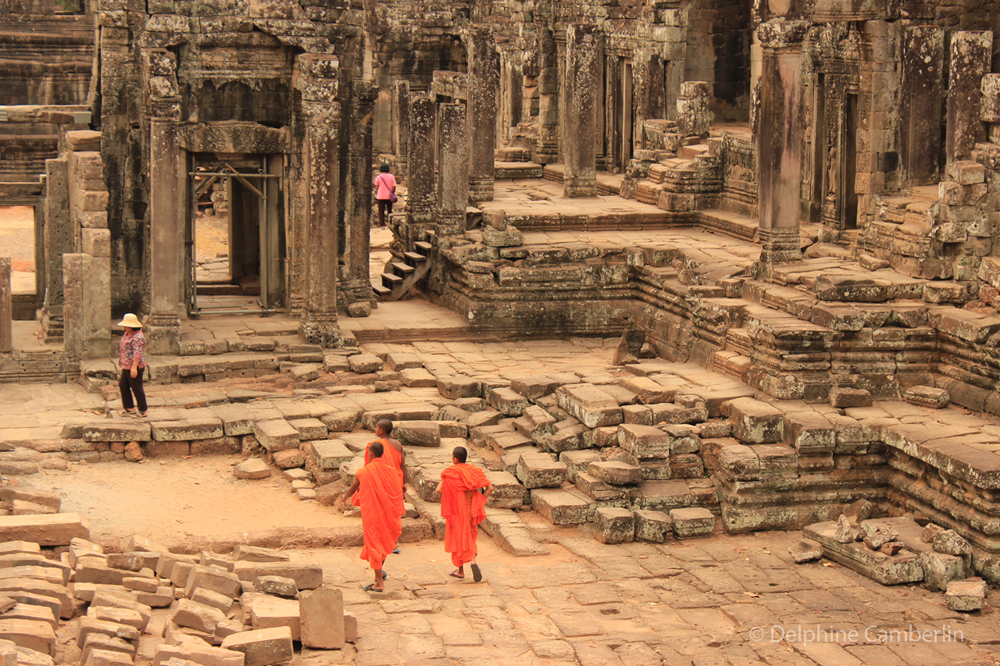
Bayon — the 54 towers of the Bayon are carved with 216 enormous serene faces staring in all four cardinal directions. Walking through the Bayon is genuinely disorienting: faces appear at every turn, from every angle, all wearing the same slight smile. The lower gallery bas-reliefs depict Khmer daily life, markets, cock fights, cooking.
Ta Prohm — the "jungle temple," where enormous silk cotton and strangler fig tree roots have grown over and through the stone galleries over 600 years. Used as a filming location for Tomb Raider (2001). Visit before 8am or after 4pm to have the corridors with fewer crowds.
Banteay Srei — the "Citadel of Women," a 10th-century temple built from pink sandstone and covered in relief carvings of extraordinary fineness — the finest examples of classical Khmer art. Preah Khan — a vast, partially overgrown monastery with kilometre-long galleries. Neak Pean — an artificial island temple in the middle of a reservoir.
Phnom Penh is a city of contradictions that reward close attention. The French colonial boulevards and elegant riverside café culture sit alongside the ornate Royal Palace and Silver Pagoda; the night market energy of the Russian Market fills a building that was used as a prison during the Khmer Rouge period; and the Tuol Sleng Genocide Museum occupies a former high school that was the Khmer Rouge's most notorious torture centre. Understanding all of these layers simultaneously is the work of at least 2–3 days in the city.
The Royal Palace and Silver Pagoda — the working royal palace of the Cambodian monarchy: classical Khmer architecture with multi-tiered roofs in gold and green tile, set within extensive formal gardens on the Mekong riverfront. The Silver Pagoda (Wat Preah Keo) takes its name from the floor — 5,000 silver tiles weighing 1kg each — and houses Cambodia's most significant national treasure collection, including a 17th-century Buddha figure encrusted with 2,086 diamonds.
The National Museum of Cambodia — in a terracotta-coloured building designed in 1920 in traditional Khmer style, housing the finest examples of Khmer sculpture in existence. The most moving exhibit: the statue of the Leper King, an image of such calm and human presence that it stops visitors. The courtyard's four galleries, open to the sky, have their own peacocks.
The Riverside (Sisowath Quay) — the kilometre-long promenade along the Tonle Sap River is Phnom Penh's social heart. The French colonial architecture of the adjacent streets (particularly around the Foreign Correspondents' Club) preserves the visual memory of a city that was, before 1975, one of the most elegant in Southeast Asia.
The Central Market (Psar Thmei) — a magnificent 1937 art deco dome housing one of the finest market buildings in Southeast Asia: gold jewellery, fabric, fresh produce, street food, and every category of Cambodian commerce under a single building of genuine architectural beauty.
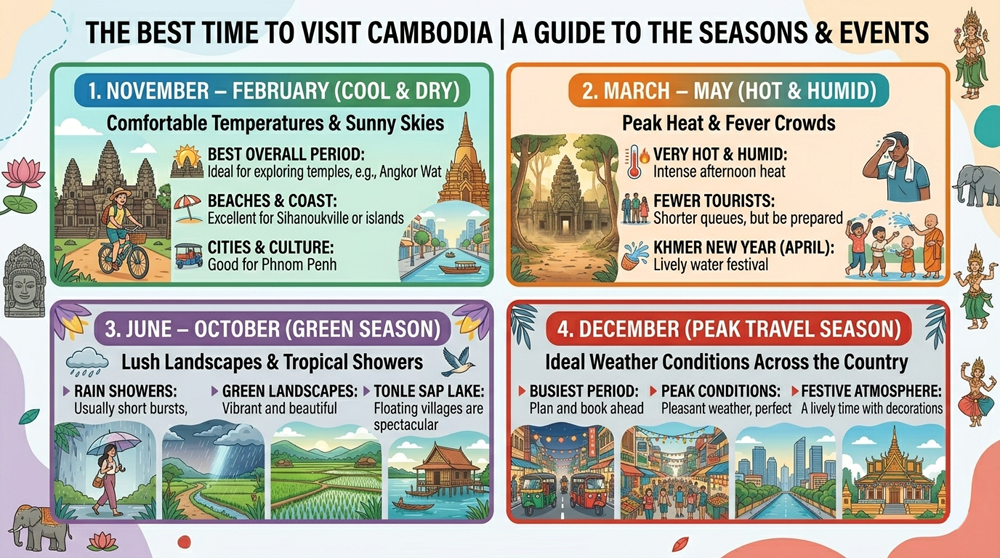
Cooler, dry season with comfortable temperatures. Best overall period for temples, cities, and beaches.
Very hot and humid, especially around Angkor Wat. Fewer tourists but intense afternoon heat.
Green season with tropical rain showers and lush landscapes. Rain usually comes in short bursts rather than all day.
Peak travel season with ideal weather conditions across the country.
Cambodia has a tropical climate with warm temperatures throughout the year, divided mainly between the dry season and the monsoon season. Humidity is often high, especially before the rains arrive, but seasonal changes dramatically affect the landscapes, rivers, and travel experience. From the temples of Angkor to the islands of the south coast, Cambodia remains a rewarding destination year-round depending on the type of trip you are planning.
Best Overall Time to Visit
These are the coolest and driest months of the year, making it the most comfortable period for exploring Cambodia.
Temperatures are warm but manageable, especially for:
This is also peak tourist season, particularly around December and January.
Very Hot but Less Crowded
Temperatures rise significantly across the country, often exceeding 35°C during the afternoon.
While sightseeing can become challenging in the midday heat, this period offers:
Early mornings are best for temple visits during this season.
Lush Landscapes & Tropical Atmosphere
The southwest monsoon brings regular rain showers, usually in the afternoon or evening rather than continuous all-day rain.
During this period:
Road conditions in rural areas can occasionally become difficult, but major destinations remain accessible.
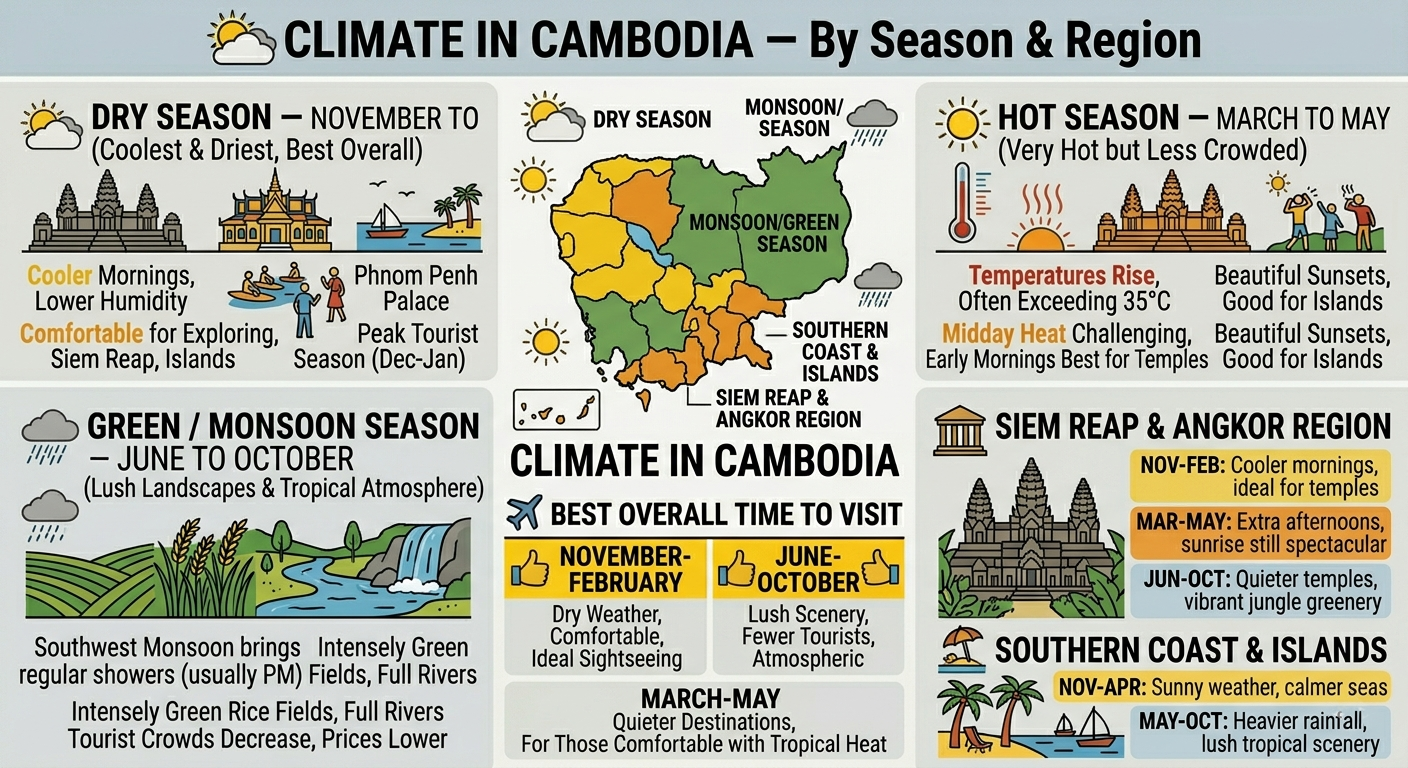
November to April
Sunny weather and calmer seas create the best conditions for beaches and island travel.
May to October
Rainfall becomes heavier and seas can occasionally become rougher, though tropical scenery becomes especially lush.
November to February
Cooler mornings and lower humidity make this the ideal time for exploring the temple complexes.
March to May
Extremely hot afternoons, though sunrise visits to Angkor Wat remain spectacular.
June to October
The temples become quieter and surrounded by vibrant jungle greenery after the rains.
For tours and experiences in Cambodia, KKday often has deeper inventory than the global platforms — strong on local operators, particularly in Asia. Worth comparing alongside GetYourGuide before booking.
Browse Cambodia tours on KKday →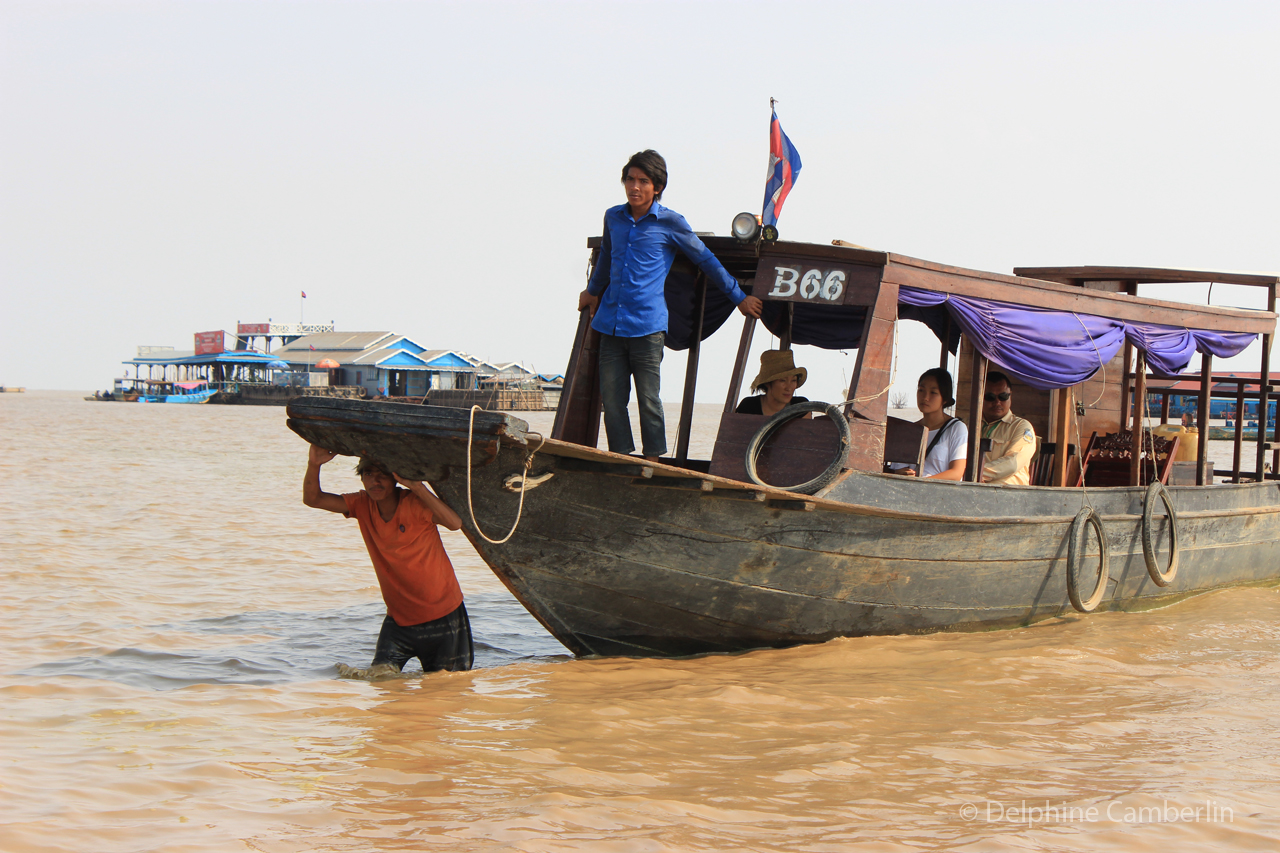
Skip the SIM hunt on arrival. A travel eSIM lets you activate local data before you board — no plastic card, no roaming fees, instant setup. Roamic covers this destination and most countries in the Galerie.
Get Your Travel eSIM →🎟️ GetYourGuide: "A sunrise Angkor Wat photography tour with a local guide is one of the best things I've booked — they know exactly where to position you for the best light at each hour."
Most travellers fly into Siem Reap, but flying into Phnom Penh and out of Bangkok (or Ho Chi Minh City) makes for a far more logical overland trip through the region. Kiwi.com handles these open-jaw combinations well.
Stock Photography
Browse and license the full Food photography collection — available for commercial and editorial use on Shutterstock.
View on Shutterstock →
Stock Photography
Browse and license the full Asia photography collection — available for commercial and editorial use on Shutterstock.
View on Shutterstock →