| 🗓️ | Recommended stay | 7 – 14 days |
| 🎒 | Budget / day | €45–65 / $50–72Budget bure, local food, ferries |
| 🥂 | Luxury / day | €200–600 / $220–660Overwater bungalow, full board resort |
| 📅 | Best months | May – October |
| 🌡️ | Climate | 24–31°C · Dry & sunny May–OctCyclone risk November – April |
| ✈️ | Visa | Visa-free on arrival for most nationalities · Up to 4 months |
| 💵 | Currency | FJD · Cards on main islands · Outer islands are cash only |
| ⛵ | Getting around | Domestic flights or ferries to outer islands · Local buses on Viti Levu |
| 🛡️ | Safety | Low — very welcoming peoplePetty theft in Suva city centre |
| 🍜 | Must-try food | Kokoda (raw fish in coconut milk), lovo feast, roti with curry |
| 💬 | Language | English is official — zero barrier · "Bula!" is the universal greeting |
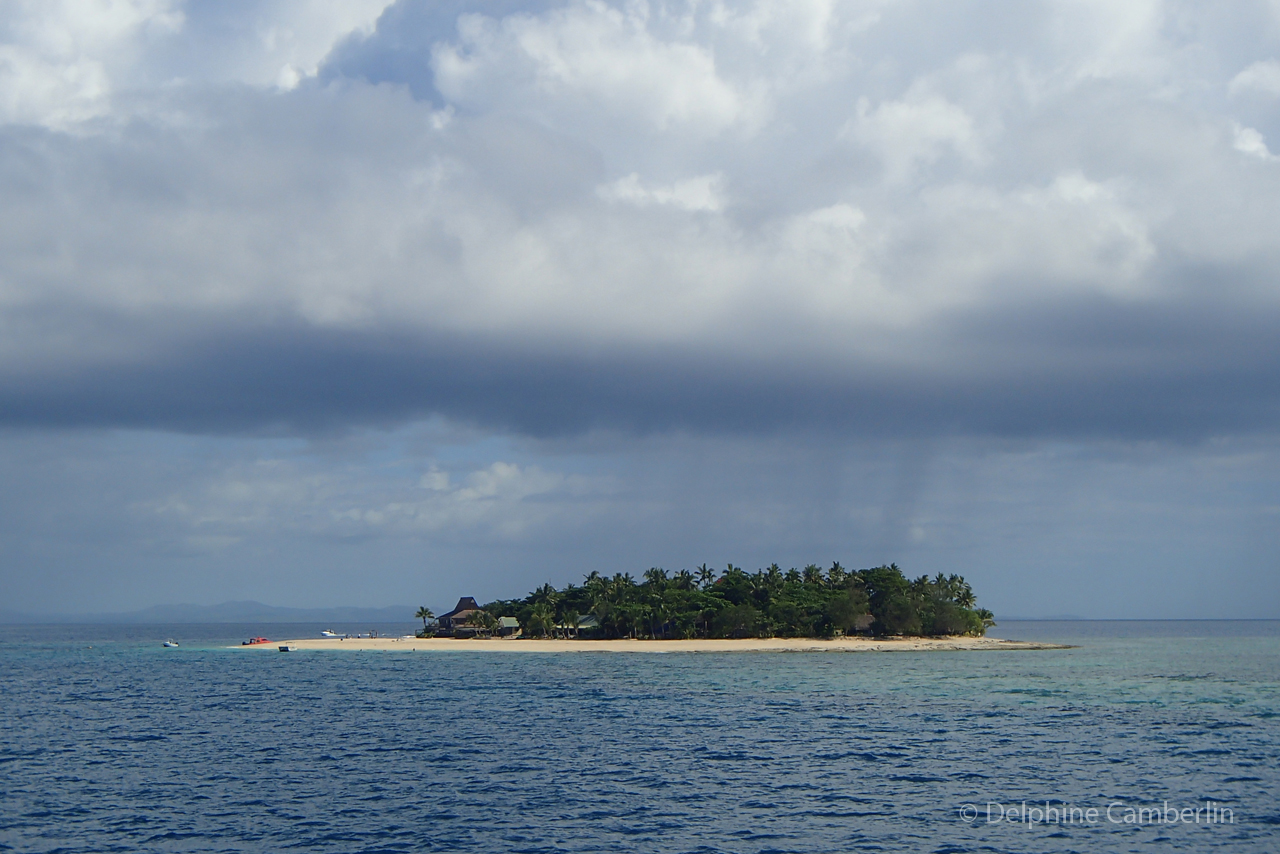
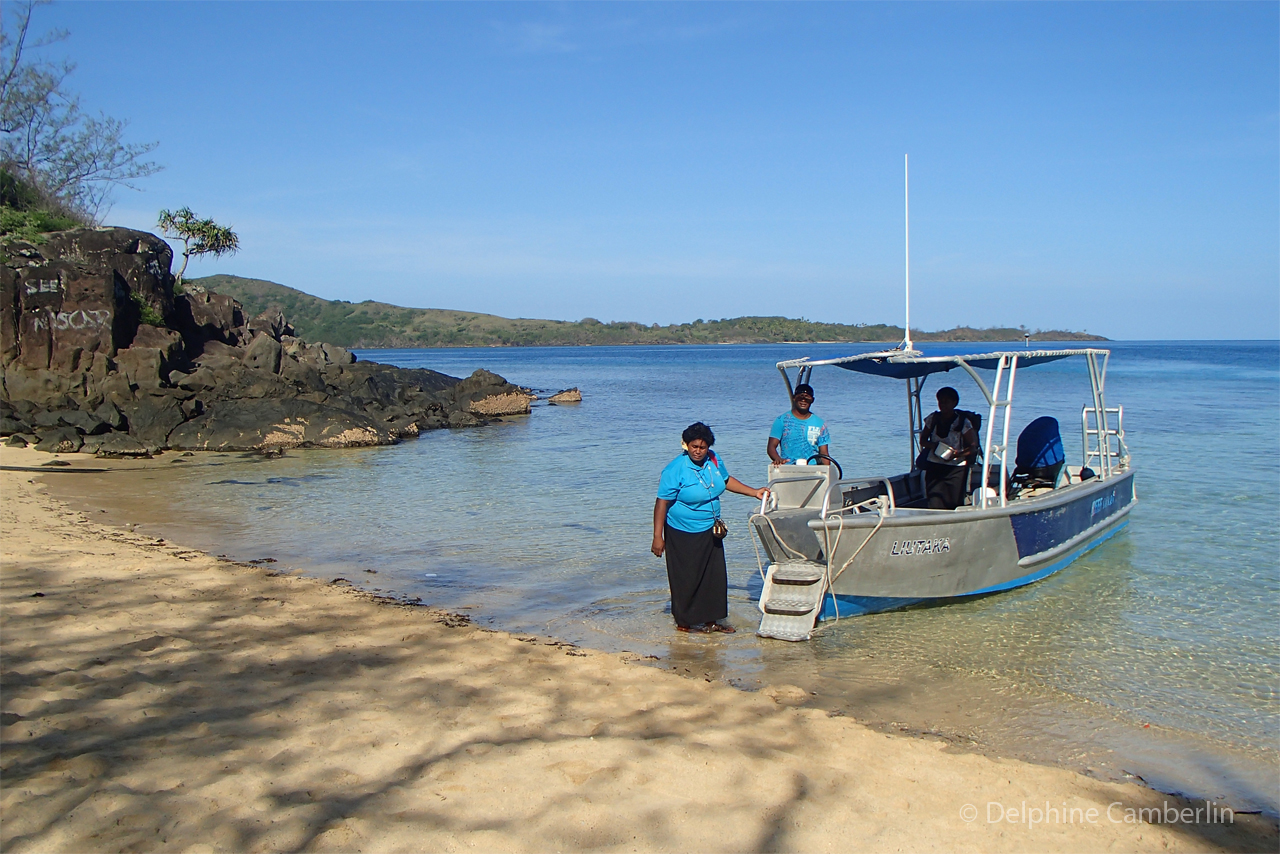
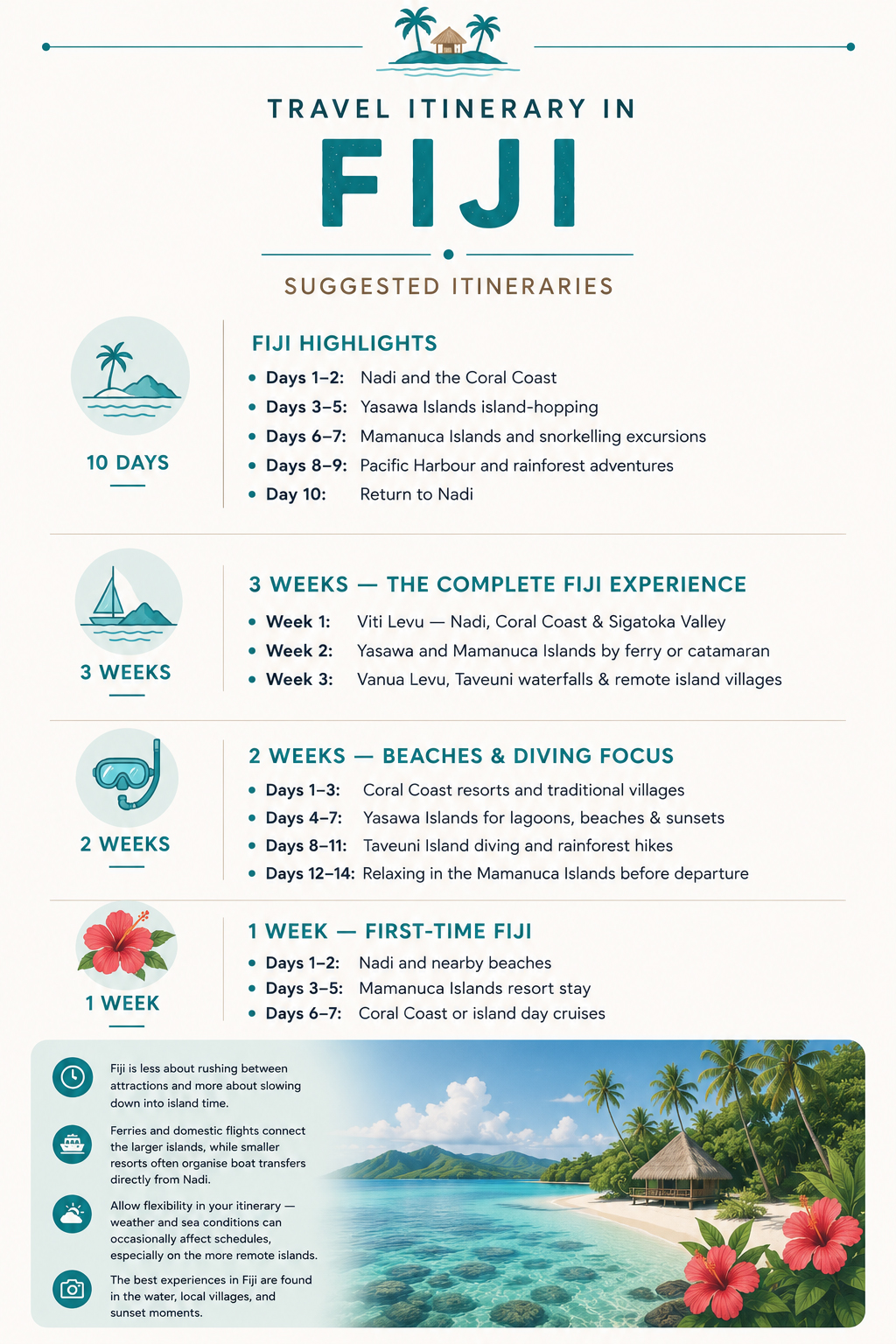
Fiji is less about rushing between attractions and more about slowing down into island time. Ferries and domestic flights connect the larger islands, while smaller resorts often organise boat transfers directly from Nadi. Allow flexibility in your itinerary — weather and sea conditions can occasionally affect schedules, especially on the more remote islands.
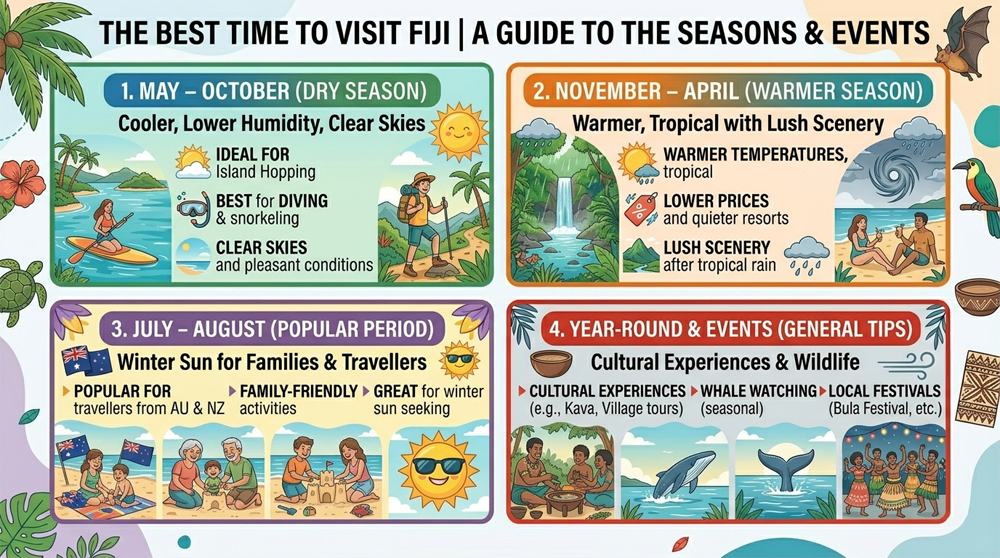
Dry season with cooler temperatures, lower humidity, and clear skies — ideal for island hopping and diving.
Warmer, tropical season with higher humidity and occasional cyclones. Great for lush scenery and quieter resorts.
Popular period for families and winter sun travellers from Australia and New Zealand.
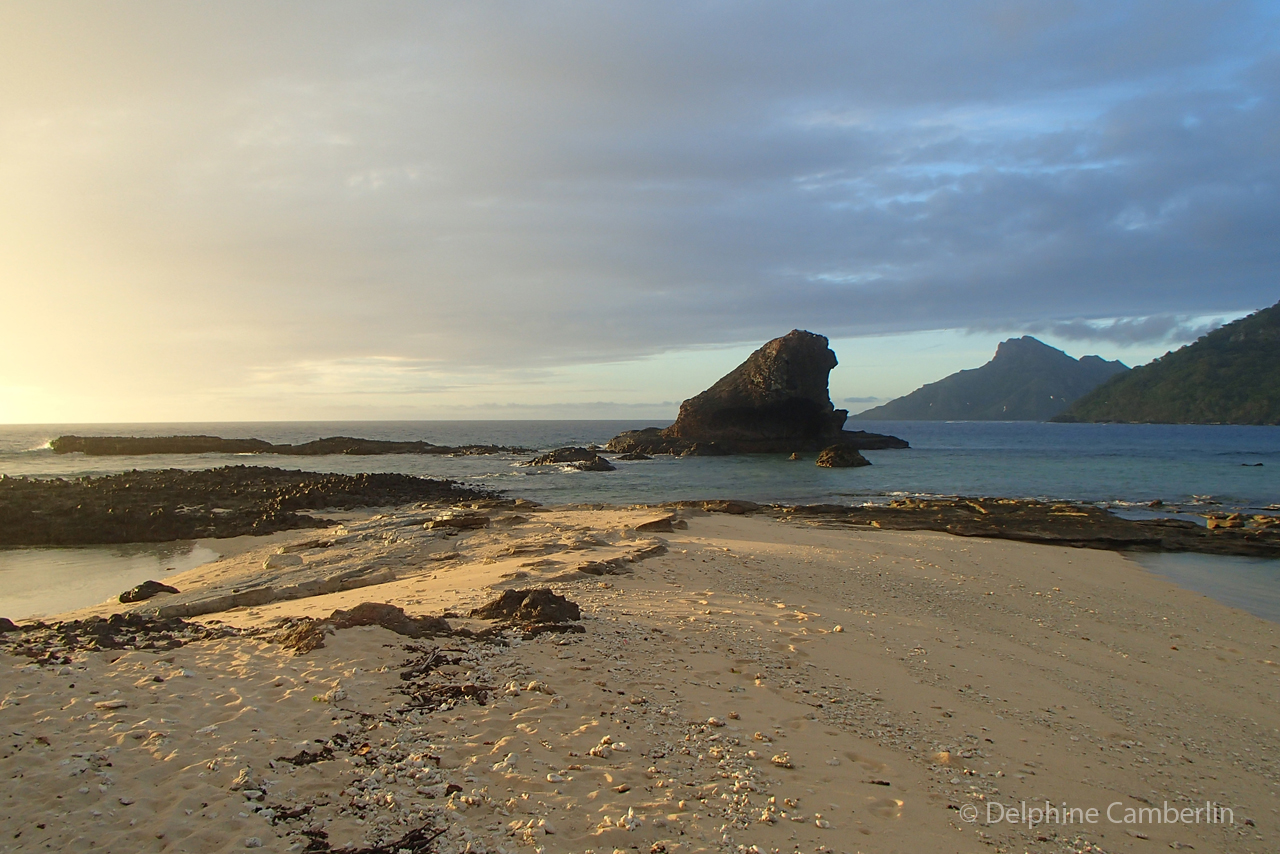
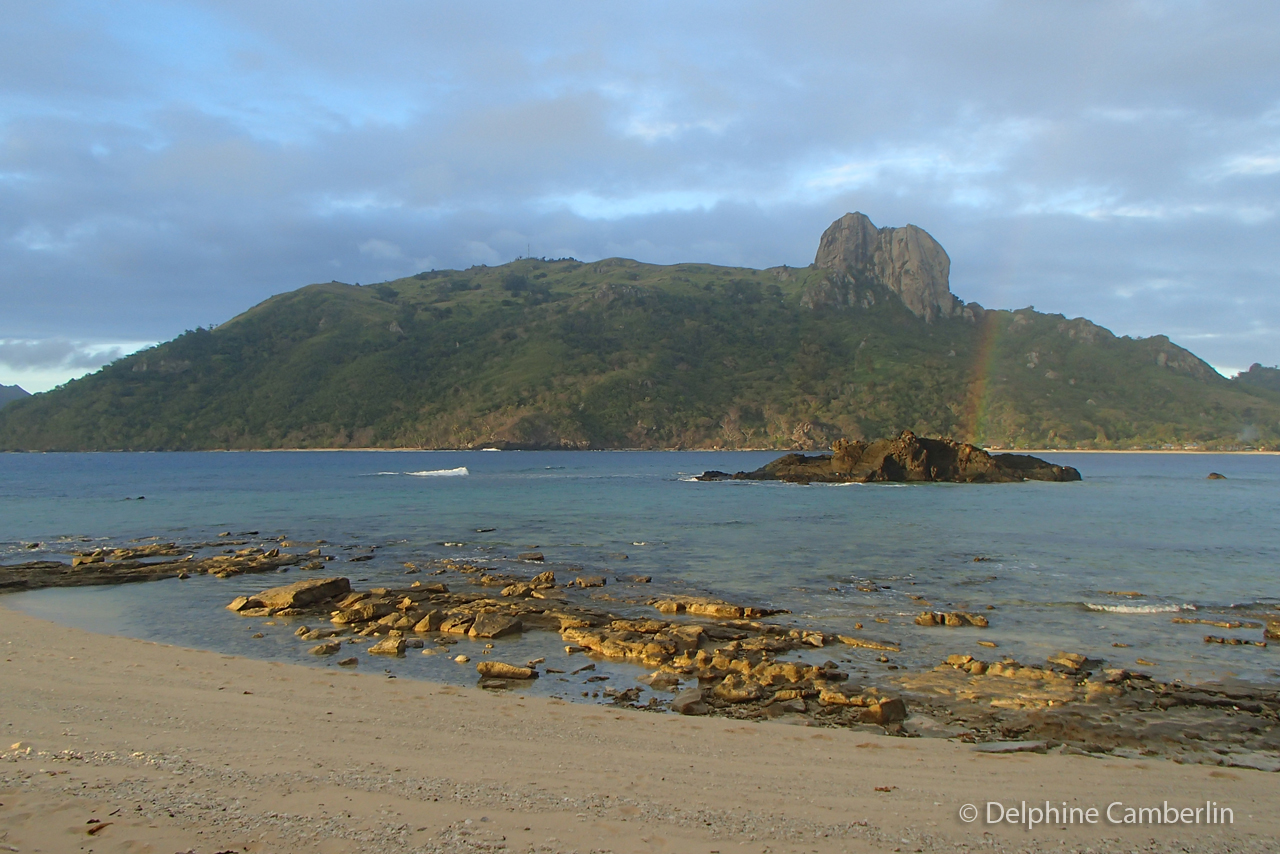
Fiji enjoys a tropical island climate with warm temperatures year-round, crystal-clear waters, and lush green landscapes. The weather is generally divided into two main seasons: a drier, cooler season and a warmer, wetter tropical season. While Fiji can be visited throughout the year, the experience changes depending on rainfall, humidity, and cyclone season — especially across the outer islands.
Best Overall Time to Visit
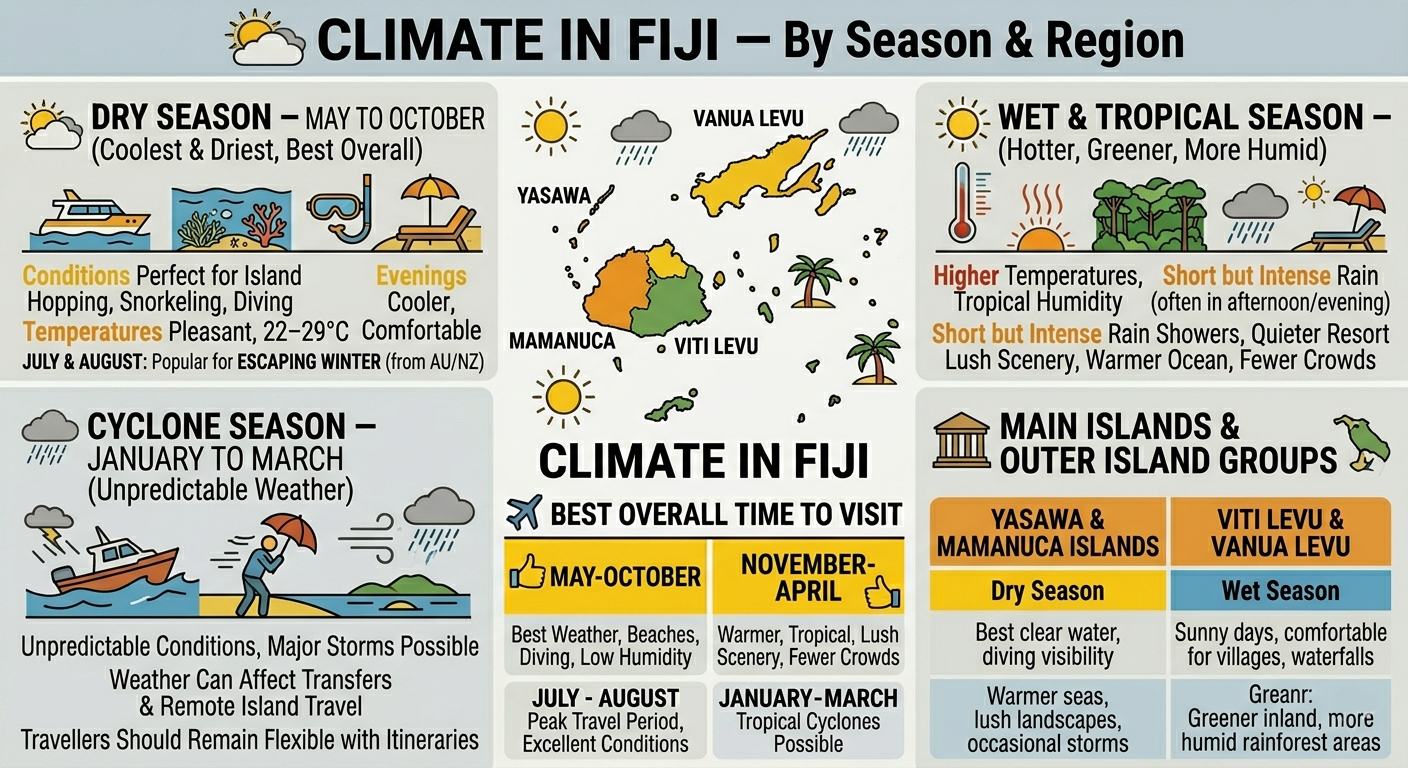
This is considered the ideal period to visit Fiji, with lower humidity, cooler temperatures, and plenty of sunshine. Conditions are perfect for:
Hotter, Greener & More Humid
The wet season brings higher temperatures, tropical humidity, and more frequent rainfall, often in the form of short but intense showers. This season offers:
Tropical cyclones are possible during the peak wet season, particularly between January and March. Although major storms are not constant, weather conditions can become unpredictable, especially for:
May to October
Best conditions for clear water, diving visibility, and beach weather.
November to April
Warmer seas and tropical landscapes, though occasional storms and rougher waters are possible.
Dry Season
Sunny days and comfortable temperatures make this the best time for exploring villages, waterfalls, and coastal regions.
Wet Season
Greener inland scenery and more humid conditions, especially in rainforest areas.
Skip the SIM hunt on arrival. A travel eSIM lets you activate local data before you board — no plastic card, no roaming fees, instant setup. Roamic covers this destination and most countries in the Galerie.
Get Your Travel eSIM →Most flights to Fiji route through Sydney, Auckland, or Los Angeles. Kiwi.com is useful for finding multi-stop combinations that avoid backtracking on long-haul routes.
Stock Photography
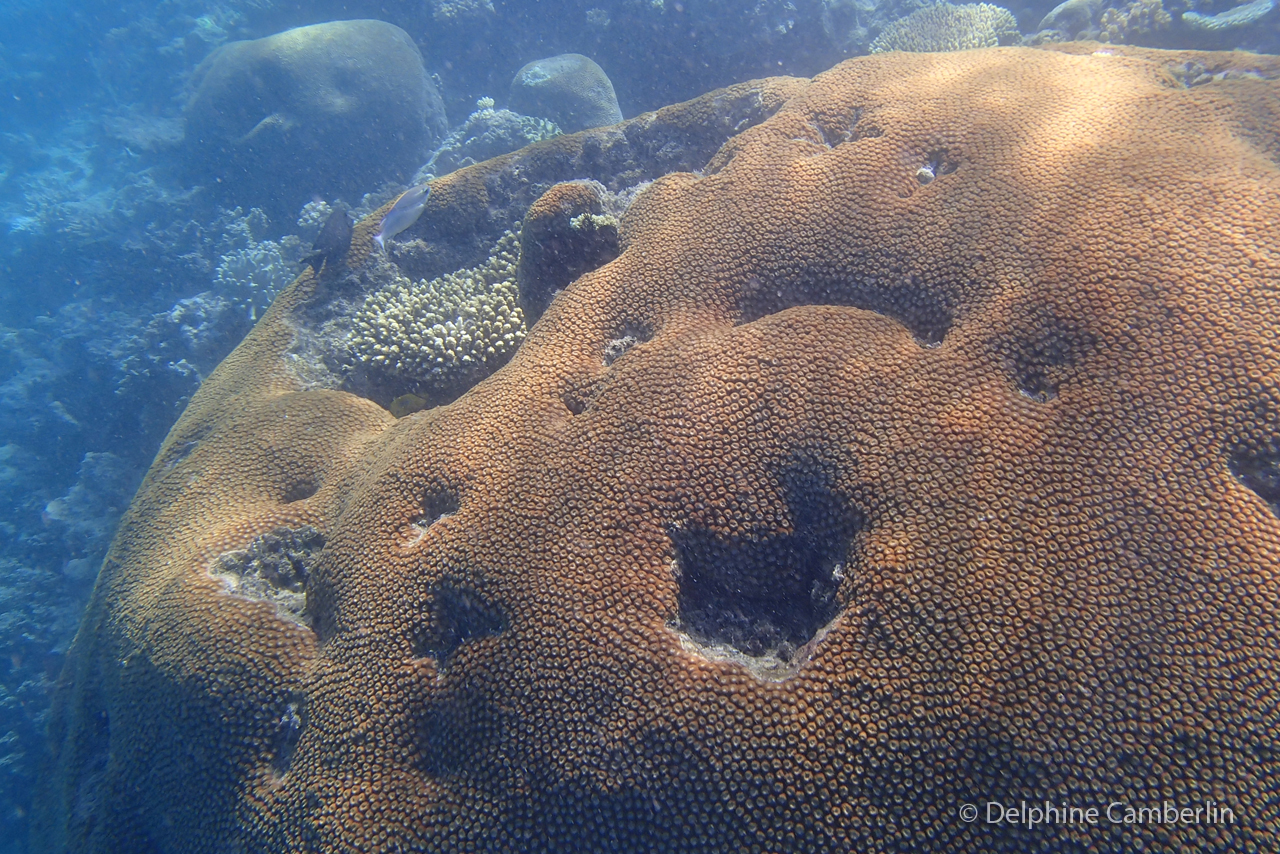
Browse and license the full Fiji - Underwater seabed photography collection — available for commercial and editorial use on Shutterstock.
View on Shutterstock →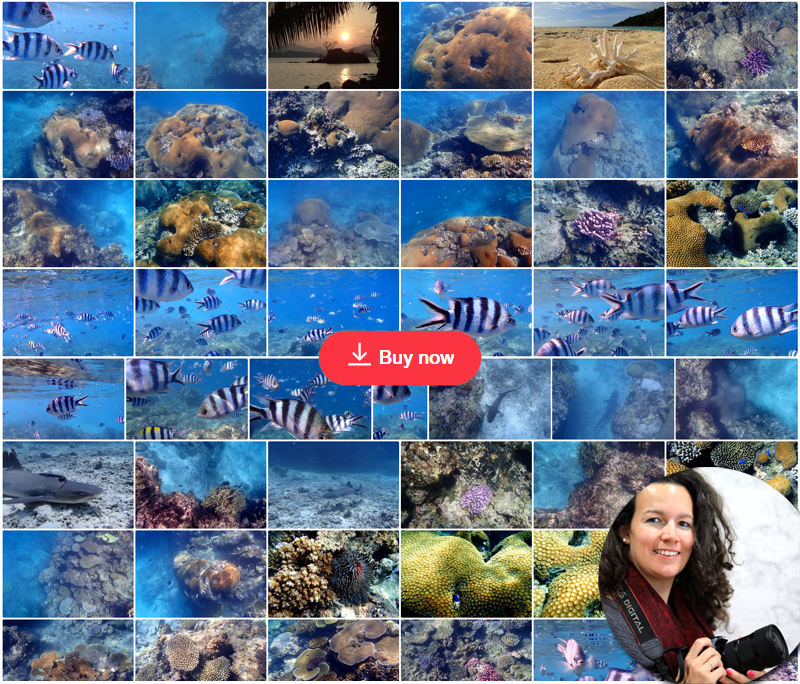
Stock Photography
Browse and license the full Asia photography collection — available for commercial and editorial use on Shutterstock.
View on Shutterstock →