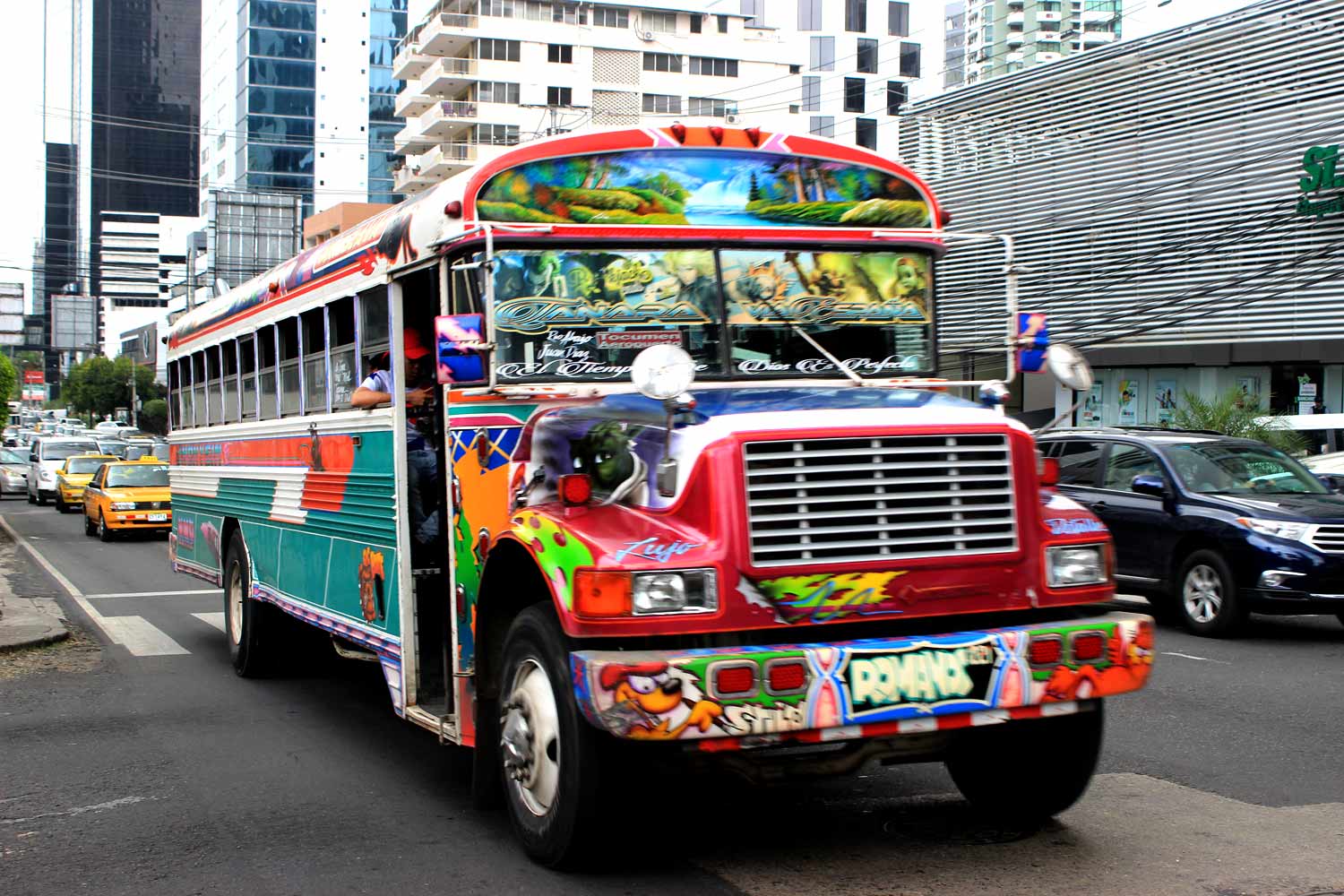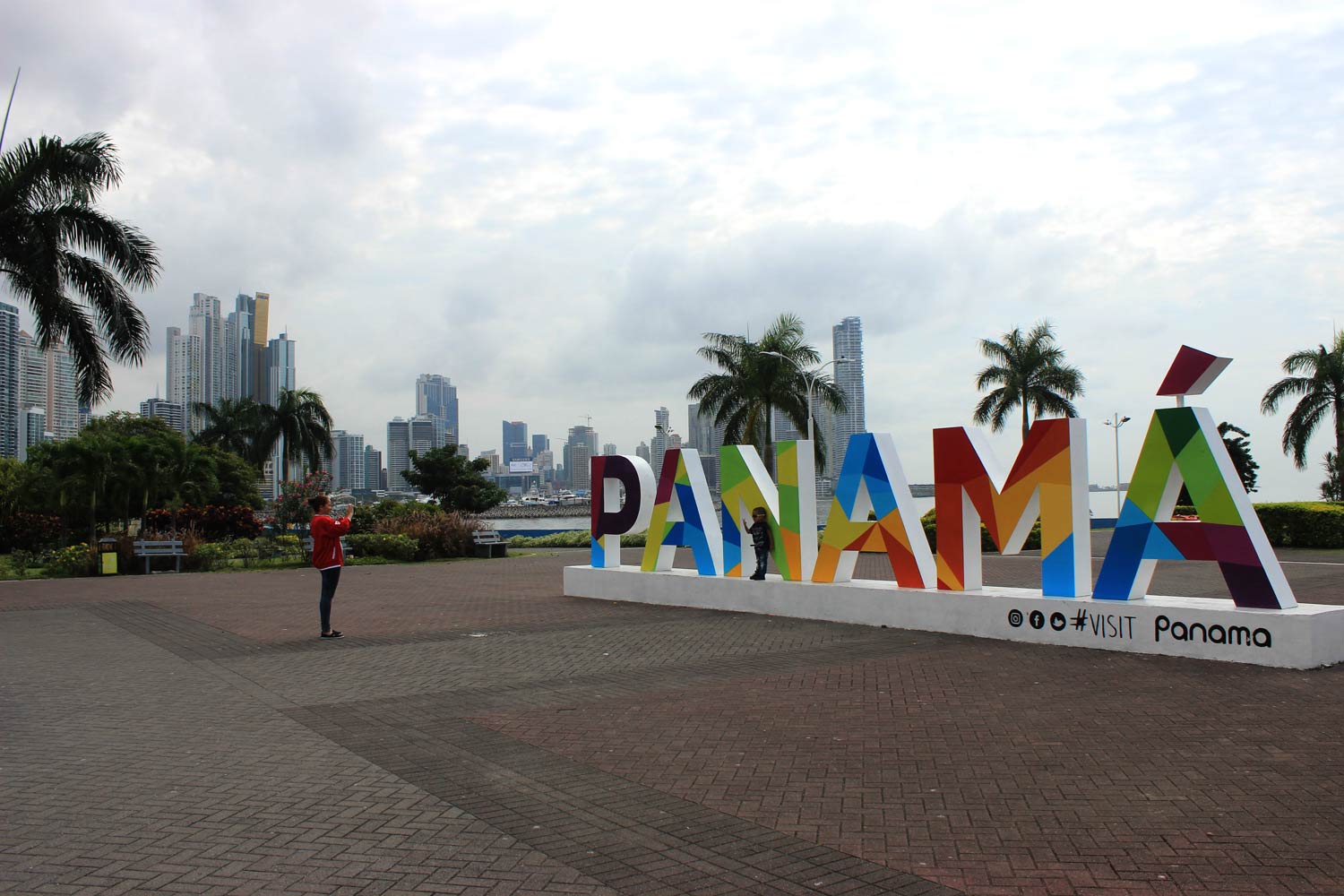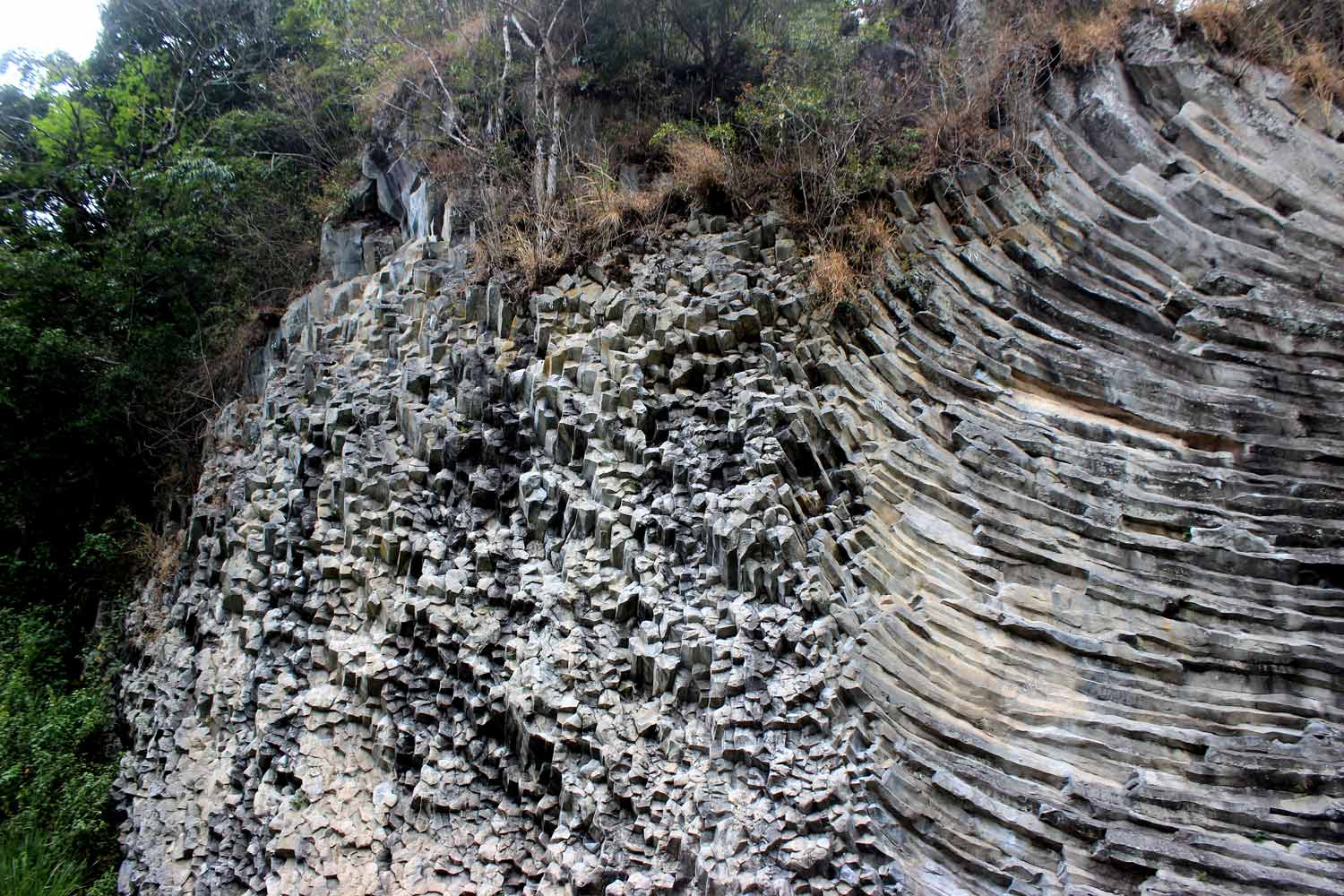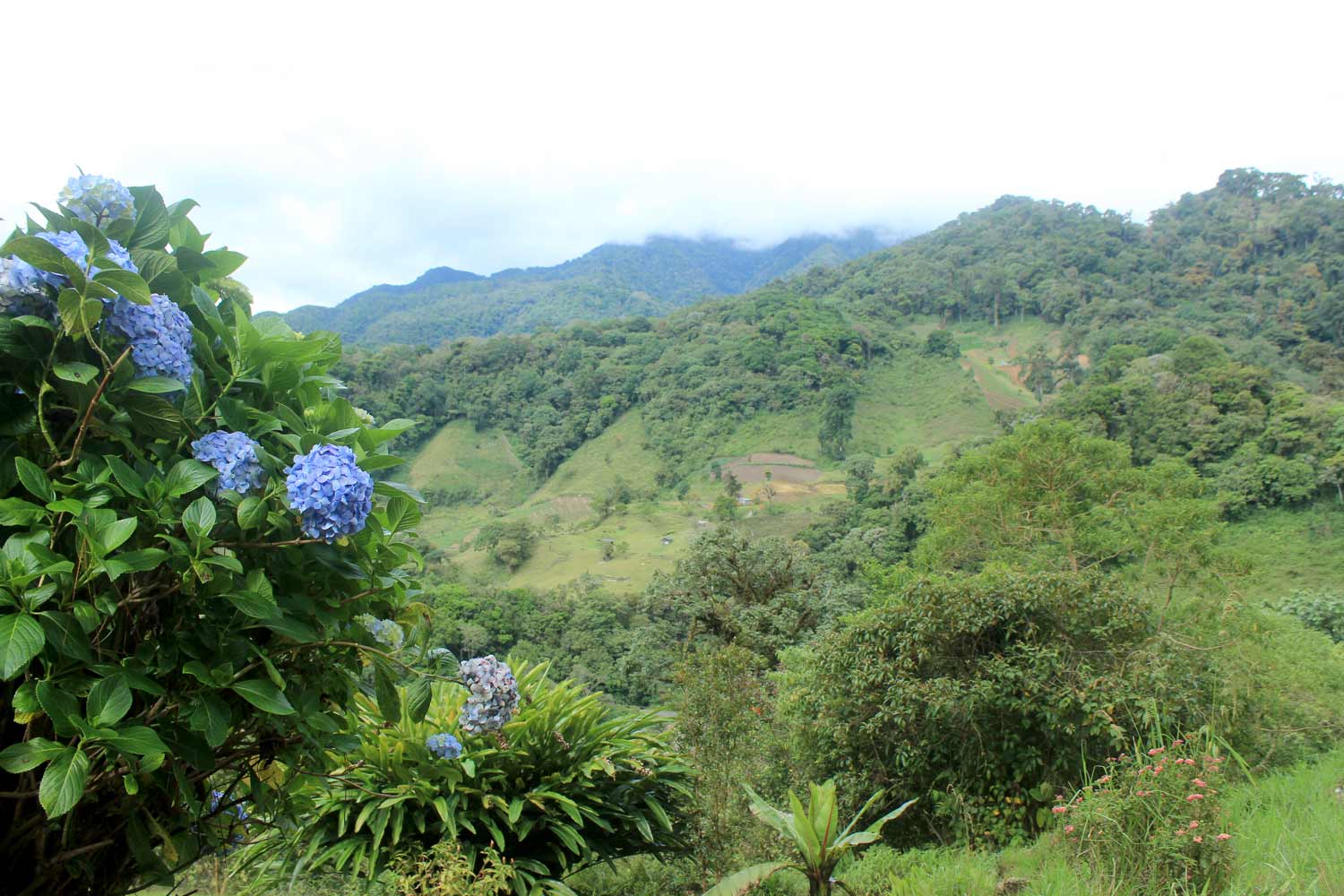
Panama is Central America's most underrated country — sandwiched between more famous neighbours and often reduced to its canal in the popular imagination. But the reality is far richer: the Casco Viejo historic quarter of Panama City with its crumbling Spanish colonial architecture and rooftop bars overlooking the Pacific, the extraordinary engineering spectacle of the Panama Canal locks, the cloud forest hikes and hidden hot springs around Boquete, the natural rock climbing walls of Los Ladrillos, and the remote San Blas Islands where Kuna Yala communities live on coral islands so low that they're at risk of disappearing within decades. Panama is a country of surprising depth.
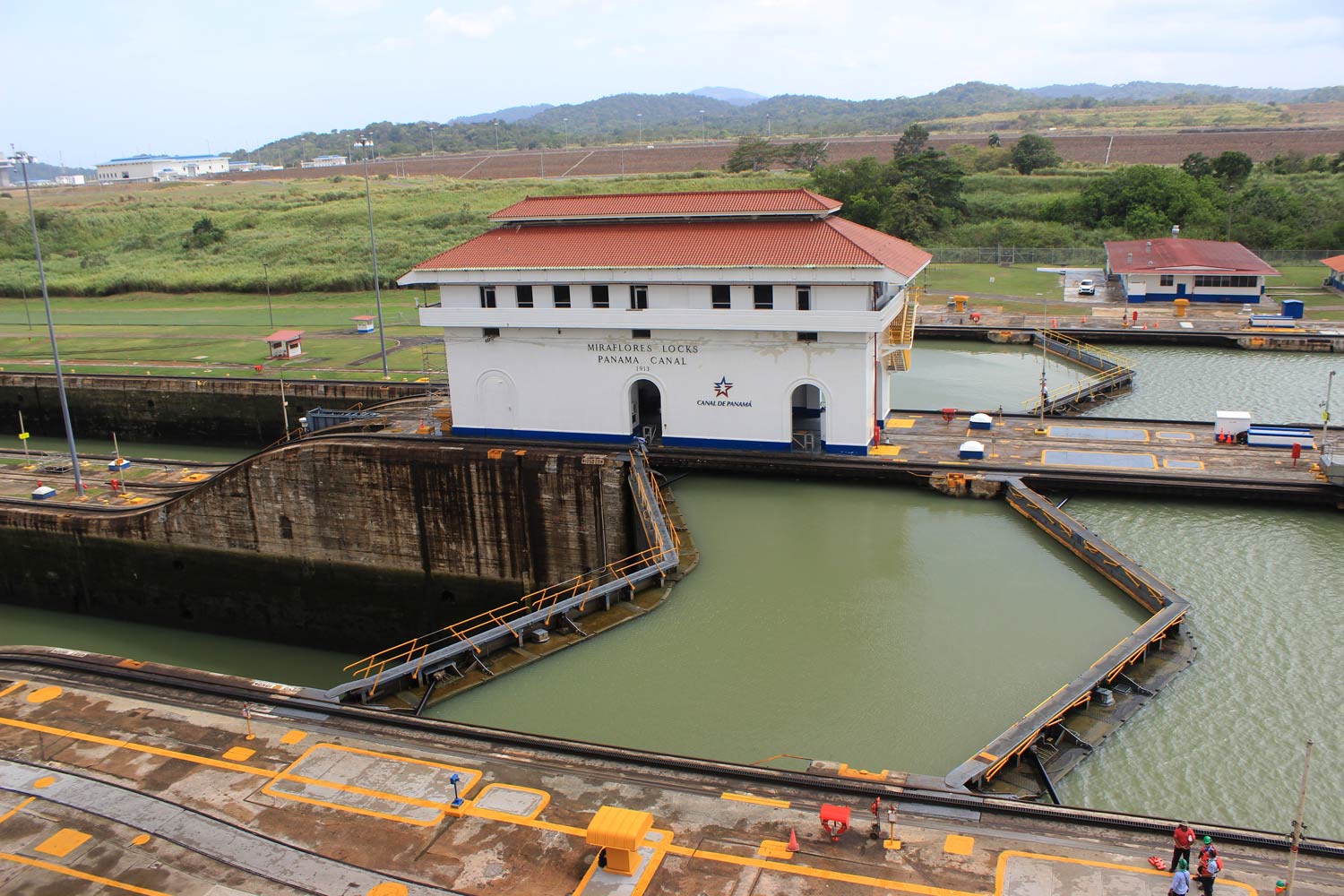
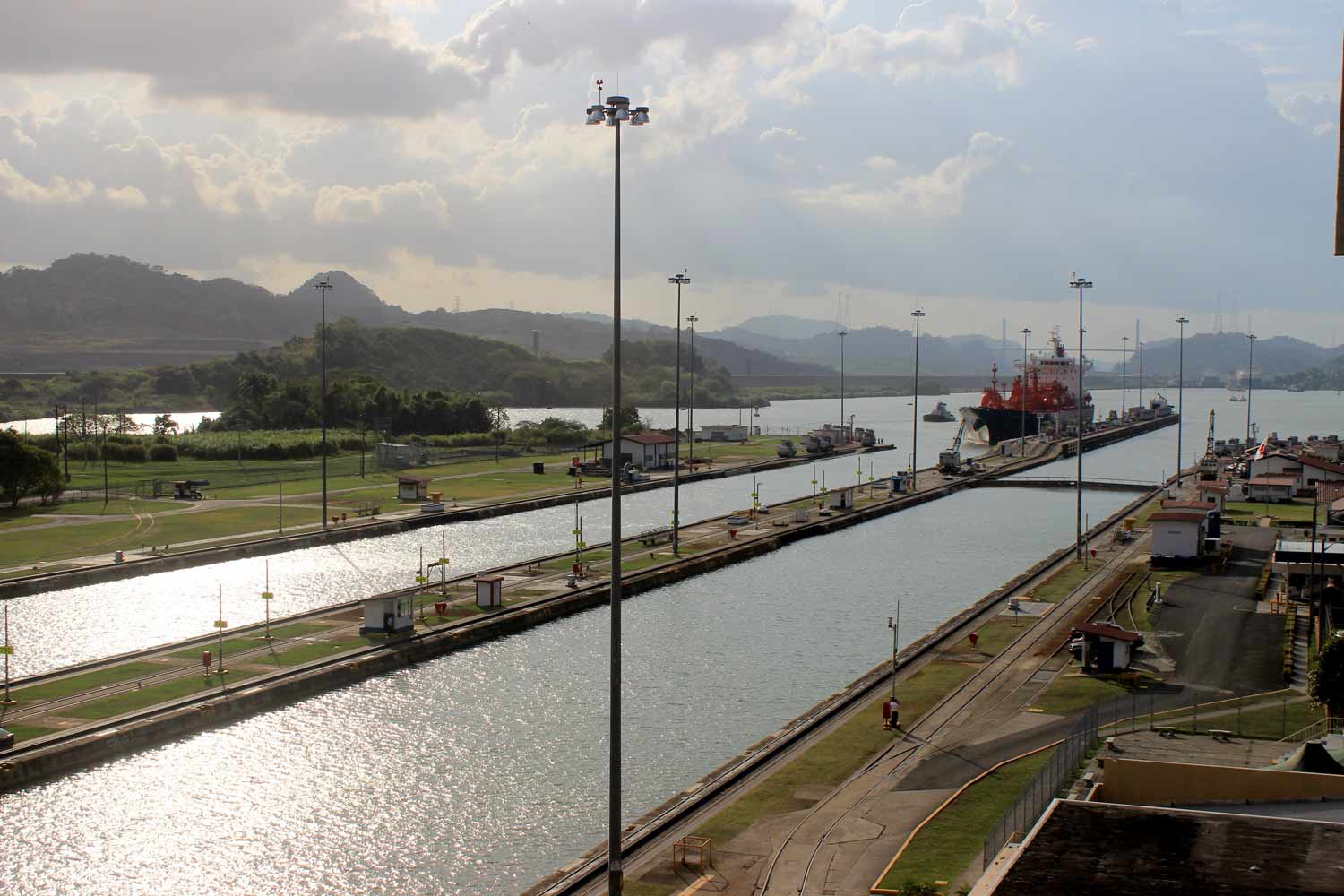
The Panama Canal locks at Miraflores — watching a Panamax container ship passing through a lock chamber with inches to spare on either side is one of the great industrial photography subjects. The scale is genuinely hard to process until you're standing next to it.
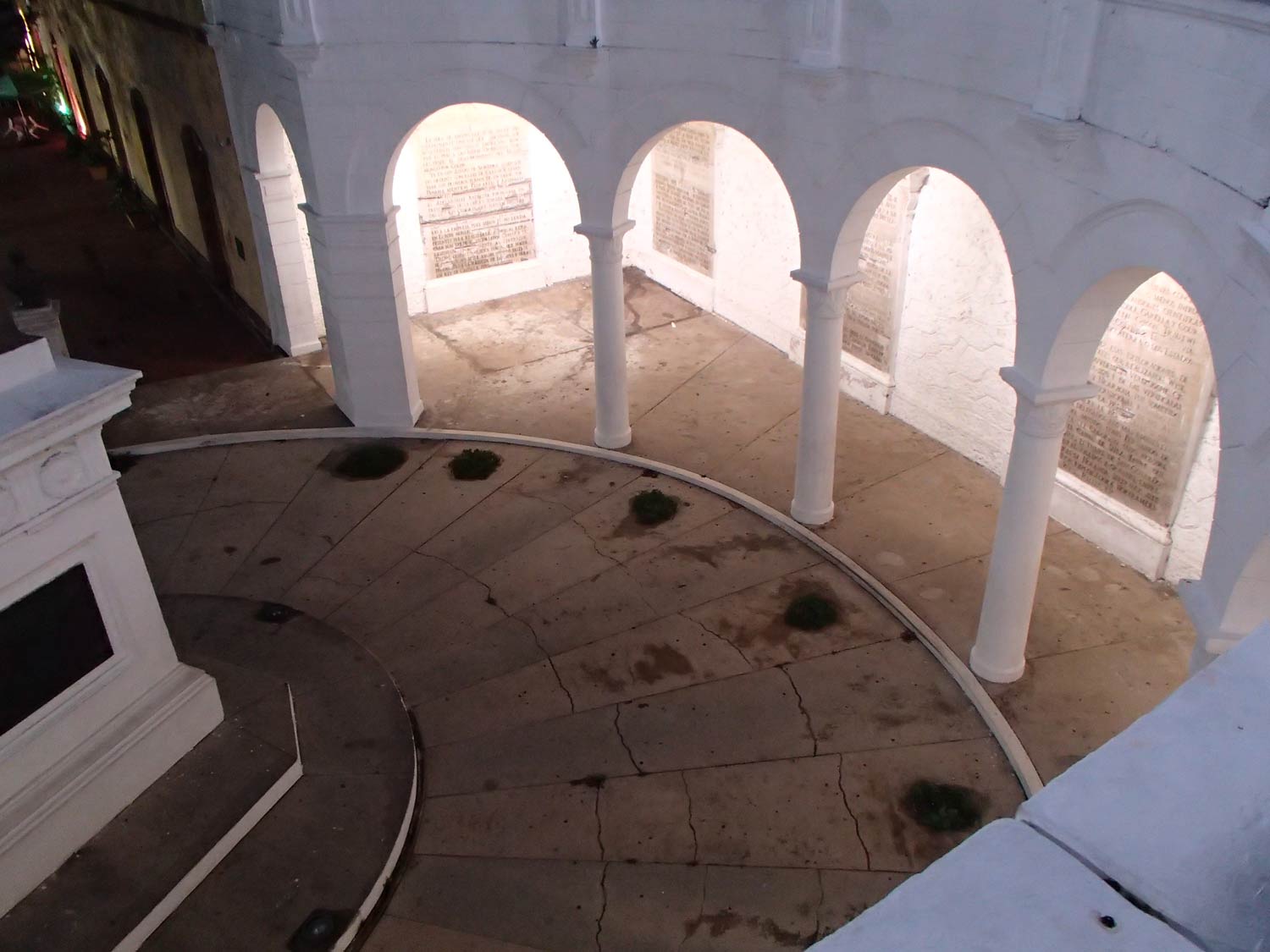
Casco Viejo, Panama City — the historic quarter is a photographic treasure of decaying grandeur: Spanish colonial churches next to restored boutique hotels, coloured facades with balconies heavy with tropical plants, and the modern skyline of new Panama City visible across the bay as a startling contrast.
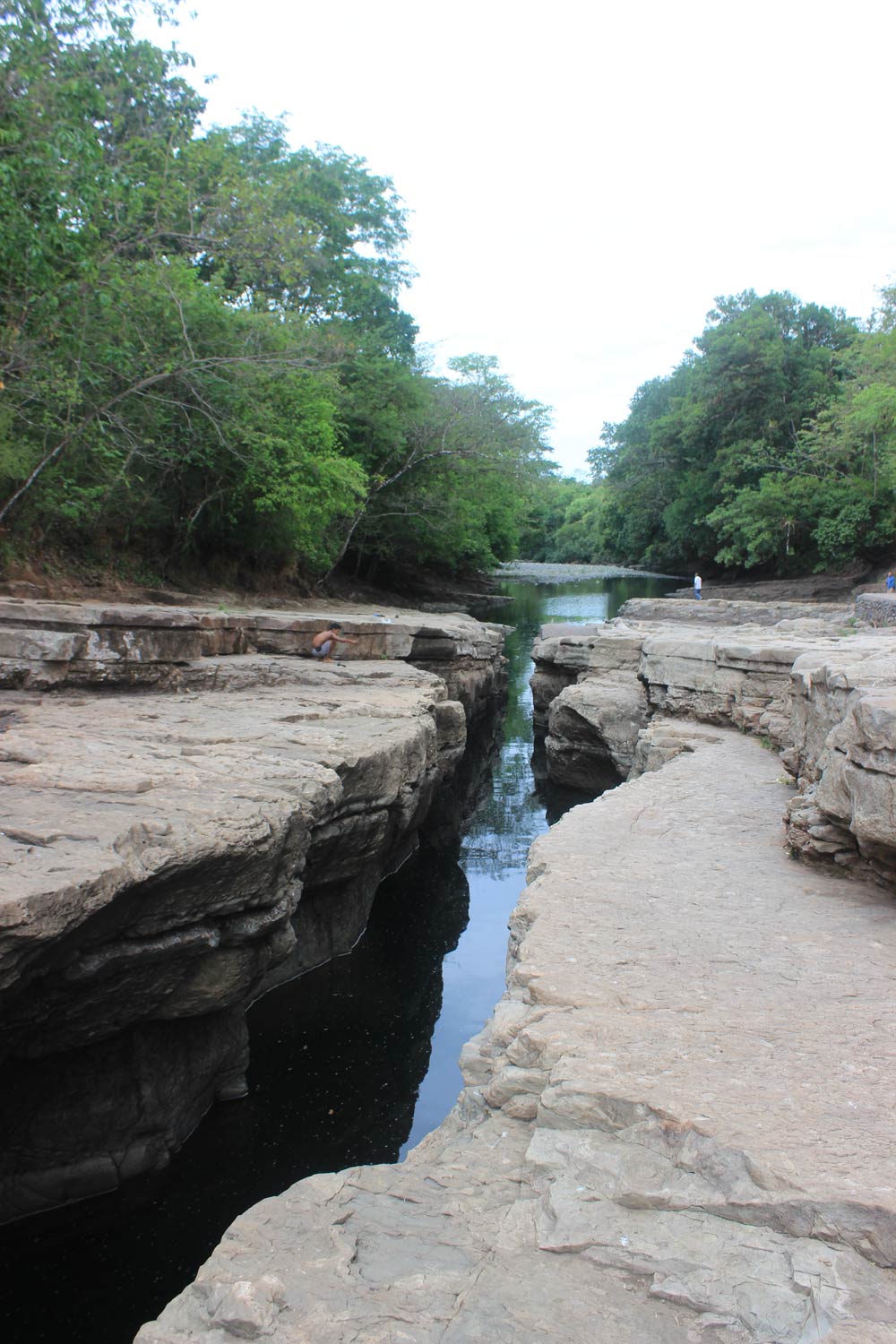
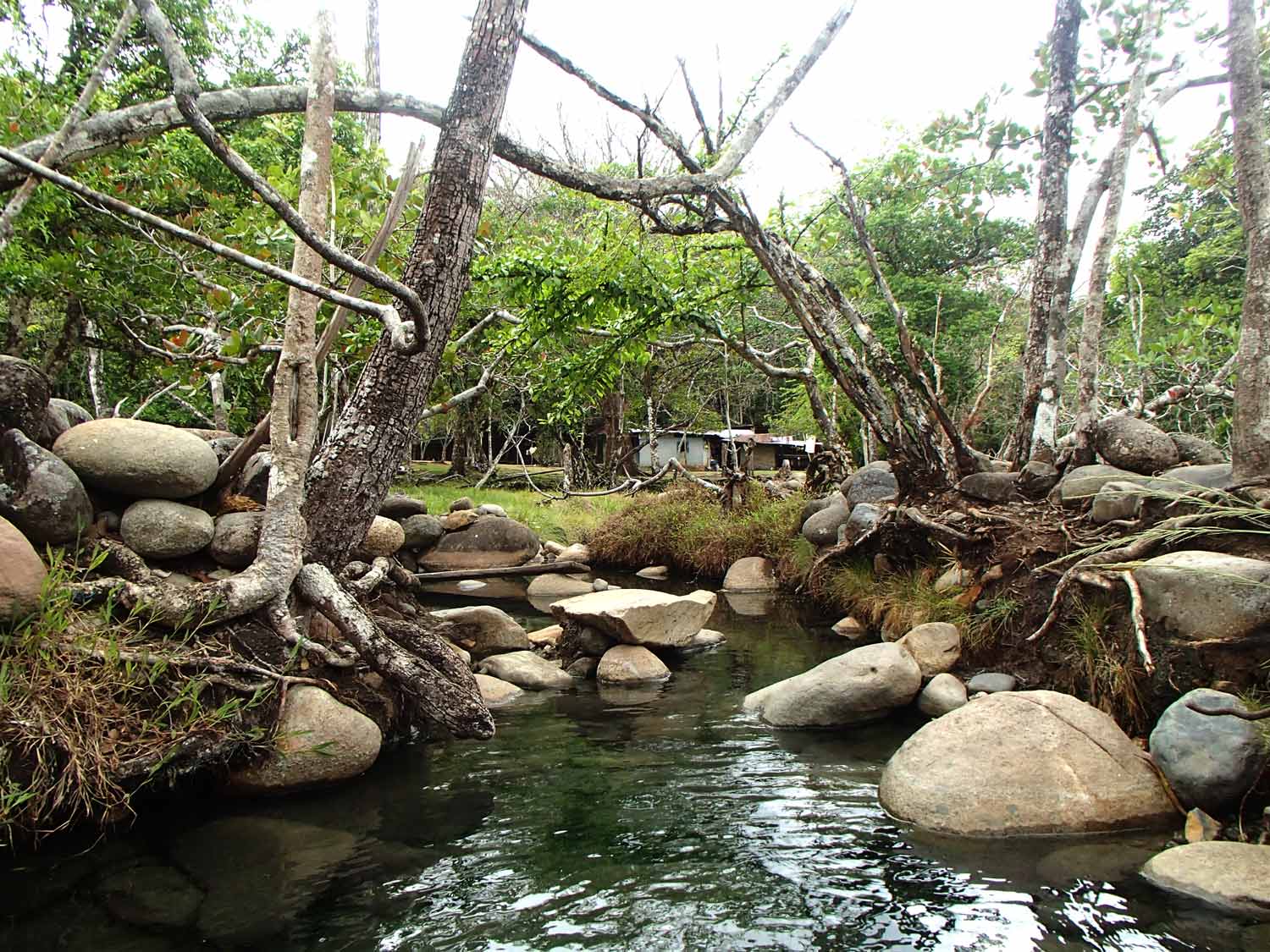
Los Cangilones de Gualaca — a natural rock gorge where the river has carved smooth swimming holes in the stone, surrounded by tropical forest. Very few tourists find this place, and the combination of water, stone, and jungle light is exceptional.
San Blas Islands — the Kuna Yala archipelago is a world of tiny palm-covered islands, dugout canoes, and mola textile art. The Kuna people maintain significant political autonomy and their culture is visually extraordinary — photographing with permission here is one of the richest documentary experiences I've had in Latin America.
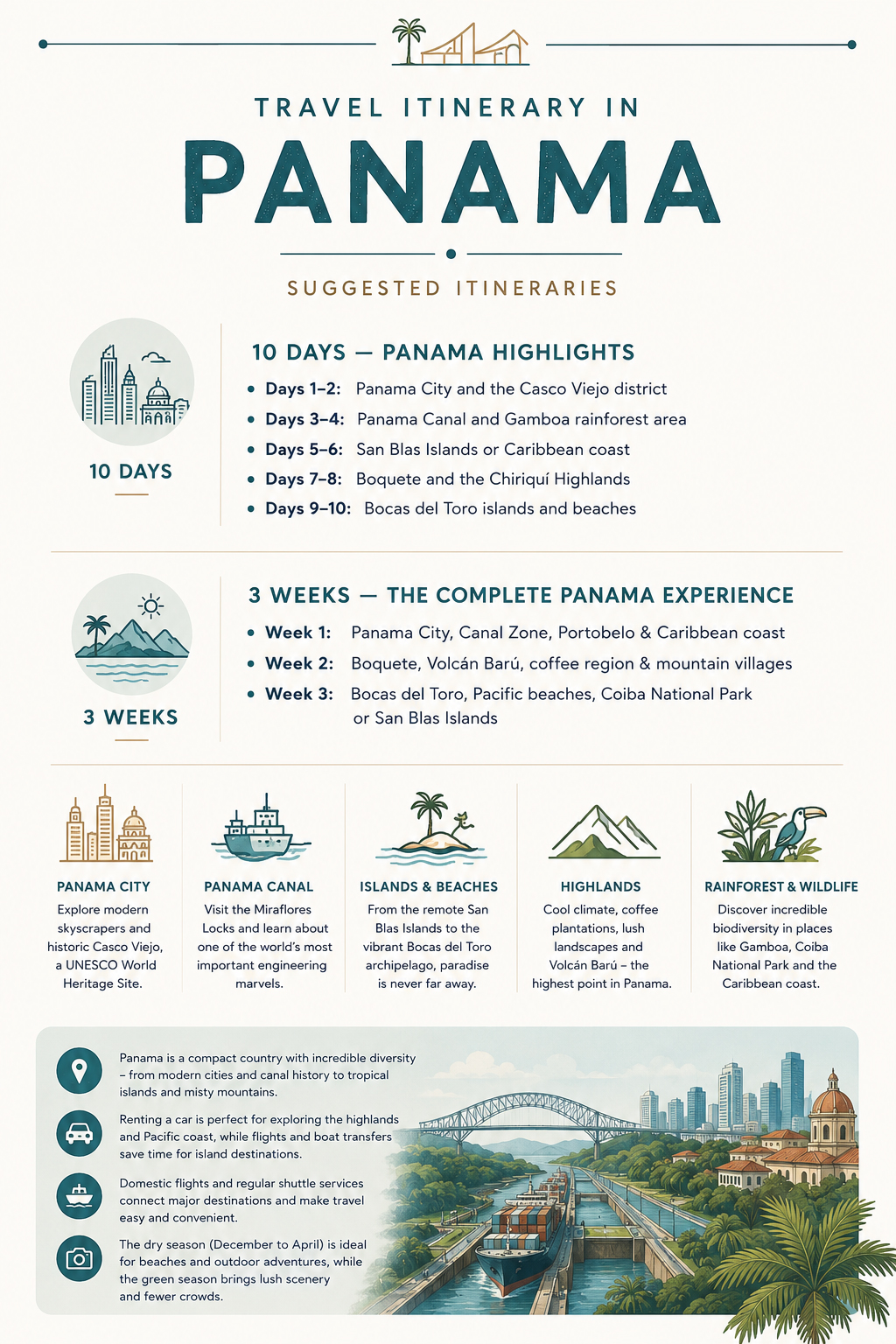
Panama uses the US dollar, which simplifies budgeting considerably. Panama City is more expensive than its neighbours, but Boquete and the interior remain very affordable. The country is compact enough to cover significant ground in 7–12 days, and its position as a hub for Central and South American flights means arrival and departure costs are often lower than for neighbouring countries.
| 🗓️ | Recommended stay | 7 – 12 days |
| 🎒 | Budget / day | €40–65 / $44–72Hostel, local fondas, buses |
| 🥂 | Luxury / day | €130–260 / $143–286Boutique hotel, private boat to San Blas, guided tours |
| 📅 | Best months | December – April |
| 🌡️ | Climate | 24–32°C · Dry Jan–Apr · Rainy May–NovBoquete highlands cooler (~18°C) — a great escape from the heat |
| ✈️ | Visa | Visa-free for EU & US up to 180 days |
| 💵 | Currency | USD is the official currency · Cards in cities · Cash for rural areas & San Blas Islands |
| 🚌 | Getting around | Uber in Panama City · Buses between regions · Boats to San Blas Islands |
| 🛡️ | Safety | Medium — tourist areas safeAvoid Colón province · Be aware at night in Panama City |
| 🍜 | Must-try food | Sancocho (chicken soup — the national dish), patacones, fresh ceviche, ropa vieja |
| 💬 | Language | Spanish essential outside Panama City · Some English in expat & tourist areas |
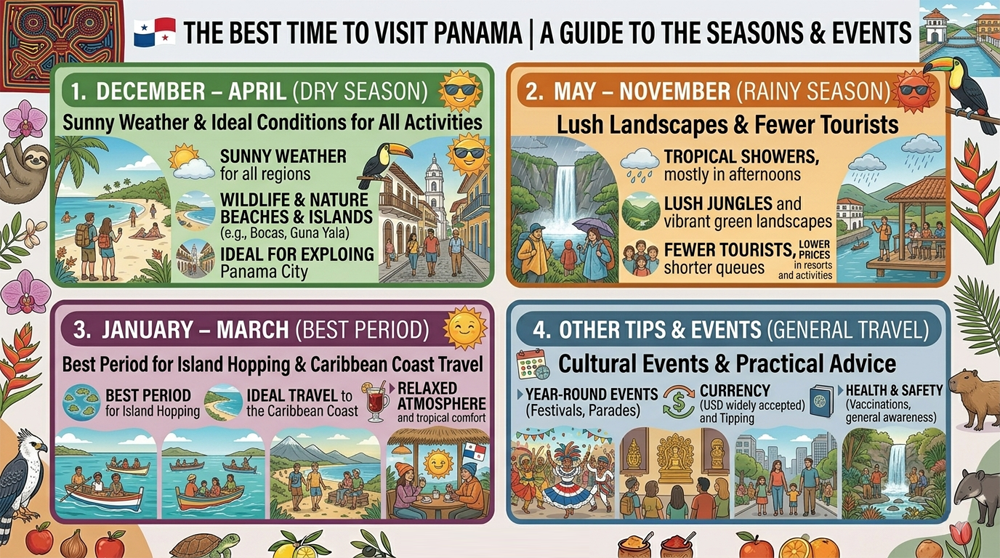
Dry season with sunny weather, ideal for beaches, islands, and exploring Panama City.
Rainy season brings lush landscapes and fewer tourists, with showers mostly in the afternoon.
Best period for island hopping and Caribbean coast travel.
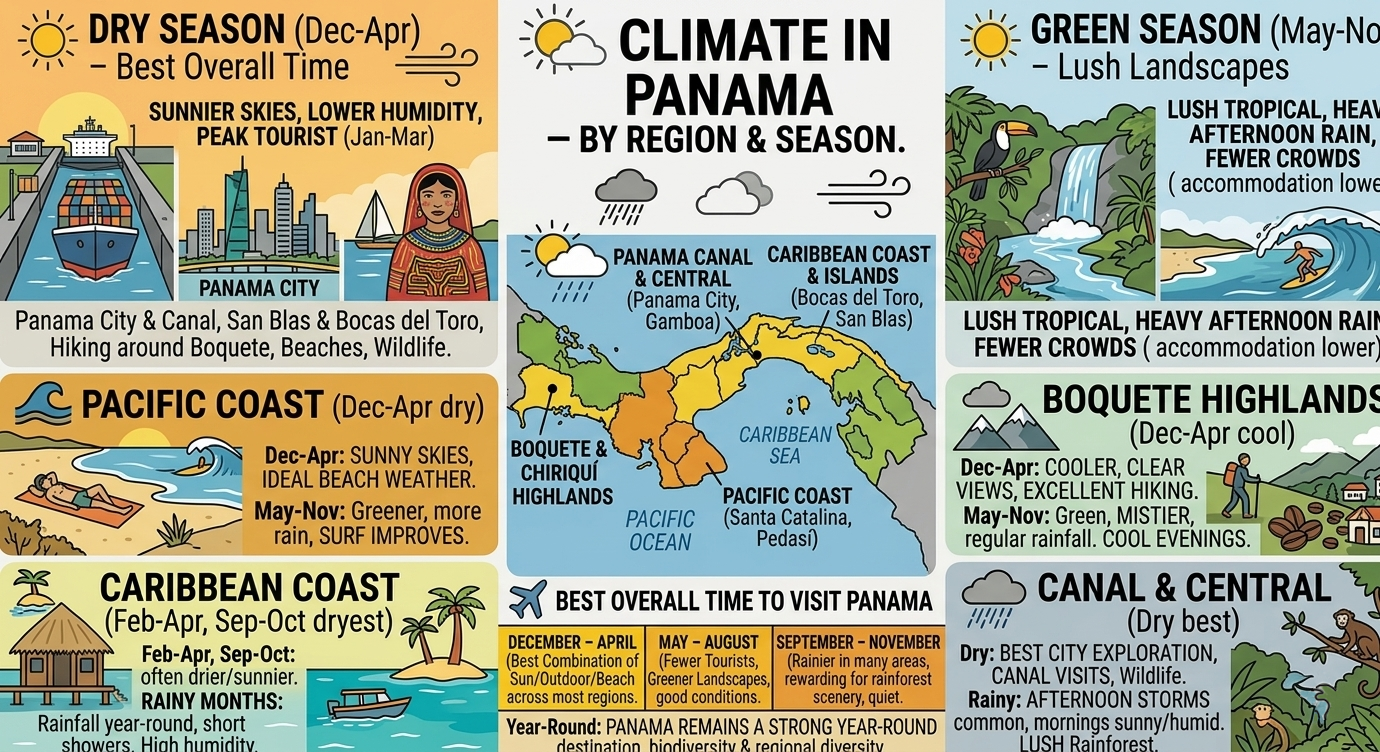
Panama has a tropical climate year-round, with warm temperatures, high humidity, and distinct dry and rainy seasons. Thanks to its position between the Pacific Ocean and the Caribbean Sea, weather conditions can vary significantly depending on the region. From cloud forests in the highlands to Caribbean islands and Pacific surf beaches, Panama offers very different travel experiences throughout the year.
Best Overall Time to Visit These months bring sunnier skies, lower humidity, and the most reliable travel conditions across the country. This is the ideal season for:
This is also peak tourism season, especially around Christmas, New Year, and February.
Lush Landscapes & Fewer Crowds The rainy season transforms Panama into an intensely green tropical landscape. Rain often arrives in short but heavy afternoon downpours rather than constant all-day storms.
Roads in remote regions can occasionally become difficult after heavy rain, particularly near jungle areas.
Lush Landscapes & Tropical Atmosphere The southwest monsoon brings regular rain showers, usually in the afternoon or evening rather than continuous all-day rain. During this period:
Road conditions in rural areas can occasionally become difficult, but major destinations remain accessible.
December to April Cooler temperatures, clear mountain views, and excellent hiking conditions make this the best time to visit Panama’s highlands.
May to November The mountains become greener and mistier, with regular rainfall creating dramatic cloud forest scenery and excellent conditions for coffee plantations.
February to April · September to October These months often bring the driest and sunniest weather on Panama’s Caribbean side.
May to August · November to January Rainfall becomes more frequent, though tropical showers are often brief and temperatures remain warm year-round.
Skip the SIM hunt on arrival. A travel eSIM lets you activate local data before you board — no plastic card, no roaming fees, instant setup. Roamic covers this destination and most countries in the Galerie.
Get Your Travel eSIM →🎟️ GetYourGuide: "A guided Panama Canal boat transit and a Kuna Yala San Blas Islands day trip are two experiences that benefit enormously from local knowledge and connections."
Panama City's Tocumen Airport is Central America's main hub. Kiwi.com is useful for building multi-stop routes through the region — flying into Panama and out of Costa Rica (or Colombia) avoids backtracking entirely.
Stock Photography
Browse and license the full Food photography collection — available for commercial and editorial use on Shutterstock.
View on Shutterstock →
Stock Photography
Browse and license the full Spain photography collection — available for commercial and editorial use on Shutterstock.
View on Shutterstock →